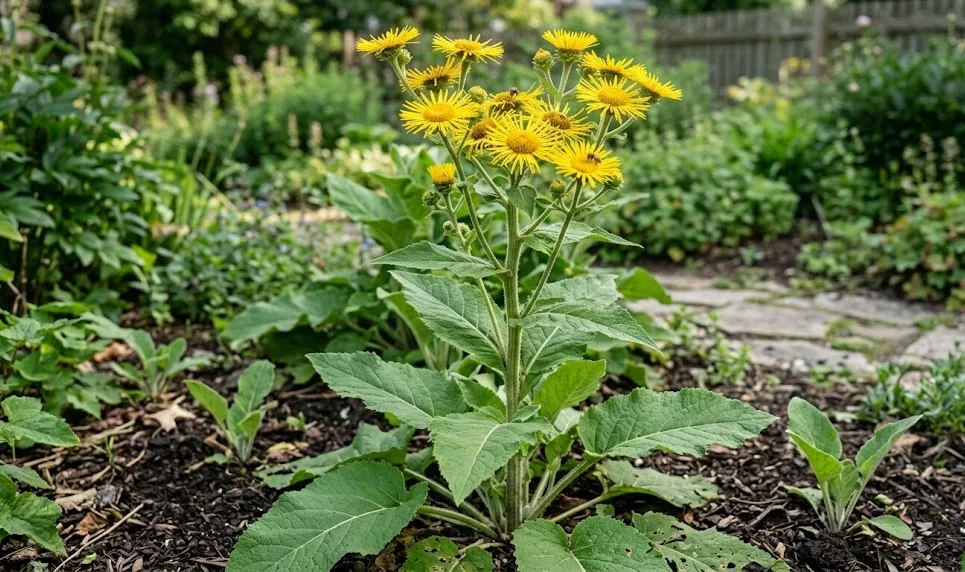

Water management is a critical factor in the cultivation of elecampane due to its large leaf surface area. These broad leaves transpire a significant amount of moisture, especially during the hot summer months. Without a consistent supply of water, the plant will quickly show signs of wilting and reduced vigor. Finding the balance between adequate hydration and soil aeration is the key to professional success.
During the initial establishment phase, the water needs are at their highest level. You must ensure that the root zone stays moist to encourage the downward growth of the main rhizome. Once the plant has developed a deep root system, it becomes slightly more tolerant of brief dry spells. However, for maximum root production, a steady moisture level should be maintained throughout the entire growing season.
The timing of irrigation can significantly impact the health of the foliage and the roots. It is best to water early in the morning so the leaves have time to dry before nightfall. This practice reduces the risk of fungal infections that thrive in damp, cool evening conditions. You should aim to apply water directly to the soil surface rather than using overhead sprinklers.
Fertilization should be approached with a focus on long-term soil health rather than quick growth spurts. Elecampane is a heavy feeder that responds well to high levels of organic matter in the soil. You should incorporate well-rotted compost or manure into the planting area before the season begins. This provides a slow-release source of nutrients that supports the plant during its most active phases.
In addition to organic amendments, balanced mineral fertilizers can be used to address specific deficiencies. Nitrogen is important for the development of the massive leaves during the early summer. However, excessive nitrogen late in the season can lead to soft growth that is more susceptible to frost. You should focus on potassium and phosphorus in the late summer to strengthen the root system for winter.
More articles on this topic
Recognizing the signs of nutrient stress allows for timely interventions in the garden. Yellowing of the lower leaves may indicate a nitrogen deficiency, while purple tints can suggest a lack of phosphorus. You should perform regular soil tests to understand the exact nutrient profile of your growing area. This data-driven approach ensures that you are providing exactly what the plant needs for optimal performance.