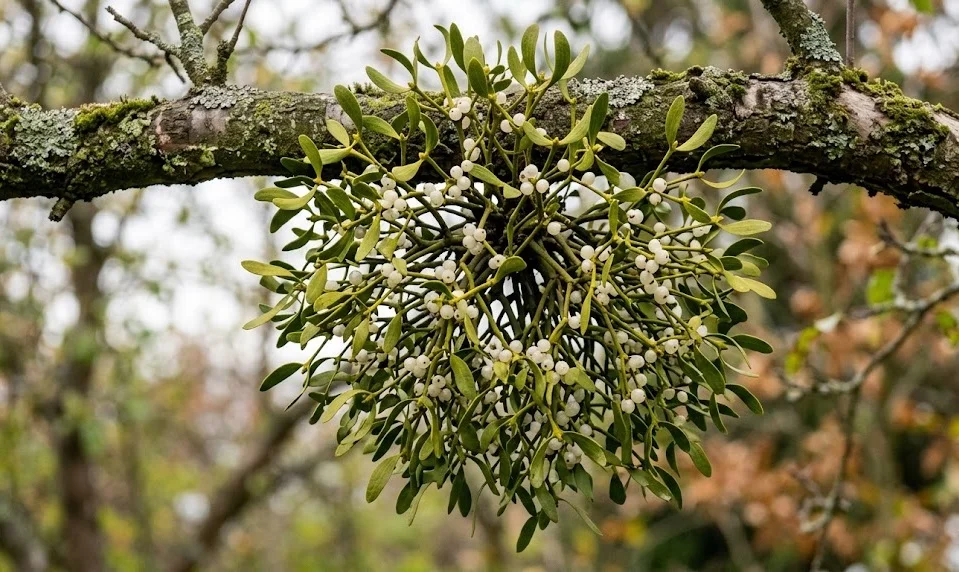

The irrigation and nutrient management of white mistletoe is a unique horticultural practice because the plant never draws directly from the soil. Instead, all of its water and mineral requirements are met by the host tree through a specialized parasitic connection. This means that any watering or fertilization program must be directed entirely toward the host tree itself. A healthy, well-nourished host is the only way to ensure that the mistletoe remains vibrant and continues to produce its characteristic evergreen foliage and white berries.
Managing host hydration for parasitic support
The primary source of water for white mistletoe is the sap flowing through the host tree’s xylem. Because mistletoe transpires water at a much higher rate than the tree’s own leaves, it acts like a powerful pump that is always active. During the summer months, this can put a significant strain on the tree’s water reserves, especially in dry urban environments. Therefore, maintaining consistent soil moisture around the base of the host tree is the most effective way to “water” the mistletoe.
In times of drought, the host tree might naturally try to shut down its stomata or drop leaves to conserve moisture, but the mistletoe does not follow these signals. This lack of coordination can lead to localized dehydration in the branch where the mistletoe is attached. To prevent this, deep watering sessions are recommended during prolonged dry periods to ensure the host’s water table remains accessible. The water should be applied at the drip line of the tree where the fine feeder roots are most active.
Mulching the area under the host tree can also drastically improve the water availability for the parasitic plant. A thick layer of organic mulch helps retain soil moisture and regulates the temperature of the root zone, which reduces the overall stress on the host. When the host tree is relaxed and well-hydrated, it can easily provide the excess water that the mistletoe requires to maintain its turgor. A stressed tree, on the other hand, will often prioritize its own survival over that of the parasite.
Monitoring the appearance of the mistletoe leaves is a good way to gauge if the host tree needs more water. If the mistletoe leaves begin to look wrinkled or lose their bright green color, it is often a sign of water stress in the tree. Unlike many garden plants, mistletoe does not “wilt” in the traditional sense because of its leathery structure. Instead, the signs are more subtle, and a professional eye will recognize the loss of luster as a call for increased irrigation for the host.
More articles on this topic
Indirect fertilization strategies for mistletoe
Fertilizing mistletoe is entirely an indirect process that involves improving the mineral content of the host tree’s sap. Since the mistletoe is particularly greedy for minerals like potassium and nitrogen, the host tree must have an ample supply to share. Applying a slow-release, balanced fertilizer to the host tree in early spring can help boost the nutrient levels in the vascular system. This ensures that the mistletoe has everything it needs for its vigorous early-season growth.
It is important to avoid over-fertilizing, as this can lead to excessive leafy growth in the host tree, which might shade out the mistletoe. A moderate approach is always best when dealing with the delicate balance between a parasite and its host. Organic fertilizers, such as well-rotted compost or seaweed extracts, are often preferred as they release nutrients slowly and improve soil health. This long-term improvement in soil quality provides a stable environment for both organisms.
Specific mineral deficiencies in the host tree will quickly manifest in the mistletoe clumps. For example, if the host tree is struggling with iron deficiency in alkaline soils, the mistletoe leaves may turn yellow. In such cases, treating the host with chelated iron or acidifying the soil can resolve the issue for the parasite as well. Always diagnose the host tree’s nutritional status first before assuming the mistletoe is sick.
Fall fertilization can also be beneficial, as it helps the host tree build up its carbohydrate and mineral reserves for the winter. While the mistletoe is less active in the cold months, it still requires a steady supply of basic elements to maintain its evergreen leaves. A healthy host with a full “pantry” of nutrients will support a more robust mistletoe population through the challenging winter weather. This holistic approach to nutrition is the secret to a professional-looking garden display.
More articles on this topic
Soil quality and its impact on the host
The soil type and structure under the host tree play a massive role in how well nutrients are delivered to the mistletoe. Compacted soil can restrict root growth and reduce the host’s ability to absorb the minerals that the parasite depends on. Aerating the soil periodically can improve oxygen levels and encourage a more extensive root system for the host tree. A larger root system naturally leads to a more efficient uptake of water and minerals for the entire canopy.
The pH level of the soil is another critical factor that influences nutrient availability. Most common host trees for white mistletoe, like apple or lime trees, prefer a slightly acidic to neutral pH. If the soil becomes too alkaline, many essential micronutrients become “locked” and unavailable to the tree roots. Regularly testing the soil pH allows you to make necessary adjustments with sulfur or lime to keep the host in its optimal growth zone.
Organic matter in the soil acts as a reservoir for both water and nutrients, which is vital for the parasite’s steady supply. Adding leaf mold or garden compost to the surface of the soil encourages beneficial mycorrhizal fungi. These fungi form a symbiotic relationship with the host tree’s roots, significantly increasing their surface area for nutrient absorption. This indirect support system is incredibly effective for maintaining a large and healthy mistletoe clump.
Drainage is equally important, as waterlogged soil can lead to root rot in the host tree. If the host tree’s roots are damaged by lack of oxygen, the water and nutrient supply to the mistletoe will be cut off almost immediately. Ensuring that the host is planted in a well-draining location prevents many of the physiological problems associated with parasitic growth. A healthy soil environment is the foundation upon which the entire host-parasite relationship is built.
Understanding the mineral uptake mechanism
To manage fertilization professionally, one must understand how mistletoe “steals” nutrients from the host. The connection point, or haustorium, works by creating a bridge between the xylem of the two plants. Mistletoe primarily takes up minerals that are dissolved in the water flowing through the tree. It does not typically access the phloem, where the tree moves its sugars, which is why mistletoe must photosynthesize its own energy.
Because the mistletoe is a “mineral sink,” it often has higher concentrations of certain elements than the surrounding tree branches. This is particularly true for mobile elements like potassium, which move easily through the water stream. If you notice the host tree’s leaves showing signs of deficiency while the mistletoe looks fine, the parasite may be out-competing the tree for resources. In such instances, increasing the overall nutrient supply to the tree is necessary to protect the host’s health.
The timing of mineral uptake is closely linked to the host’s transpiration rate. On sunny, windy days when the tree is moving a lot of water, the mistletoe is also pulling in a large amount of dissolved minerals. This means that the demand for nutrients is highest during the peak growing season. Ensuring that the host has access to a consistent supply of nutrients during the spring and summer is vital for the mistletoe’s development.
Interesting variations can occur depending on the specific host species. Some trees are naturally better at sequestering certain minerals than others, which can affect the chemical composition of the mistletoe. Professional gardeners sometimes observe that mistletoe on apple trees looks different from mistletoe on poplars, partly due to these differences in nutrient availability. Understanding these nuances helps in tailoring the care routine to each specific host-parasite pair in the garden.
Supplemental care during drought periods
Drought is the single greatest threat to mistletoe because the plant cannot stop itself from losing water. Unlike the host tree, mistletoe lacks the sophisticated mechanisms to close its leaf pores entirely when water is scarce. This means it continues to drain the tree even when the tree is already struggling. During a severe drought, supplemental watering for the host tree is not just an option; it is a necessity for the survival of both plants.
When watering during a drought, it is better to provide long, slow soakings rather than frequent shallow waterings. This encourages the host tree’s roots to grow deeper into the soil where moisture is more stable. Applying water late in the evening or early in the morning reduces evaporation and ensures that more water reaches the root zone. A well-hydrated host will be much more tolerant of the mistletoe’s constant water demand.
Using a soaker hose or a drip irrigation system can provide a very efficient way to maintain host hydration. These systems deliver water directly to the soil without wetting the tree’s foliage, which helps prevent fungal issues. For trees with large mistletoe loads, you may need to increase the irrigation frequency compared to non-infested trees. This extra attention during the summer months will pay off with a lush and healthy display in the winter.
Finally, reducing other stresses on the host tree during a drought can indirectly help the mistletoe. Avoid heavy pruning or major soil disturbances around the host when water is limited. If the host tree is healthy and unstressed, it can act as a reliable reservoir for the parasite. Professional management is all about anticipating these periods of stress and providing the necessary support to keep the parasitic relationship in balance.