
Harnessing the power of the sun is the most fundamental requirement for producing the massive, energy-dense fruits that pumpkin plants are famous for. These plants are essentially biological solar panels, using their expansive leaves to convert sunlight into the sugars that fuel their rapid expansion. Without adequate light, the vines will become leggy and weak, and the plant may never have enough energy to set and mature a successful crop. Understanding the nuances of solar exposure is the first step toward a bountiful harvest.
Full sun is not just a recommendation for pumpkins; it is an absolute necessity for their survival and productivity throughout the long summer. You should aim for a planting site that receives at least eight to ten hours of direct, unobstructed sunlight every single day. Any less than this and you will likely see a significant decrease in the number of flowers and the final size of your pumpkins. If your garden is partially shaded by trees or buildings, you may need to reconsider your layout or choose smaller, faster-maturing varieties.
The quality of the light is just as important as the quantity, as the plants need the full spectrum of solar radiation to thrive. Morning sun is particularly valuable because it helps dry the dew off the leaves quickly, which is your best natural defense against fungal diseases. If you have to choose between a site with morning sun or one with afternoon sun, the morning exposure is generally superior for plant health. However, in extremely hot climates, some very light afternoon filtered shade can actually prevent the leaves from wilting under the most intense heat.
Light duration also plays a critical role in the timing of flower production and the overall development of the pumpkin fruit. As the days begin to shorten in late summer, the plant receives a signal to start diverting its energy away from vine growth and toward ripening the fruit. This natural transition is essential for ensuring the pumpkins reach maturity and develop a hard rind before the first frost arrives. Paying attention to these seasonal light shifts will help you better understand the life cycle of your pumpkin patch.
Managing shade and competition
Overhead obstacles like tall trees or overgrown hedges can cast long shadows that move across your garden throughout the day, often in ways you might not expect. It is a good idea to observe your intended planting site at several different times of day before you ever put a seed in the ground. You might find that a spot that looks sunny at noon is actually in deep shade for most of the morning or late afternoon. Proper site selection is the easiest way to avoid light-related problems later in the season.
More articles on this topic
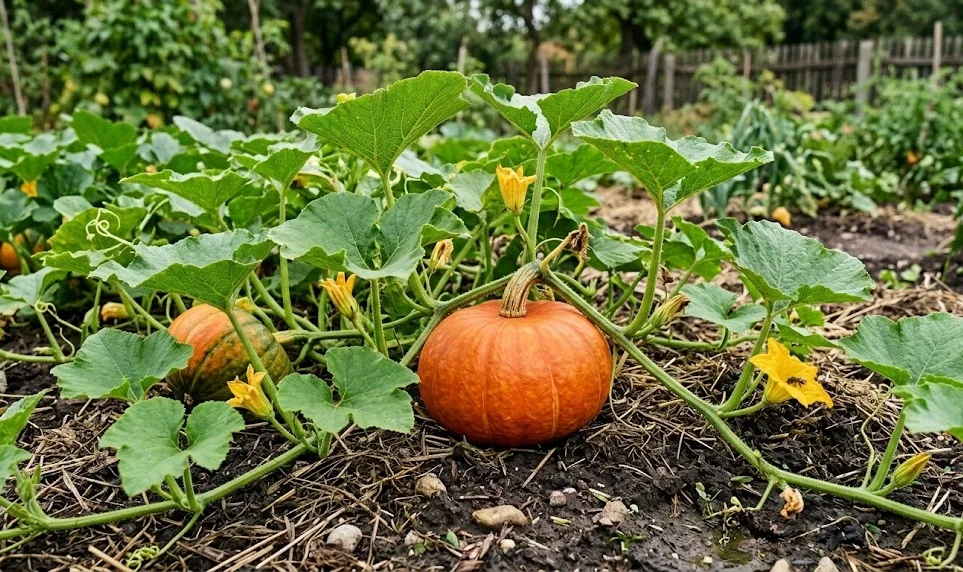
Within the garden itself, the massive leaves of the pumpkin plants can sometimes shade out their own developing fruit or secondary vines. While the leaves need the sun, the pumpkins themselves also benefit from some direct exposure to help harden their skins and develop a deep, uniform color. You can gently move the large leaves aside or prune a few strategically to ensure the developing fruit gets the light it needs. Just be careful not to expose the pumpkins too suddenly to intense heat, as they can actually suffer from “sunscald” if the transition is too dramatic.
Competition from other tall crops like corn or sunflowers can also create light-related stress for your pumpkins if they are planted too closely together. While some traditional methods like the “Three Sisters” use these plants as companions, you must ensure there is enough space for everyone to get their share of the sun. If the pumpkins are being shaded out by their neighbors, they will stop growing horizontally and start trying to climb, which is not ideal for large-fruited varieties. Balance and spacing are the keys to a harmonious and productive mixed garden.
Maximizing solar exposure
In cooler climates or areas with short growing seasons, maximizing every bit of available sunlight is the secret to success for pumpkin growers. You can use reflective mulches or even strategically placed mirrors to bounce extra light back up into the underside of the leaf canopy. Planting your pumpkins on a south-facing slope can also provide a natural advantage by capturing the sun’s rays at a more direct angle throughout the day. These small adjustments can add up to a significant difference in the final weight and maturity of your crop.
Reflective surfaces near the garden, such as a white-painted fence or a light-colored building, can provide a helpful “bonus” of reflected light to your plants. This indirect light helps illuminate the interior of the vine clusters that might otherwise be in deep shade for most of the day. Every extra photon that hits a green leaf is another bit of energy that can be stored as starch in your developing pumpkins. Think of your garden layout as a system designed to capture and hold as much solar energy as possible.
The health and cleanliness of the leaves themselves also determine how efficiently the plant can use the light it receives. Dust, dirt, or residues from sprays can block the stomata and reduce the amount of light that reaches the chloroplasts inside the leaf tissue. Occasionally rinsing the leaves with a gentle spray of water can keep them clean and functioning at their peak efficiency. A clean leaf is a productive leaf, ensuring that your plant is making the most of the sunlight you have worked so hard to provide.