
Crown imperial is a hardy spring bulb in many temperate climates, and established plants usually overwinter successfully when the soil drains well. Cold itself is often less dangerous than prolonged winter saturation, especially in heavy ground where water remains around dormant bulbs. Proper autumn preparation therefore focuses on drainage, stable soil conditions, and avoiding unnecessary disturbance. Container-grown plants require additional protection because their bulbs experience greater temperature fluctuations than bulbs insulated by open garden soil.
Preparing crown imperial for winter
Winter preparation begins after the foliage has naturally died back. The dry stem can be removed once it has lost all green colour and the bulb has completed its energy-storage phase. There is no advantage in cutting healthy foliage earlier. Allowing natural senescence strengthens the bulb before dormancy.
The planting area should be kept reasonably clear of thick, wet plant debris. A dense layer of decaying material can hold moisture against the soil surface and provide shelter for pests. A light organic mulch may be useful in colder climates, but it should remain loose and breathable. Excessive mulching can be counterproductive in already wet soil.
Autumn is also a useful time to assess drainage after heavy rain. Standing water over the planting position indicates an obvious problem. If water remains for long periods, the bed may need structural improvement before winter. Raised planting areas can be particularly valuable where the natural soil is dense.
Established bulbs generally do not need to be lifted purely for winter storage. Leaving them in the ground reduces handling damage and allows roots to develop naturally. Lifting is justified mainly when the site is unsuitable, the bulbs need dividing, or winters are excessively wet for outdoor survival. In most suitable temperate gardens, undisturbed overwintering is preferable.
More articles on this topic
Protecting bulbs from frost and moisture
Soil provides substantial insulation against low temperatures. Correctly planted bulbs experience much smaller temperature fluctuations than exposed containers. A stable winter chilling period is also part of the natural annual cycle of crown imperial. Normal frost is therefore not necessarily harmful.
The greatest winter threat in many gardens is a combination of cold and waterlogged soil. Saturated conditions reduce oxygen around the bulb and encourage tissue breakdown. Freeze-thaw cycles can further disturb poorly structured wet ground. Improving drainage is more reliable than attempting to insulate permanently soggy soil.
A modest mulch layer can help stabilize temperatures where winters are severe and snow cover is unreliable. Suitable materials include dry leaves, mature compost, or loose organic matter. The mulch should not create a waterproof mat. It can be reduced in early spring as shoots begin to emerge.
Late frost after spring emergence is different from winter cold affecting a dormant bulb. Young leaves can occasionally be scorched when warm weather is followed by a sudden hard freeze. Temporary protection with horticultural fleece can help during exceptional cold snaps. Covers should be removed when conditions improve so that light and ventilation return.
More articles on this topic
Overwintering crown imperial in containers
Container-grown crown imperial is more exposed to frost because cold air can reach the root zone from the sides of the pot. Large containers provide better temperature stability than small pots. Frost-resistant containers are also important because saturated porous pots may crack during freezing weather. Good drainage holes must remain open throughout winter.
Pots can be moved to a sheltered location beside a wall or grouped together for additional insulation. Wrapping the outside of containers with appropriate insulating material can reduce extreme temperature fluctuations. The crown imperial still needs natural winter chilling and should not usually be moved into a warm indoor room. Excessive warmth can disrupt dormancy.
Winter watering in containers should be minimal but not completely ignored in unusually dry conditions. The compost should not remain saturated, yet prolonged total desiccation is also undesirable. Rain often provides enough moisture if the pot is exposed outdoors. Containers under covered areas may occasionally require a small amount of water.
Placing pots directly in trays that collect rainwater should be avoided. Standing water can keep the lower compost saturated for days. Raising containers slightly above the ground helps excess moisture escape. This simple adjustment often prevents more winter problems than elaborate insulation.
Spring transition after overwintering
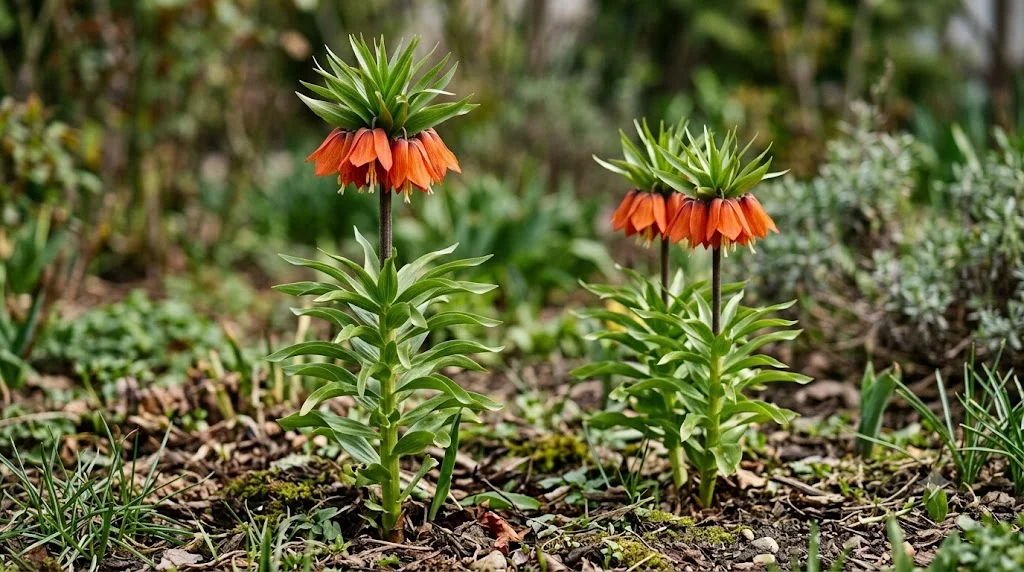
Crown imperial can emerge surprisingly early once conditions begin to warm. Containers and beds should therefore be checked regularly toward the end of winter. New shoots can appear before many other perennials show visible growth. Early recognition helps prevent accidental damage during spring cultivation.
Mulch can be pulled back gradually as growth appears. This prevents emerging stems from becoming trapped beneath heavy material. At the same time, the soil should not be aggressively disturbed around the shoot. Crown imperial roots may already be active below ground.
Water requirements increase as the stem grows. Dormant-season restraint should therefore transition toward moderate spring watering when rainfall is insufficient. A balanced fertilizer can also be applied once active growth is underway. The change should follow plant development rather than a fixed calendar date.
Successful overwintering becomes obvious when stems emerge strongly and evenly. Weak, yellow, or absent growth may indicate bulb decay, physical damage, or unsuitable winter conditions. Problems should be investigated rather than immediately compensated for with extra water or fertilizer. Healthy spring growth begins with a sound bulb that has remained firm throughout dormancy.