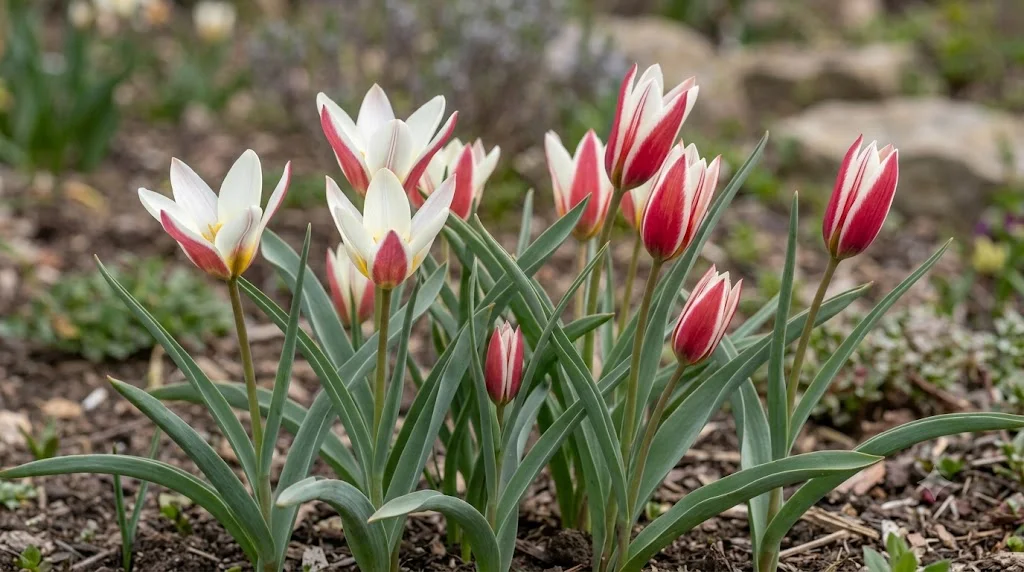

Lady tulips require very little conventional pruning, but the timing of flower and foliage removal has a major effect on future flowering. The green leaves must remain in place after bloom because they manufacture and store energy in the bulb. Cutting back too early is one of the most damaging maintenance mistakes gardeners make with tulips. Proper pruning is therefore mainly a matter of restraint, sanitation, and waiting for natural dormancy.
Deadheading after flowering
Deadheading means removing the faded flower before a seed capsule develops fully. This can redirect energy toward bulb growth and offset production. It is particularly useful when the goal is to maintain vigorous flowering bulbs. The cut should be made below the spent flower without removing healthy leaves.
Clean, sharp scissors or secateurs reduce the risk of tearing the stem. Tools should be disinfected when moving between plants if disease is suspected. The cut flower and developing capsule can be removed from the bed. Healthy material may be composted, but diseased tissue should be discarded separately.
Not every flower needs to be deadheaded. Gardeners who want seedlings and natural variation can leave selected seed capsules to mature. These plants may invest less energy in the parent bulb during that season. A balanced approach is to remove most spent flowers while retaining seed on a few strong specimens.
Deadheading should not be confused with cutting the entire flowering stem to ground level. The green stem can also contribute to photosynthesis. Leaving it in place until it yellows supports bulb recovery. Only the upper reproductive structure needs to be removed when seed is not required.
More articles on this topic
Allowing foliage to die back naturally
Leaves should remain untouched for as long as they are green. Through photosynthesis, they convert sunlight into carbohydrates that are transported to the bulb. These reserves support root growth, flower initiation, and spring emergence in the following year. Early removal can result in smaller bulbs and fewer flowers.
Foliage should not be tied, braided, folded, or bundled. These practices reduce the leaf surface exposed to light and restrict internal transport. They can also create damp pockets that favour disease. The leaves may look untidy, but their natural position is the most efficient.
Companion planting can help disguise fading foliage without interfering with it. Small perennials that emerge later can soften the appearance of the bed. They should not form a dense canopy over the tulip leaves. Adequate airflow and sunlight must continue until yellowing is complete.
The correct time for cutting back is when the leaves have turned yellow or brown and detach easily. At this stage, most useful nutrients have returned to the bulb. The dry foliage can be trimmed near soil level or removed gently by hand. Green resistance indicates that the process is not yet complete.
More articles on this topic
Sanitation and long-term maintenance
Pruning tools should be kept clean and sharp even though lady tulips require only limited cutting. Dirty blades can transfer fungal spores, bacteria, or plant sap between clumps. A suitable disinfectant can be used between affected plants. Tools should be dried after cleaning to prevent corrosion.
Diseased foliage may need to be removed before natural dieback is complete. Plants showing severe spotting, mould, distortion, or collapse should be taken out promptly. The bulb and surrounding debris may also require removal. Protecting the wider planting is more important than preserving one infected plant.
Dry leaves left on the soil surface can harbour pests or obscure emerging weeds. Once fully detached, they should be cleared from intensively managed beds. In naturalised areas, small amounts of healthy dry material are less problematic. The planting should still be inspected periodically for signs of rot or pest activity.
Lady tulips do not require shaping, height control, or routine stem shortening. Their natural form is compact and should be preserved. The best pruning practice consists of deadheading selectively, retaining green foliage, and removing dry or diseased tissue at the appropriate time. This restrained method supports healthy bulbs and dependable flowers year after year.