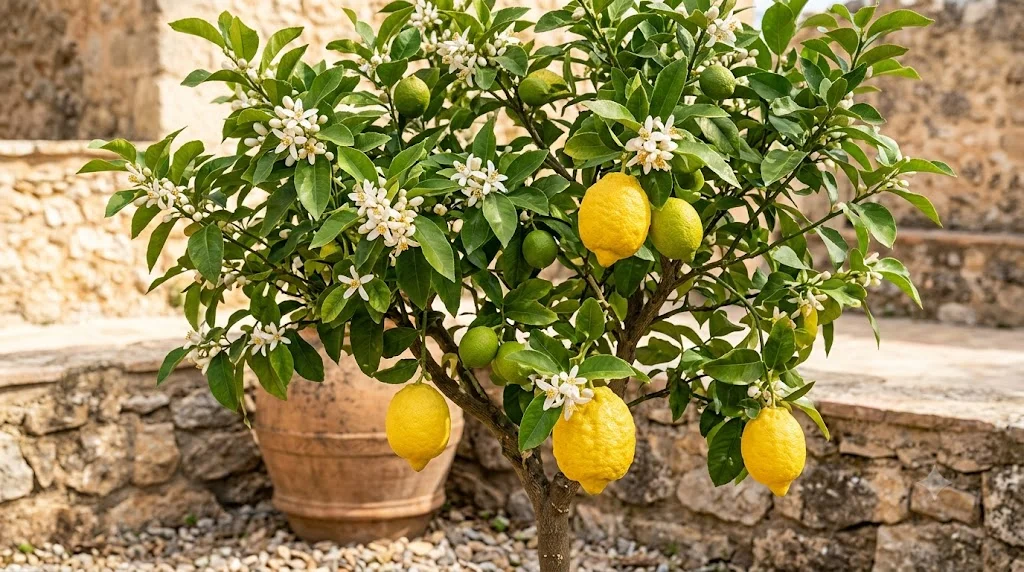

Water and mineral nutrition are closely linked in lemon cultivation because roots can absorb nutrients only when moisture, oxygen and temperature are suitable. Too little water causes wilting, flower loss and dry fruit, while too much excludes air and encourages root decline. Feeding cannot correct poor irrigation, and excessive fertiliser often makes root problems worse. The best results come from observing the plant and adjusting care to the season rather than following a rigid calendar.
Reading the moisture needs of the root zone
A lemon tree prefers a root zone that is evenly moist but never permanently saturated. The upper layer of compost can be allowed to dry slightly before the next thorough watering. Testing with a finger or wooden probe gives more reliable information than judging the surface by colour alone. Large containers may remain wet in the centre even when the top appears dry.
Pot weight is another useful indicator. A freshly watered container feels noticeably heavier than one that is approaching the correct time for irrigation. Learning this difference helps prevent unnecessary watering during winter or cool weather. It is especially useful where decorative outer pots hide the drainage holes.
Wilting does not always mean that the tree needs more water. Waterlogged roots cannot absorb moisture efficiently, so the leaves may droop even though the compost is wet. Before irrigating a wilted plant, check the root zone carefully. Adding more water to oxygen-starved roots can accelerate decline.
Older leaves that curl inward, dry at the edges or fall may indicate repeated drought stress. Flowers and small fruit are particularly sensitive to irregular moisture. A cycle of severe drying followed by heavy watering can cause fruit splitting or premature drop. Consistency is therefore more important than maintaining constant surface wetness.
More articles on this topic
Watering correctly through the seasons
During active spring growth, increase irrigation gradually as temperatures rise and new leaves expand. The tree will use more moisture when it is flowering or carrying fruit. Water deeply enough for excess to leave the drainage holes. Discard water from saucers or outer containers so that the root ball is not left standing in it.
Summer watering frequency depends on pot size, wind, sunlight and canopy density. A small terracotta pot in full sun may dry rapidly, while a large plastic container in partial shade retains water much longer. Check the tree daily during heatwaves without assuming that daily watering is always necessary. Irrigation should respond to actual moisture conditions.
Autumn watering should be reduced as light levels and evaporation decline. A tree brought indoors usually uses less water, even if the room is moderately warm. Continue checking the compost rather than stopping irrigation completely. Evergreen foliage still loses moisture and the roots must not be allowed to become bone dry.
Winter is the season when overwatering causes the greatest number of failures. Cool roots absorb water slowly, while low light limits growth. Allow a greater proportion of the upper compost to dry before watering again. Use room-temperature water and irrigate earlier in the day so excess moisture can drain before night.
More articles on this topic
Water quality and drainage
Rainwater is often suitable for lemon trees because it usually contains fewer dissolved salts than hard tap water. Collected water should be clean and free from contamination. Extremely cold rainwater stored outdoors may need to warm before use on an indoor tree. Sudden chilling of the roots should be avoided.
Hard water can gradually raise the pH of container compost and leave mineral deposits. This can reduce the availability of iron, manganese and other micronutrients. Pale young leaves with green veins may appear even when the fertiliser contains adequate nutrients. Repotting, using rainwater and applying an appropriate citrus feed can help correct the underlying imbalance.
Good drainage depends on more than holes in the base of the pot. The growing medium must retain its structure instead of collapsing into a dense mass. Compacted compost limits oxygen movement and keeps the centre wet for long periods. Replacing degraded medium is often more effective than adding a layer of stones beneath it.
Drainage holes should be checked periodically for blockage by roots or fine material. Raising a heavy pot slightly above a hard surface can improve water escape. Decorative cachepots must be emptied after irrigation. A lemon tree should never remain in hidden standing water for hours or days.
Selecting and applying fertiliser
A specialised citrus fertiliser is usually the easiest way to supply an appropriate balance of nutrients. Lemon trees require nitrogen for foliage and shoot growth, potassium for fruit development and several micronutrients for healthy metabolism. Magnesium, iron, manganese and zinc are particularly important in container culture. A general-purpose feed may not always provide these elements in suitable proportions.
Begin regular feeding when active growth resumes in spring. Follow the product concentration carefully because more fertiliser does not produce proportionally more growth. Weak, frequent applications are often safer for container plants than occasional heavy doses. Never apply concentrated feed to a completely dry root ball.
During flowering and fruit development, potassium demand is significant. However, the tree still needs nitrogen to maintain the leaves that support the crop. A severely nitrogen-deficient plant cannot ripen fruit efficiently. Balanced nutrition is therefore preferable to using a high-potassium product without considering the rest of the nutrient profile.
Feeding should be reduced or stopped when growth slows in late autumn and winter. Fertiliser salts accumulate when roots are inactive and irrigation is infrequent. Trees maintained under warm, brightly lit conditions may continue limited growth and require occasional mild feeding. The decision should be based on actual growth rather than the date alone.
Diagnosing nutritional problems
Nitrogen deficiency generally causes older leaves to become uniformly pale because nitrogen can be moved from old tissue to new growth. The entire plant may appear weak, and shoots remain short. A suitable fertiliser can correct the problem if the roots are healthy. Poor drainage must be resolved first because damaged roots cannot use added nitrogen effectively.
Iron deficiency usually appears on young leaves as yellow tissue between green veins. It is common when the root-zone pH is too high or roots are cold and waterlogged. An iron treatment may improve appearance, but permanent correction requires better growing conditions. Repeated applications without addressing pH or drainage offer only temporary relief.
Magnesium deficiency often affects older leaves and may create yellow areas around a green central pattern. Fruit-bearing trees can show symptoms when nutrient demand is high. A citrus fertiliser containing magnesium is preferable to repeated unmeasured additions of single minerals. Excessive correction can disturb the balance of other nutrients.
Leaf symptoms can overlap, so diagnosis should consider the tree’s recent care and root condition. Salt damage, drought, pests and cold injury may resemble deficiency. Inspect several leaves of different ages rather than relying on one damaged specimen. When uncertain, improving drainage, light and watering consistency is safer than applying a strong mixture of fertilisers.