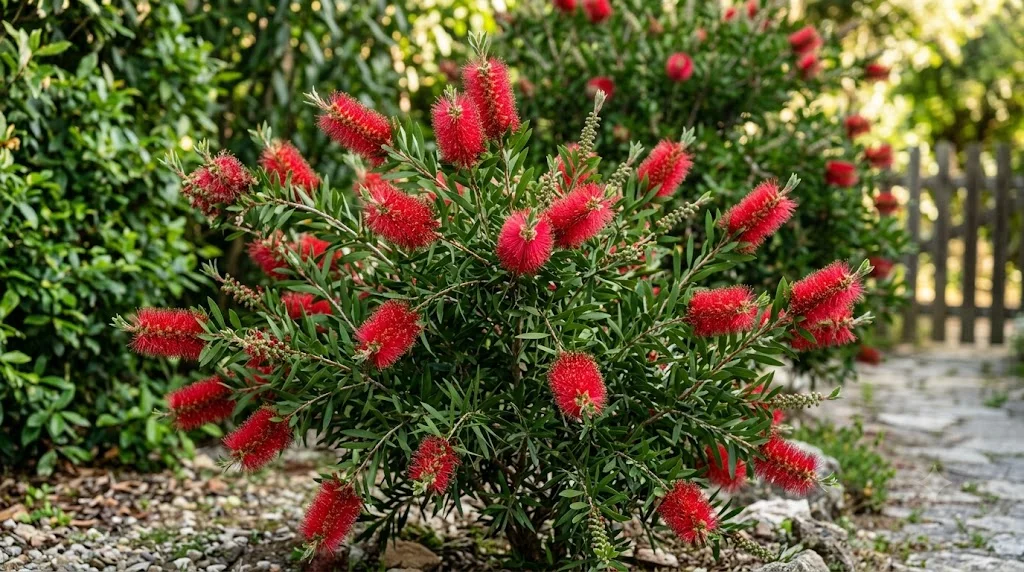

Lemon bottlebrush depends on abundant light to maintain dense foliage, sturdy shoots, and reliable flowering. Full sun is normally the best choice, although plants must be acclimatised when moved from protected conditions. Insufficient light weakens growth and reduces the number of flower spikes. Correct positioning is therefore one of the most important decisions in both garden and container cultivation.
Providing enough direct sunlight
Outdoor plants should ideally receive at least six hours of direct sunlight each day. Longer exposure generally produces stronger branching and more abundant flowers. Morning and midday sun are particularly valuable in cooler climates. A lightly shaded position may support survival but rarely delivers the finest display.
Sunlight helps shoots mature and develop the firmness required for winter resilience. Plants grown in shade often produce long, thin stems with wide gaps between leaves. These shoots bend easily and create an open, unbalanced crown. They may also be more susceptible to pests and environmental stress.
A south-facing garden position is usually suitable in temperate regions. West-facing walls can also provide excellent warmth and afternoon light. In very hot climates, some protection from the fiercest late-afternoon sun may reduce leaf scorch. Established plants usually tolerate heat well when their roots receive adequate moisture.
Nearby trees, buildings, and fences can change the light pattern through the seasons. A position that is sunny in spring may become shaded after deciduous trees develop leaves. Observe the site over several hours before planting permanently. Long-term light conditions matter more than a brief period of sunshine at midday.
More articles on this topic
Managing light for container and indoor plants
Container plants can be moved to take advantage of seasonal sunlight. A bright terrace, balcony, or courtyard is ideal during the active growing season. The pot should be turned regularly if light reaches only one side. This prevents the crown from leaning and encourages uniform branching.
Indoor plants need the brightest window available. South-facing glazing usually offers the strongest light in the Northern Hemisphere. A conservatory or sunroom provides better exposure than a standard room because light reaches the crown from several directions. Clean windows also transmit noticeably more light during winter.
Artificial plant lighting can supplement weak natural light. The lamp should provide an appropriate spectrum and remain close enough to influence growth without overheating foliage. A consistent daily light period is more useful than occasional illumination. Artificial lighting is most effective when combined with some natural daylight.
Leaves may yellow or fall after a sudden reduction in light. This commonly happens when outdoor plants are moved into winter accommodation. Some adjustment is normal, but severe loss suggests that the position is too dark or too warm. Cooler temperatures can reduce the plant’s metabolic demand when strong light is unavailable.
More articles on this topic
Preventing sun scorch and uneven growth
A plant raised indoors or overwintered under glass should not be placed immediately in intense outdoor sun. Its leaves have adapted to lower light and may scorch within hours. Begin with bright shade or gentle morning sun. Gradually extend the exposure over at least one week.
Sun scorch often appears as pale, cream, or brown patches on the most exposed leaves. The damaged areas will not turn green again. Remove only leaves that are completely dry or unattractive, since partly functional leaves still support recovery. New foliage should emerge normally once the plant has acclimatised.
Heat reflected from paving, walls, or glass can intensify sunlight around container plants. This may raise leaf and root temperatures considerably. Water demand increases rapidly under such conditions, even when the surrounding air does not feel exceptionally hot. Moving the pot slightly away from reflective surfaces can reduce stress.
Uneven light produces one-sided flowering and lopsided growth. Rotating a pot by a quarter turn every one or two weeks helps balance the crown. Garden plants cannot be rotated, so thoughtful initial positioning is essential. Selective pruning can later correct minor imbalance but cannot compensate fully for persistent shade.