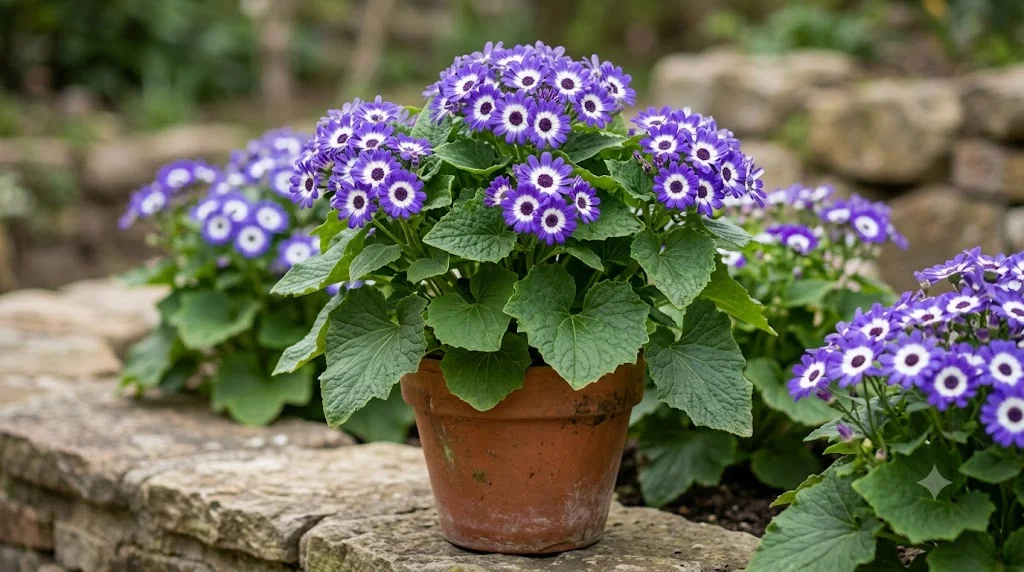

Cineraria does not require heavy structural pruning during its main flowering period. Most routine work involves removing faded blooms, damaged foliage, and weak stems without disturbing healthy buds. More substantial cutting back may be attempted after flowering when a plant is being retained for another season. Clean tools and conservative cuts reduce the risk of infection and unnecessary stress.
Deadheading and routine grooming
Remove individual flowers as they fade rather than waiting for an entire cluster to decay. Follow the flower stem downward and cut it just above healthy foliage or close to its point of origin. This keeps dead tissue from becoming trapped in the dense canopy. It also improves the plant’s appearance immediately.
Use small, sharp scissors or fine secateurs for accurate work. Blunt tools crush soft stems and leave ragged wounds. Clean the blades before use, especially when several plants are being groomed. Disinfect them again after cutting any tissue that looks diseased.
Do not remove unopened buds while taking out faded blooms. Cineraria flower clusters can contain blooms at several stages of development. Separate dead stems gently from those that are still active. Working slowly prevents accidental damage to the remaining display.
Deadheading does not always force a commercially produced cineraria to flower indefinitely. Its main purpose is sanitation and presentation rather than dramatic reblooming. The plant still follows a seasonal flowering cycle. Nevertheless, removing decaying flowers can preserve healthy surrounding blooms for longer.
More articles on this topic
Removing damaged leaves and stems
Yellow leaves can be removed when they no longer contribute meaningfully to the plant. Cut the leaf stalk near its base without injuring the crown. Avoid pulling firmly, because this can tear healthy tissue. A clean cut closes more predictably than an irregular wound.
Leaves affected by fungal spots should be removed promptly when the infection is limited. Place them directly into a waste bag and do not compost heavily diseased material. Clean the cutting tool after each group of infected leaves. Improve airflow and watering practices at the same time, because pruning alone will not remove the underlying cause.
Broken or collapsing stems should be cut back to firm healthy tissue. Inspect the base for softness, darkening, or unpleasant odour. These symptoms may indicate crown or stem rot rather than simple mechanical damage. Isolate the plant when infectious disease is suspected.
Avoid removing too many leaves at once. The foliage produces the energy needed to sustain roots and developing buds. Excessive defoliation weakens the plant and exposes the compost surface to faster drying. Retain every healthy leaf that is not causing a specific problem.
More articles on this topic
Cutting back after flowering
When the main display is over, spent flower stems can be removed completely. Cut them close to the crown while preserving healthy basal leaves and new shoots. This reduces the amount of decaying material and allows light to reach emerging growth. The work should be done with clean, precise cuts.
Do not cut the entire plant down to bare soil unless severe damage makes this unavoidable. Cineraria may not regenerate reliably from a crown that has lost all functional foliage. A moderate reduction is safer than drastic pruning. Leave enough healthy growth to maintain photosynthesis.
After cutting back, reduce watering slightly because the smaller canopy loses less moisture. The compost must still remain lightly and evenly moist. Waterlogging is especially dangerous when leaf area has been reduced. Check the pot rather than maintaining the previous flowering-season schedule.
Delay fertilizer until new growth becomes visible. Feeding immediately after a hard reduction can increase salt stress around inactive roots. Once fresh leaves expand, a dilute balanced fertilizer can be introduced gradually. Strong, compact regrowth indicates that the plant has responded well to pruning.