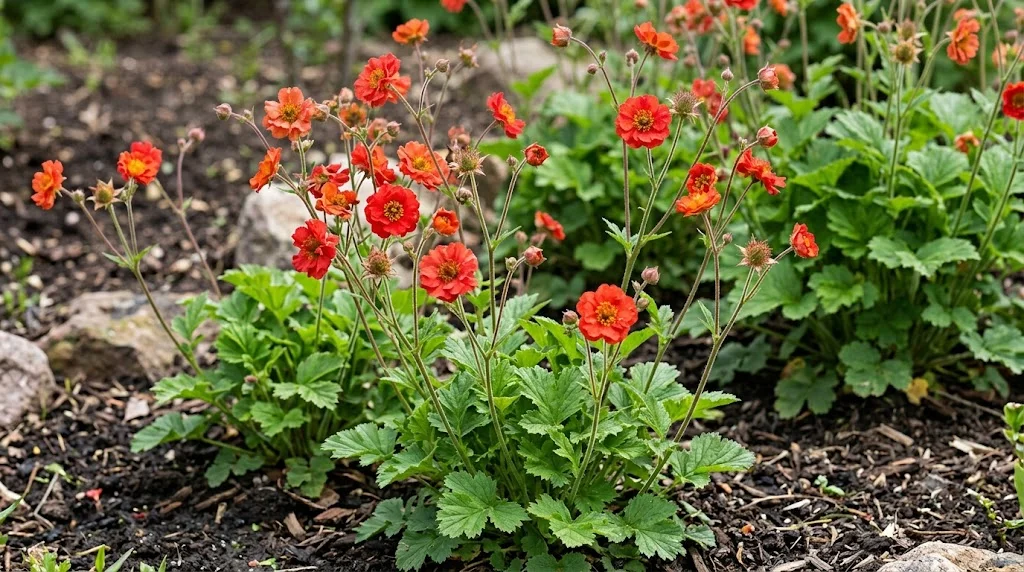

Chilean avens produces its strongest stems and most abundant flowers when it receives generous light without excessive heat stress. In cool and moderate climates, full sun is usually ideal, while warmer regions often require some protection during the hottest part of the day. Light levels influence flowering, stem strength, foliage quality, soil moisture, and the plant’s ability to compete with nearby vegetation. Choosing the right exposure is therefore one of the most important decisions made before planting.
Growing in full sun
A full-sun position generally provides at least six hours of direct light during the main growing season. In temperate areas with mild summers, this exposure encourages compact growth and plentiful flower buds. Stems tend to remain stronger and less inclined to lean toward neighboring plants. Good light also helps foliage dry after rain.
Morning-to-afternoon sun is particularly suitable where temperatures remain moderate. The plant can photosynthesize efficiently without experiencing extreme late-day heat. Soil should still retain enough moisture to prevent repeated wilting. A sunny position with dry, shallow soil is less suitable than a slightly shaded position with balanced moisture.
Dark-flowered and double cultivars often show their color and form most clearly in bright light. However, intense sun can fade some delicate shades or shorten the life of individual blooms. This does not necessarily reduce the total flowering season if new buds continue to open. Regular deadheading and adequate moisture help maintain the display.
Observe how sunlight changes through the year. A site that receives full sun in spring may become shaded after nearby shrubs and trees leaf out. Conversely, a winter-shaded bed may be bright enough during the plant’s active season. Evaluate the exposure between late spring and midsummer rather than relying on a single observation.
More articles on this topic
Using partial shade in warm conditions
Partial shade is valuable in climates with hot summers or intense afternoon sunlight. A location with morning sun and light afternoon shade often provides an effective balance. The plant receives enough energy to flower while avoiding the most stressful temperatures. Soil moisture also remains more stable in this exposure.
Open, dappled shade beneath high-canopied trees may be suitable if root competition is not severe. Dense shade under evergreen trees is usually less successful because both light and water are limited. Tree roots can dry the soil even when the air feels cool. Additional irrigation may not fully compensate for constant competition from a mature root system.
Plants in partial shade may grow slightly taller and flower less heavily than those in full sun. Stems can lean if light reaches the clump mainly from one direction. Rotate containers periodically or position garden plants where light is distributed evenly. Support may be needed for tall cultivars grown near walls or dense shrubs.
Too much shade produces a loose rosette, elongated stems, and relatively few flower buds. Foliage may remain damp for longer after rainfall, increasing the likelihood of spotting diseases. If a mature plant repeatedly fails to flower, assess the daily light pattern before applying fertilizer. Moving or dividing the clump may be more effective than feeding it.
More articles on this topic
Balancing light with heat and moisture
Light cannot be considered separately from temperature and soil moisture. A full-sun location in cool, moisture-retentive soil may be ideal, while the same exposure in a hot, sandy bed can cause severe stress. Leaves may scorch, flowers may fade quickly, and growth may stop during midsummer. Site selection should account for all three factors.
Mulching and deep watering help plants tolerate sunny conditions. Organic matter improves the soil’s ability to retain moisture without keeping the crown saturated. During heatwaves, temporary shading can protect newly planted or container-grown specimens. Established plants usually recover more readily when cool conditions return.
Walls, paving, gravel, and dark surfaces can reflect or store significant heat. A bed described as receiving only moderate sunlight may still become extremely hot because of surrounding materials. Observe afternoon conditions at plant level rather than judging exposure from hours of sunlight alone. Good airflow can reduce some heat stress but cannot replace adequate moisture.
Seasonal adjustment is especially important for containers. A pot may be placed in full spring sun and later moved to light afternoon shade during summer. This flexibility helps preserve flowering and reduces irrigation demand. Return the plant to brighter conditions when temperatures moderate, ensuring that it continues receiving enough light for healthy growth.