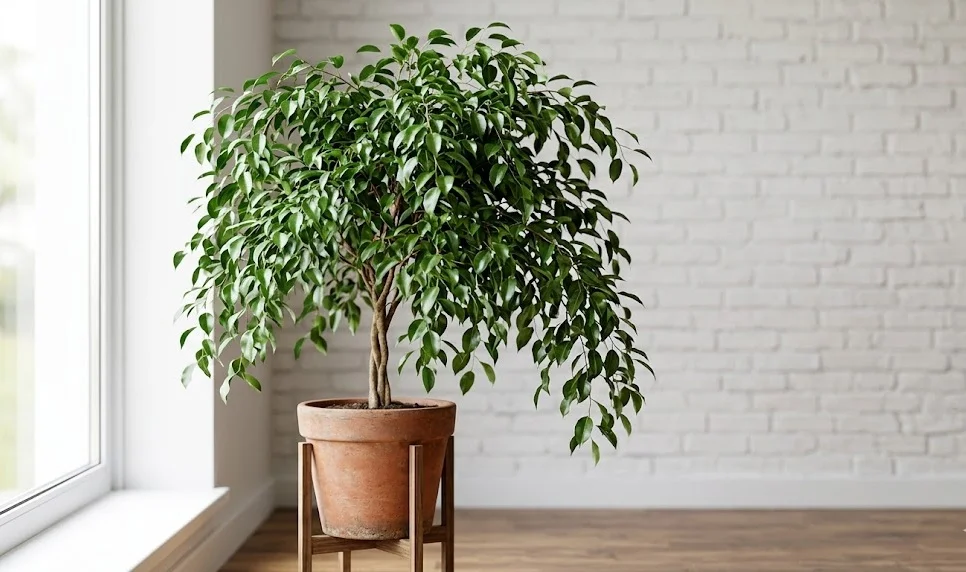

Watering and fertilizing weeping fig well is less about rigid schedules and more about reading the plant, the pot, and the season. This species reacts poorly to both drought stress and waterlogged roots, so balance is essential. Nutrients also need to match the plant’s growth rhythm, because excess feeding during low light can create weak, pest-prone growth. Professional care depends on consistency, restraint, and close observation.
Understanding moisture needs
Weeping fig prefers evenly moderated soil moisture, not constant wetness. The upper layer of the potting mix should usually be allowed to dry slightly before the next watering. This encourages oxygen to return to the root zone. Roots that remain wet without air become weak and vulnerable to rot.
The finger test remains a useful practical method, especially for home growers. If the top few centimeters feel dry but the deeper mix still has slight moisture, watering may be appropriate. If the lower mix is still wet, watering should be delayed. A moisture meter can help, but it should be interpreted alongside the plant’s appearance and pot weight.
Leaf behavior can give clues, but it should not be the only guide. Slight wilting may indicate dryness, while yellowing and drop may indicate either overwatering or stress from another cause. Because symptoms overlap, soil inspection is essential. Guessing based only on leaves often leads to the wrong correction.
Pot size, soil composition, room temperature, humidity, and light all influence watering frequency. A plant in bright filtered light uses water faster than one in a dim corner. A clay pot may dry more quickly than a plastic one. The same plant may need very different care in summer and winter.
More articles on this topic
Proper watering technique
Water should be applied evenly across the soil surface until it runs from the drainage holes. This ensures the entire root ball receives moisture. Light splashes that wet only the surface encourage shallow rooting and leave dry pockets deeper in the pot. Thorough watering followed by proper drying is healthier than frequent small amounts.
Excess water must be removed from the saucer or decorative container. Even a short period of standing in water can harm fine roots if it happens repeatedly. The plant may look fine at first, but root stress often appears later as yellowing leaves and decline. Good drainage is a non-negotiable part of successful care.
Water temperature should be moderate, not icy cold. Very cold water can shock roots, especially in winter. Room-temperature water is safer and closer to the plant’s preferred conditions. This simple habit reduces unnecessary stress.
The time of day can also matter in cool seasons. Morning watering gives the pot and foliage environment time to stabilize before night. Avoid leaving wet soil in a cold room overnight if the plant is already stressed. Warm, bright conditions after watering help roots function efficiently.
More articles on this topic
Adjusting watering by season
In spring, watering usually becomes more frequent as new growth begins. The plant starts using more moisture as days lengthen and temperatures rise. This is also when small errors are forgiven more easily because roots are active. Still, the soil should not be kept constantly wet.
In summer, water demand can rise sharply. Warm rooms, stronger light, and active growth all increase moisture use. Larger plants with dense canopies may dry faster than expected. Regular checking is better than assuming a fixed weekly routine will remain accurate.
In autumn, the plant’s water use often slows before indoor temperatures change noticeably. Day length is a powerful signal, even in heated rooms. Watering should be reduced gradually as growth becomes slower. This adjustment prevents excess moisture from lingering in the root zone.
Winter watering requires the most restraint. The plant may still need water, but intervals are usually longer. Dry indoor air can make leaves lose moisture while the soil remains wet, creating confusing symptoms. Checking both foliage and soil prevents overcorrection.
Fertilizer choice and application
A balanced liquid fertilizer for foliage plants is generally suitable during active growth. The nutrient ratio does not need to be extreme, because weeping fig is valued for steady foliage and structure rather than flowers or fruit. Moderate nitrogen supports leaf production, while potassium and micronutrients help overall vigor. A complete formula is usually preferable to a single-purpose feed.
Fertilizer should be applied only to moist soil. Feeding a dry root ball can damage roots and cause leaf stress. Watering first or fertilizing during a normal watering session is safer. Diluted fertilizer is often better than strong occasional feeding.
During spring and summer, feeding every few weeks may be appropriate for a healthy, actively growing plant. Slower-growing plants in lower light need less. Overfertilizing does not compensate for poor light, compacted soil, or root problems. It often makes those problems worse.
In autumn and winter, fertilizer should be reduced or paused. When growth slows, nutrient uptake also declines. Unused salts can accumulate in the soil and interfere with root function. Resuming feeding in spring should be gradual and based on visible growth.
Recognizing nutrient and salt problems
Pale new growth may suggest nutrient deficiency, but it can also result from low light or root stress. Before increasing fertilizer, the overall care situation should be reviewed. If the soil is old, compacted, or waterlogged, nutrients may not be available even when fertilizer has been applied. Healthy roots are necessary for effective feeding.
Brown leaf tips can appear when fertilizer salts accumulate, especially in containers with poor drainage. Hard water can contribute to mineral buildup as well. Occasional flushing with clear water can help remove excess salts from the potting mix. This should be done only when drainage is excellent.
Weak, overly soft growth may indicate too much fertilizer in relation to available light. Such growth is more attractive to pests and more likely to collapse under stress. Reducing feeding and improving light usually produces firmer, healthier leaves. A compact canopy is more valuable than rapid expansion.
A professional approach treats fertilizer as support, not a cure. Nutrients work best when light, watering, soil, and temperature are already suitable. When the plant is stressed, heavy feeding rarely helps. Restoring balance should always come before pushing growth.