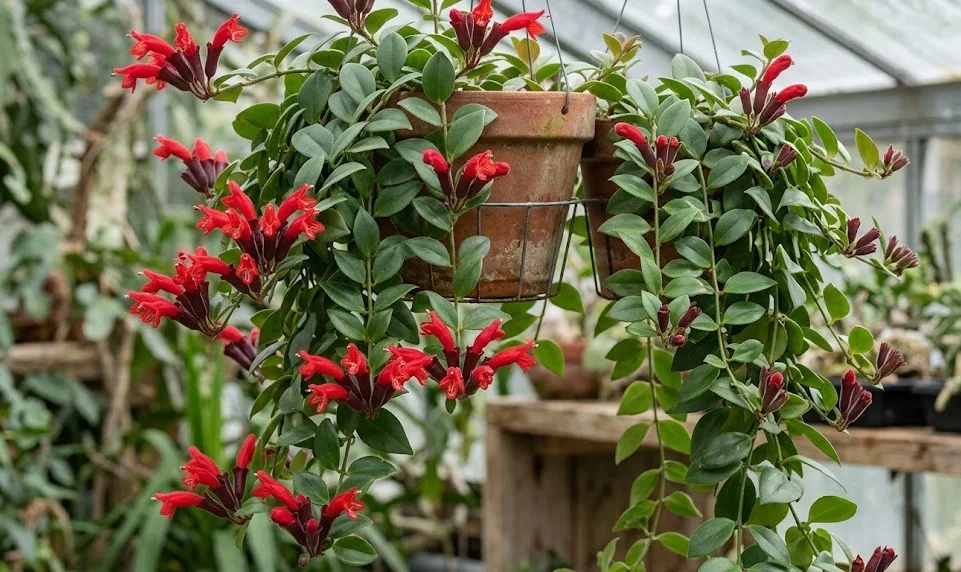

The trailing lipstick plant is generally resilient indoors, but it can suffer when air is too dry, soil is too wet, or the plant is weakened by poor light. Most pest and disease problems begin quietly, often on hidden stems or leaf undersides. Early detection makes treatment simpler and protects the plant’s ornamental value. Prevention depends on clean growing conditions, correct watering, and regular inspection.
Root rot and moisture-related diseases
Root rot is one of the most serious problems for the trailing lipstick plant. It usually develops when the potting mix remains wet for too long. Dense soil, oversized pots, blocked drainage holes, and winter overwatering all increase the risk. Once roots lose oxygen, decay organisms can spread quickly.
Symptoms often include yellowing leaves, wilting despite wet soil, and soft growth at the base. The potting mix may smell sour or stale. Leaves may drop suddenly because damaged roots can no longer supply water properly. This can confuse growers because the plant appears thirsty while the soil is already wet.
Treatment begins by removing the plant from the pot and inspecting the roots. Healthy roots are usually firm and pale, while rotten roots are brown, black, soft, or hollow. Damaged roots should be trimmed away with clean tools. The plant should then be repotted into a fresh, airy mix and watered more cautiously.
Prevention is much easier than rescue. Use a well-draining substrate and a pot with drainage holes. Water only when the upper mix has dried slightly. In cooler months, reduce watering because the plant uses moisture more slowly.
More articles on this topic
Leaf spots, fungal issues, and poor airflow
Leaf spots may appear when foliage remains wet in still air. They can also result from stress, poor hygiene, or splashing contaminated potting mix onto leaves. Spots vary in colour and shape, but they often reduce the clean glossy appearance of the plant. A few damaged leaves may not threaten the whole plant, but spreading symptoms should be addressed.
Good airflow is an important preventive measure. The plant should not be packed tightly among other plants without space for air movement. Hanging baskets need enough clearance around the stems. Dense growth can be thinned lightly if the centre becomes stagnant.
Watering technique also matters. Water should be directed onto the potting mix rather than repeatedly over the leaves. If foliage does become wet, it should dry reasonably quickly. Evening misting in a cool room is especially risky because leaves may remain damp overnight.
Affected leaves can be removed if they are badly marked. Tools should be cleaned before and after pruning. The surrounding conditions should then be improved rather than relying only on sprays. A healthier environment is the most effective long-term defence against recurring leaf problems.
More articles on this topic
Mealybugs and scale insects
Mealybugs are common indoor pests on trailing lipstick plants. They appear as small white cottony clusters, often hiding in leaf joints and along stems. They feed by sucking sap, which weakens growth and may cause sticky honeydew. Severe infestations can lead to distorted shoots and general decline.
Scale insects are more discreet. They often look like small brown or tan bumps attached to stems and leaves. Because they do not move much once settled, they can be mistaken for part of the plant. Like mealybugs, they remove sap and may produce sticky residues.
Manual removal is effective when infestations are small. A cotton swab lightly moistened with alcohol can be used carefully on individual pests. Insecticidal soap or horticultural oil may help, but coverage must reach hidden areas. Repeated treatments are usually needed because eggs and young pests may escape the first application.
Isolation is important when pests are found. The plant should be kept away from other houseplants until the problem is controlled. Nearby plants should also be inspected because pests often spread before they are noticed. Regular checks are the best way to prevent a small colony from becoming a major infestation.
Spider mites, aphids, and thrips
Spider mites thrive in dry, warm indoor conditions. They are tiny and may not be noticed until fine webbing or speckled leaves appear. The leaves may lose their glossy colour and take on a dull, dusty look. Dry air and drought stress make the plant more vulnerable.
Aphids are more common on tender new growth and flower buds. They may cluster on soft stems and distort young leaves. They also produce sticky honeydew, which can encourage sooty mould. Although they are often easier to see than mites, they can multiply quickly.
Thrips can cause silvery streaks, distorted leaves, and damaged flowers. They are slender insects that may hide inside buds or along leaf surfaces. Their damage is often mistaken for nutrient issues or environmental stress. Close inspection is needed when new growth looks scarred or irregular.
Treatment should combine cleaning, environmental correction, and appropriate pest control. Showering the foliage gently can reduce mite and aphid numbers, provided the plant dries well afterward. Insecticidal soap may be useful for soft-bodied pests. Persistent thrips may require repeated treatment and strict isolation.
Building a prevention routine
A strong plant is less likely to suffer severe pest and disease problems. Bright indirect light, warm temperatures, and correct watering build natural resilience. Weak plants kept too dark or too wet are much more vulnerable. Good culture is therefore the foundation of plant protection.
New plants should be inspected before being placed near an existing collection. Pests often enter the home on newly purchased specimens. A short quarantine period can prevent wider spread. This is especially useful for collectors with many indoor plants.
Cleanliness also reduces risk. Dead leaves, old flowers, and fallen debris should be removed from the pot surface. Dirty tools can transfer disease between plants, so pruning equipment should be sanitised. Decorative pots should be cleaned if they have held a diseased plant.
Monitoring should be part of regular care rather than an emergency response. Look under leaves, along stems, and around nodes during watering. Early signs are often subtle but manageable. Consistent observation keeps the trailing lipstick plant healthy and attractive over the long term.