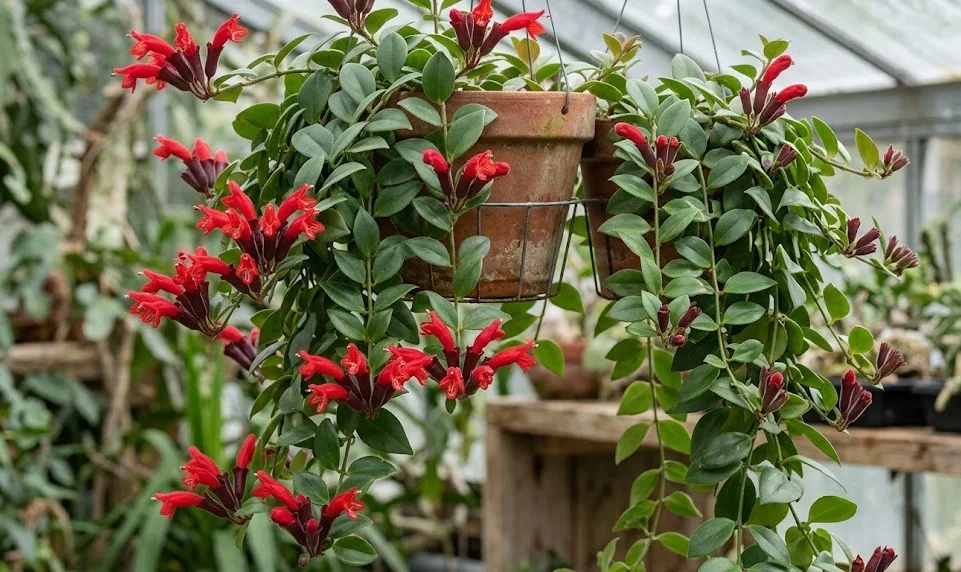

Watering and fertilising the trailing lipstick plant requires balance rather than intensity. The plant dislikes drought stress, but it is even less tolerant of saturated roots. It needs regular nutrients during active growth, but heavy feeding can reduce flowering and damage roots. A measured routine creates glossy foliage, sturdy stems, and a better chance of seasonal blooms.
Reading the plant and the pot before watering
The most reliable watering method begins with observation. The top layer of the potting mix should be allowed to dry slightly before water is added again. This prevents the root zone from staying constantly wet. At the same time, the entire root ball should not be left dry for extended periods.
Pot weight is a useful guide. A freshly watered pot feels noticeably heavier than one that is ready for watering. Over time, this simple habit helps growers understand the plant’s rhythm. It is especially helpful in hanging baskets, where the surface may dry faster than the deeper mix.
Leaf texture can also provide clues. Slight softness may indicate that the plant needs water, but severe wilting means it has already been stressed. Yellowing leaves can result from both overwatering and underwatering, so they should not be interpreted alone. The condition of the potting mix gives the most accurate answer.
Watering frequency changes with the season and the room environment. A plant in a warm, bright room may need water much more often than one in a cooler, shaded space. The same plant may behave differently in summer and winter. Fixed calendar watering is therefore less reliable than checking conditions.
More articles on this topic
Watering technique and water quality
When watering, apply enough water to moisten the full root ball. A small splash on the surface may leave deeper roots dry. Thorough watering followed by complete drainage is healthier than frequent shallow watering. This pattern also encourages roots to occupy the pot more evenly.
Drainage must be immediate and unobstructed. If water remains in the saucer or decorative pot, it should be poured away. Roots deprived of oxygen are more vulnerable to rot pathogens. Even a plant that enjoys humidity can decline quickly in stagnant water.
Room-temperature water is best. Very cold water can shock roots, especially in winter. Letting tap water stand for a short time can also make watering less abrupt for sensitive plants. In areas with very hard water, occasional use of rainwater or filtered water may reduce mineral buildup.
The plant should be watered at the soil level rather than over the foliage. Wet leaves are not automatically harmful, but they dry slowly in still indoor air. Repeatedly wet foliage may encourage leaf spotting or fungal issues. Keeping the crown and leaves relatively dry is a safer routine.
More articles on this topic
Fertilising during active growth
Feeding should begin when the plant is actively producing new growth. This is usually in spring, when light levels rise and temperatures become more stable. A balanced liquid houseplant fertiliser at half strength is often sufficient. The goal is steady support, not forceful growth.
Fertiliser can be applied every few weeks during the main growing season. The exact interval depends on the product strength, potting mix, and plant response. If growth is compact and leaves are a healthy green, the feeding level is probably adequate. If leaf tips brown or white crust appears on the surface, feeding may be too strong.
A fertiliser that includes micronutrients can be beneficial in container culture. Plants grown indoors rely entirely on what the potting mix and fertiliser provide. Over time, nutrients are washed out or depleted. A complete formula helps prevent subtle deficiencies.
Avoid feeding a dry plant. Fertiliser salts can irritate roots when the root ball is too dry. Watering lightly before feeding, or applying fertiliser as part of a normal watering routine, is safer. This helps distribute nutrients evenly through the mix.
Adjusting nutrition for flowering
Flowering depends on more than fertiliser. Light, maturity, temperature, and general plant health all play major roles. However, nutrition can influence whether the plant invests in leaves or flowers. Excess nitrogen is one of the most common reasons for lush growth with few buds.
A balanced or slightly bloom-supportive fertiliser may be used during the period leading into flowering. This does not mean using a very strong bloom booster. High concentrations of phosphorus or potassium can still damage roots if misused. Moderate feeding works better than aggressive correction.
The plant should not be fertilised heavily when buds are already under stress. If the room is too cold, too dark, or too dry, fertiliser will not solve the problem. Correcting growing conditions should come first. Nutrients are useful only when the plant is able to use them.
After flowering, light feeding can help the plant recover and produce new shoots. This is also a good time to prune lightly if stems have become too long. New growth formed after flowering may carry future bloom potential. Care after flowering is therefore part of the next flowering cycle.
Preventing watering and feeding problems
Overwatering often appears as yellowing leaves, soft stems, and a sour smell from the potting mix. The plant may also drop leaves even though the soil appears wet. In this situation, adding more water makes the problem worse. The root zone needs air, and the watering routine should be corrected immediately.
Underwatering can cause shrivelling, dry leaf edges, and sudden leaf drop. Repeated drought stress weakens the plant and may prevent flowering. A severely dry root ball may repel water at first, so slow rehydration is useful. Soaking the pot briefly and then draining it fully can help restore even moisture.
Excess fertiliser can look like brown leaf tips, crusty deposits, or weak, distorted growth. Flushing the potting mix with clean water can reduce salt accumulation. Feeding should then be paused until the plant resumes normal growth. Stronger fertiliser is rarely the solution to a struggling plant.
The best routine is flexible and responsive. Brightness, temperature, pot size, root health, and potting mix all affect how much water and fertiliser the plant can use. A healthy trailing lipstick plant grows steadily when these factors are kept in balance. Careful observation is more valuable than following a rigid schedule.