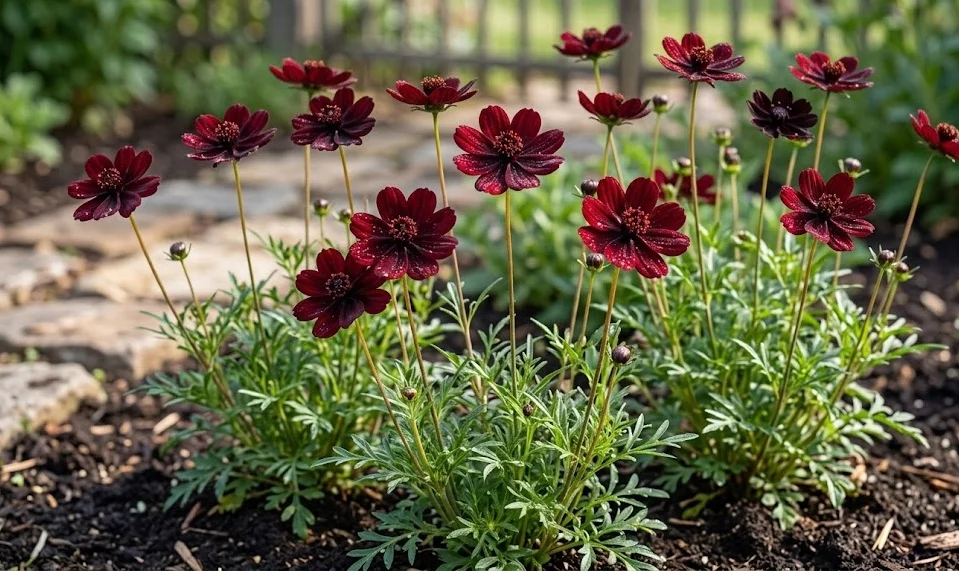

Chocolate cosmos needs generous light to produce strong stems, rich flower color, and the warm fragrance that makes it so distinctive. Although it can tolerate some light shade, it performs best when given a bright and warm position. Too little sun leads to weak growth, fewer flowers, and a less satisfying display. Understanding how light changes through the day and season helps place the plant where it can thrive.
Full sun and flower performance
Full sun is usually the best condition for chocolate cosmos. In a temperate garden, six or more hours of direct sunlight supports strong flowering. The plant responds to warmth as well as brightness, which is why sheltered sunny sites are especially valuable. A sunny border near a path or terrace often brings out its best qualities.
Flower color is also influenced by light. In strong but not scorching sun, the dark burgundy petals appear deep, velvety, and intense. In too much shade, the flowers may be fewer and the plant may stretch toward the light. The overall shape can become loose rather than elegant.
Fragrance is often more noticeable in warm, sunny weather. The chocolate-like scent is subtle, so the right position matters. A plant in a cool, shaded corner may still bloom, but its scent may be harder to appreciate. For this reason, light and placement should be considered together.
Sun-loving does not mean the plant should be neglected in extreme heat. In hot climates, full afternoon sun can become stressful, especially in containers. The best light exposure may be morning sun with light afternoon protection. This gives the plant energy without exposing it to the harshest conditions.
More articles on this topic
Managing partial shade
Partial shade can work if it is bright and open. Morning sun followed by light afternoon shade is often suitable in warmer areas. This arrangement can reduce wilting and help flowers last longer. It is very different from deep shade under dense trees or buildings.
The quality of shade matters. Dappled shade from high, open branches may be acceptable for part of the day. Dense shade that blocks direct sun for most of the day is not suitable. Chocolate cosmos needs enough light to build energy in its tuberous roots.
Plants grown in partial shade should be monitored for stretching. Long gaps between leaves, leaning stems, and delayed flowering suggest insufficient light. Moving container plants is easy, but border plants may need to be relocated during the next suitable season. Correcting light problems often improves flowering more than extra feeding.
In partial shade, watering should also be adjusted. Soil may stay moist longer where sun is reduced. Applying the same watering routine used for full-sun plants can lead to overly wet roots. Light levels and moisture use are always connected.
More articles on this topic
Container placement and seasonal changes
Container-grown chocolate cosmos gives gardeners more control over light exposure. Pots can be placed in the sunniest position during spring and early summer. If midsummer heat becomes intense, they can be moved slightly away from reflected heat. This flexibility is one of the main advantages of container culture.
Patios, walls, paving, and balconies can intensify sunlight and heat. A position that seems ideal in May may become harsh in July. Dark containers can also heat the root zone quickly. If plants wilt repeatedly despite adequate moisture, the pot may be overheating.
Seasonal sun angles should be considered. A spot that receives full sun in early summer may become shaded later by taller perennials, shrubs, or buildings. Chocolate cosmos should not be buried behind plants that expand rapidly. Good planning keeps it in useful light throughout its flowering season.
Indoor overwintered pots should not be moved abruptly into strong outdoor sun. New shoots grown under cover are tender and can scorch. Gradual acclimatization protects young foliage. Once hardened off, the plant can return to its bright summer position.