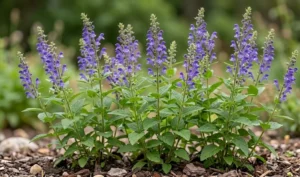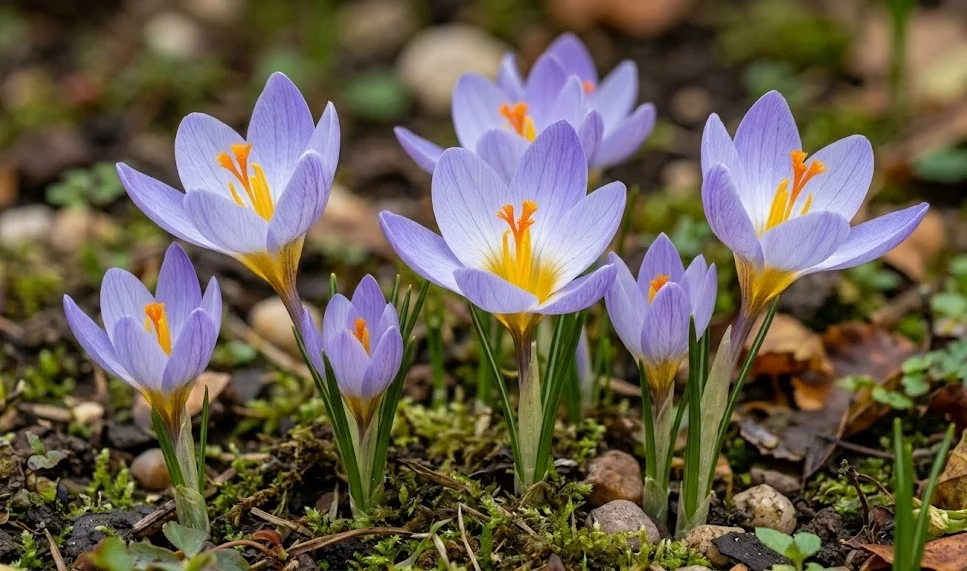

Beautiful crocus is one of the most refined autumn-flowering bulbs for gardens that need quiet colour after the main summer display has passed. Its soft lilac to violet flowers appear close to the ground, often when many borders are already slowing down. The plant looks delicate, yet it is surprisingly dependable when planted in the right soil and position. Good care begins with understanding its seasonal rhythm rather than treating it like a spring-flowering bulb.
Understanding its natural growth cycle
Beautiful crocus grows from a corm, not a true bulb, and this detail matters for care. The corm stores energy during the active growing season and uses that reserve to produce flowers and foliage. Flowering usually takes place in autumn, while the leaves often remain active through the cooler months. This cycle means that the plant should not be disturbed when it is building reserves.
The flowers often appear before the foliage is fully developed, which can make the plant seem almost sudden in the border. This is normal and should not be mistaken for weak growth. After flowering, the leaves continue their important work by producing food through photosynthesis. Removing or damaging them too early reduces the strength of next year’s display.
In mild climates, the leaves may persist for much of winter and early spring. In colder gardens, growth can slow, but healthy corms normally resume activity when conditions improve. The plant is adapted to cool, moist growing periods followed by a drier rest. Matching this rhythm in cultivation is one of the keys to long-term success.
Gardeners often fail with autumn crocuses because they water and feed them at the wrong time. The active phase is not high summer, but the cooler part of the year. Summer dryness is usually not a problem if the corms are already established. Excessive summer moisture, however, can cause rot and gradual decline.
More articles on this topic
Choosing the right garden position
Beautiful crocus performs best in a bright position with plenty of light during autumn, winter, and early spring. Full sun is ideal in open gardens, especially where the soil drains well. Light shade can also work beneath deciduous shrubs or trees, because the canopy is thinner during the plant’s active season. Dense evergreen shade is rarely suitable because it reduces both flowering and foliage strength.
The site should be sheltered enough to protect the low flowers from trampling and heavy splash from rain. A raised bed, gravel garden, rock garden, or front edge of a border often suits it well. The flowers are small, so they are easiest to appreciate where they can be seen closely. Planting them too far back in a mixed border often wastes their ornamental value.
Good air movement is helpful because it keeps the foliage dry and reduces fungal problems. This does not mean the plant should be exposed to harsh wind. A calm but open position gives the best balance between protection and ventilation. Stagnant, damp corners are much more risky than bright, airy places.
Avoid planting beautiful crocus in lawns that are mown early or heavily walked on. Unlike some spring crocuses, it needs its foliage to remain undisturbed after autumn flowering. If it is planted in grass, the area must be left unmown until the leaves naturally yellow. In most gardens, a dedicated border or naturalised patch is easier to manage.
More articles on this topic
Preparing suitable soil
The best soil for beautiful crocus is well drained, moderately fertile, and not compacted. Sandy loam, stony loam, and improved garden soil can all work well. Heavy clay is more difficult because it holds water around the corms during the dormant period. If clay soil is unavoidable, planting on a slope or in a raised bed greatly improves the chances of success.
Drainage is more important than richness. A very fertile, moisture-retentive soil can encourage soft growth and increase the risk of rot. Mixing in grit, coarse sand, fine gravel, or leaf mould helps create a more open structure. The aim is a soil that holds enough winter moisture but does not remain wet and airless.
Beautiful crocus prefers a soil that is neutral to slightly alkaline, although it can tolerate mildly acidic conditions if drainage is good. Extremely acidic, peaty, or waterlogged soil is less suitable. A light dressing of garden lime may help in strongly acidic soils, but it should be used carefully. Improving structure is usually more important than changing pH dramatically.
Before planting, remove perennial weeds thoroughly. Once the corms are established, deep weeding becomes difficult without disturbing them. Fine-rooted weeds compete for moisture and nutrients during the active growing season. Clean soil at the start saves considerable trouble later.
Seasonal watering and moisture control
Watering beautiful crocus should follow the seasons rather than a fixed weekly routine. During active root and leaf growth, the soil should be lightly moist but never saturated. Autumn rains are often enough in many climates, especially in open ground. Extra watering is useful only during unusually dry autumns or winters.
Summer watering should be minimal once the foliage has died back. The dormant corms are resting and need dry, airy conditions. Constant irrigation from nearby summer bedding plants can be harmful. This is why beautiful crocus is best paired with plants that also tolerate drier summer soil.
Container-grown plants need closer attention because pots dry out and wet up more quickly than garden beds. Water them when growth is active, then gradually reduce watering as the leaves fade. During dormancy, keep the compost barely moist or almost dry, depending on the temperature. Pots should never stand in saucers of water.
Mulching can help moderate soil moisture, but it must be used lightly. A thin layer of gravel or fine grit is often better than a thick organic mulch. Heavy mulch can hold dampness around the neck of the corms and bury the shoots too deeply. A mineral mulch also shows off the flowers and keeps soil splash off the petals.
Feeding for steady flowering
Beautiful crocus is not a heavy feeder, but it benefits from modest nutrition at the right time. The best feeding period is after flowering, while the leaves are active. At this stage, the corms are rebuilding their reserves. A low-nitrogen bulb fertiliser or a balanced organic feed can support this process.
Avoid high-nitrogen fertilisers because they encourage lush leaves at the expense of strong corms. Soft, overfed foliage is also more vulnerable to disease. A light application is enough for plants growing in reasonably fertile soil. Overfeeding is usually more damaging than underfeeding.
In poor sandy soils, an annual top-dressing of compost can improve fertility without making the bed too rich. The compost should be fine, mature, and applied thinly. Work it around the planting area rather than digging deeply into the corm zone. Deep cultivation can damage resting corms and young offsets.
Container plants need slightly more regular feeding because nutrients wash out of the compost. A diluted liquid feed during the leaf stage is usually sufficient. Feeding should stop when the leaves begin to yellow. Continuing to feed dormant plants serves no purpose and can leave salts in the compost.
Maintaining the display through the year
After flowering, remove collapsed petals only if they look untidy or encourage mould. The foliage should always be allowed to yellow naturally. This stage may not be visually exciting, but it is essential for next year’s flowers. Cutting leaves while they are still green weakens the plant.
Marking the planting area is a practical habit, especially in busy borders. Because the plant disappears underground during dormancy, it is easy to dig into the corms by accident. Small labels, stones, or a planting map can prevent damage. This is particularly useful when summer perennials grow over the same space.
The clumps should be observed rather than frequently disturbed. If flowering becomes crowded or weaker after several years, lifting and dividing may help. The best time is during dormancy, after the leaves have died back. Replant the healthiest corms promptly into refreshed, free-draining soil.
Beautiful crocus combines well with low grasses, dwarf sedums, small autumn cyclamen, and other restrained companions. Choose neighbours that do not smother the flowers or compete aggressively. The plant looks best in small drifts rather than isolated single points. Repetition gives a natural, elegant effect in both formal and informal gardens.
Common care mistakes to avoid
The most common mistake is planting beautiful crocus in soil that stays wet during summer. Dormant corms are especially vulnerable to rot in these conditions. A bed that seems acceptable in spring may become unsuitable if it receives regular irrigation all summer. Drainage should be assessed across the whole year, not just at planting time.
Another frequent error is cutting the leaves too soon. The leaves may look plain compared with the flowers, but they are the plant’s energy system. Removing them early interrupts the renewal of the corm. Weak flowering in later years is often linked to repeated premature tidying.
Planting too deeply can also reduce performance. The shoots must reach the surface easily in autumn, especially in heavier soil. A moderate planting depth protects the corm without exhausting it. If flowers fail to appear but leaves emerge weakly, depth and compaction should be checked.
Finally, beautiful crocus should not be treated as a thirsty bedding plant. It prefers a clear alternation between moist growth and drier rest. Constant attention can be worse than thoughtful restraint. When the site is right, the plant often thrives with quiet, seasonal care.