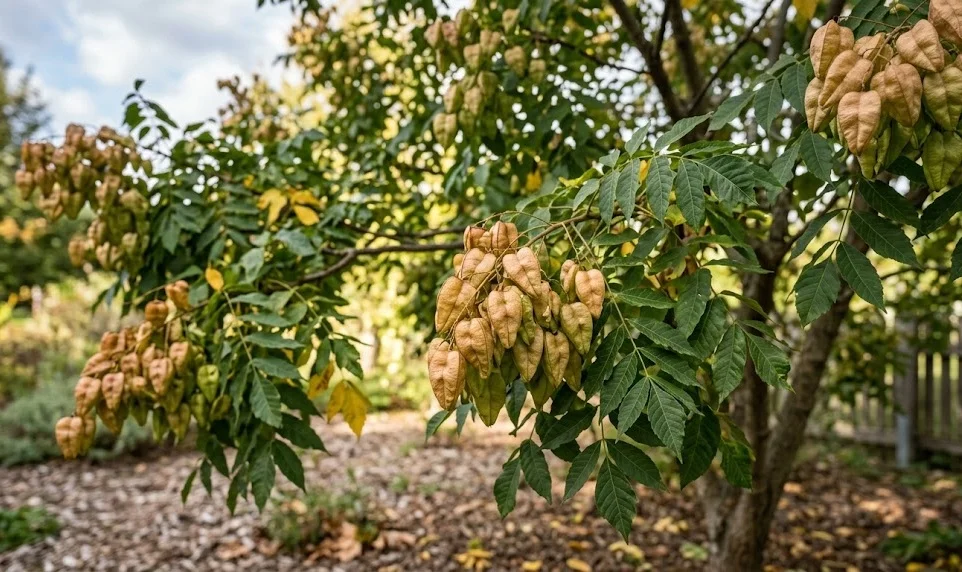

Successfully establishing a new specimen in the landscape depends entirely on selecting an appropriate location that fulfills its specific physiological requirements. This resilient tree thrives best when positioned in an open area that receives unobstructed, direct sunlight for most of the day. Proper site assessment also involves examining underground utilities and maintaining a safe distance from permanent structural foundations. Preparing the planting site with meticulous care ensures that the root system can transition smoothly from the nursery container to the native soil profile.
Soil texture and drainage capability must be evaluated prior to breaking ground to avoid creating a lethal waterlogged environment. While the species adapts to various soil types, heavy, poorly drained clay can severely restrict early root respiration and development. Conducting a simple percolation test helps determine if the selected site requires modification or structural drainage intervention. Incorporating well-decomposed organic matter across a wide area improves soil structure without creating distinct substrate boundaries that discourage root exploration.
The chemical profile of the soil should be tested to determine baseline nutrient levels and pH status before planting. Although this tree demonstrates remarkable tolerance for alkaline conditions, extreme pH values can still interfere with essential nutrient uptake. Adjusting the soil chemistry is much more effective when performed over the entire planting zone rather than just within the individual hole. Ensuring a hospitable chemical and physical environment gives the young tree the best possible start in its new permanent location.
Wind exposure is another factor that merits consideration during the site selection process, particularly in open or coastal areas. Young trees possess flexible wood that can bend significantly under high wind pressure, potentially disrupting newly forming root connections. Choosing a location that offers slight protection from prevailing gales can prevent structural deformation during the critical first growing season. Once fully established, the tree develops the necessary wood strength to withstand normal environmental wind patterns independently.
Step-by-step planting methodology for optimal establishment
The actual planting process requires precise execution to ensure the root flare sits at the correct level relative to the surrounding grade. Excavating a hole that is twice as wide as the root ball but exactly the same depth is standard professional practice. Planting too deeply is a frequent cause of delayed failure, as buried bark quickly succumbs to rot and disease. The bottom of the hole must remain firm and unexcavated to prevent the heavy root ball from settling over time.
More articles on this topic
Carefully remove the tree from its container or burlap wrapping to inspect the root system for any structural defects. Girdling or circling roots must be cleanly severed or straightened out to prevent them from choking the main trunk as they mature. Gently loosen the outer edge of the root ball to encourage immediate lateral root growth into the surrounding native soil. Position the tree in the center of the excavated hole, ensuring the trunk stands perfectly vertical from all viewing angles.
Backfilling the hole should be done using the native soil that was excavated, avoiding the temptation to add rich amendments directly to the hole. Layering different soil types can disrupt the natural movement of water, creating a bucket effect that either drowns or dehydrates the roots. Gently firm the soil around the base of the root ball in stages to eliminate large air pockets without causing severe compaction. Water the area thoroughly halfway through the backfilling process to help settle the soil naturally around the roots.
Construct a low, temporary earth berm around the perimeter of the planting zone to form a basin that retains irrigation water. Apply a uniform layer of organic mulch over the entire disturbed area, keeping it several inches away from the bare trunk bark. This protective layer conserves crucial moisture, stabilizes soil temperatures, and prevents weed competition during the initial establishment phase. Provide a deep, thorough watering immediately following the completion of the planting process to ensure complete soil-to-root contact.
Propagation from seed using stratification protocols
Propagating this species from seed is a highly rewarding process that requires overcoming a natural double dormancy mechanism. The seeds possess a hard, impermeable outer coat combined with an internal embryo dormancy that prevents immediate germination. To break the hard seed coat, scarification must be performed using mechanical abrasion or a brief hot water soak. Soaking the seeds in hot water for twenty-four hours effectively softens the exterior, allowing moisture to penetrate.
More articles on this topic
Following successful scarification, the seeds must undergo a period of cold, moist stratification to satisfy their internal chilling requirements. Mix the treated seeds with damp peat moss or sterile vermiculite inside a sealed plastic storage bag. Store the container in a standard refrigerator maintained at a temperature just above freezing for approximately ninety days. Check the mixture periodically to ensure it remains consistently moist and free from any fungal or mold development.
Once the stratification period concludes, sow the seeds into a well-draining seed starting propagation mix at a shallow depth. Maintain a warm environment with plenty of indirect sunlight to encourage steady, uniform seedling emergence over the following weeks. Keep the growing medium evenly moist but never completely saturated, as young seedlings are highly vulnerable to damping-off fungi. Provide adequate air circulation around the propagation trays to strengthen the newly emerging stems.
Transplant the young seedlings into individual nursery containers once they have developed several sets of true, functional leaves. Use a high-quality potting substrate that offers excellent drainage and a balanced baseline nutrient charge for early growth. Gradually acclimate the young plants to outdoor conditions over a week-long period before placing them in full sun. Nurturing the seedlings in containers for their first year allows them to develop a concentrated, resilient root system before final field planting.
Vegetative propagation utilizing softwood and hardwood cuttings
Vegetative propagation allows for the exact genetic replication of exceptional parent plants exhibiting desirable growth habits or flower characteristics. Softwood cuttings should be harvested in early summer when the current season’s growth is flexible but firm enough to snap cleanly. Select healthy, vigorous terminal shoots that are free from any signs of disease, mechanical damage, or insect activity. Cut the shoots into segments approximately six inches long, making the lower incision just beneath a prominent leaf node.
Remove the foliage from the lower half of the cutting to minimize moisture loss through transpiration during the rooting phase. Dip the severed base of each cutting into a professional-grade rooting hormone powder or liquid solution to stimulate cellular differentiation. Insert the prepared cuttings into a sterile, highly porous rooting medium composed of equal parts perlite and coarse sand. Place the propagation tray under a mist system or inside a humid enclosure to maintain high relative humidity around the leaves.
Hardwood cuttings offer an alternative method and should be collected during late winter when the parent tree is fully dormant. Select straight, one-year-old wood that has fully matured and hardened off against freezing winter temperatures. Prepare the cuttings in a similar manner, ensuring each piece contains at least three or four healthy, dormant buds. These dormant cuttings can be inserted directly into a protected nursery bed or stored in a cold environment until spring planting.
Bottom heat applied to the propagation benches can significantly accelerate root initial formation in both softwood and hardwood material. Monitor the cuttings regularly for root development by giving them a very gentle tug after a few weeks have passed. Once a robust, branched root system has formed, carefully pot the individual cuttings into separate growing containers. Allow the cloned plants to mature under light shade before gradually moving them into full sun exposure.