
Maximizing the ornamental potential and structural vigor of this species depends heavily on providing optimal light exposure within the landscape design. This tree is classified as an obligate heliophyte, meaning it naturally demands open locations with maximum direct solar radiation to thrive. Under full sun conditions, which constitutes at least six to eight hours of direct sunlight daily, the tree exhibits its finest characteristics. Complete exposure to sunlight fuels the high metabolic rates required for strong wood development and robust seasonal transitions.
Photosynthetic efficiency reaches its peak when the entire canopy has unhindered access to direct, unfiltered sunlight throughout the day. This abundant energy production allows the tree to synthesize large volumes of carbohydrates, which are stored in the root system for winter survival. A sun-drenched canopy also develops thicker leaves with a robust cuticle layer, making them more resilient against environmental stress and wind. This cellular strength is foundational to the tree’s long-term health and ability to withstand urban challenges.
The signature summer flowering display is directly correlated with the amount of solar radiation the tree receives during the preceding months. Full sun exposure triggers the uniform differentiation of flower buds along the terminal tips of the current season’s growth. The resulting golden panicles are larger, more densely packed, and bloom with greater synchronization across the entire crown profile. If you desire that spectacular, uniform blanket of yellow blossoms, maximizing light availability is an absolute necessity.
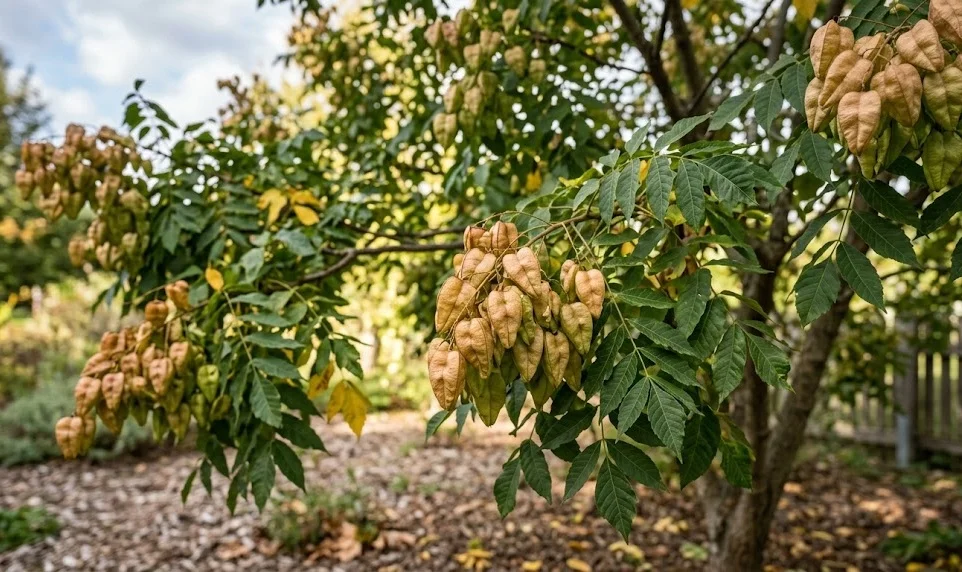
Following the flowering phase, direct sunlight is equally critical for the development of the ornamental lantern-like seed pods. The sun stimulates the production of vibrant anthocyanin pigments within the papery husks, causing them to turn striking shades of pink, orange, and bronze. This intense color transformation provides exceptional autumn interest that defines the species in professional landscape designs. Without adequate sunlight, the pods remain a dull, uniform green and may drop prematurely before reaching full maturity.
Impact of partial shade on flowering and structural form
When planted in conditions that offer only partial shade or filtered light, the tree undergoes distinct morphological changes to adapt to the lower energy environment. The most immediate visual impact is an alteration of the natural, compact, dome-like growth habit into an open, asymmetric form. Branches will naturally elongate and lean dramatically toward the direction of the greatest available light source, compromising structural balance. This etiolation results in longer internodes, thinner wood, and a canopy that is physically weaker and more prone to storm damage.
More articles on this topic
Canopy density decreases significantly in shaded locations as the tree sheds inner leaves that do not receive enough light to remain metabolically viable. This self-pruning leads to a sparse, leggy appearance that lacks the lush, textural appeal of a sun-grown specimen. The overall growth rate slows down dramatically, delaying the time it takes for a young tree to achieve its desired landscape function. Maintaining a structurally sound and aesthetically pleasing form becomes a constant challenge when light resources are limited.
Flowering performance suffers a severe decline when the tree is forced to grow beneath the shadow of larger structures or mature canopy trees. The production of yellow panicles becomes sporadic, with blossoms often limited strictly to the highest branches that manage to reach the sunlight. The intense, synchronized display is replaced by scattered, muted clusters that fail to make a significant visual impact in the garden. For landscape designs centered around summer color, partial shade environments will inevitably lead to disappointment.
The autumn color transformation is also compromised when the tree lacks access to strong, direct afternoon sunlight during the late season. The foliage may turn a dull, muddy yellow or simply drop from the branches while still partially green, skipping the vibrant display entirely. The persistent seed pods will also fail to develop their characteristic warm, rosy tints, remaining structurally weak and less visually appealing through the winter months. Understanding these negative impacts highlights the vital importance of correct light placement from the very beginning.
Positioning strategies in diverse urban landscapes
Successful urban integration requires careful consideration of surrounding structures, hardscapes, and existing vegetation to optimize light availability over time. When planting near multistory buildings, place the tree on the south or west side to maximize its exposure to intense afternoon sun. Avoid tight spaces between tall structures where artificial canyons create permanent shade zones that restrict solar access for most of the day. Providing ample horizontal clearance ensures the tree can capture light from all angles as it grows.
More articles on this topic
In residential landscapes, the tree makes an exceptional specimen plant when positioned in open lawn areas or wide corner beds. It can be utilized effectively to provide canopy shade for single-story structures without sacrificing its own light requirements in the process. Consider the ultimate height and spread of neighboring trees to prevent future light competition as the landscape matures over the decades. Strategic placement ensures that the tree remains dominant enough to claim its necessary share of the local sun envelope.
Streetscape plantings present unique challenges regarding light distribution due to uniform rows of structures and utility limitations. Selecting wide medians or open sidewalk cutouts allows the canopy to expand symmetrically and capture maximum ambient sunlight. Regular monitoring of surrounding urban trees ensures that encroaching limbs from faster-growing species do not overshadow the sun-loving goldenrain tree. Proactive structural management of the surrounding plant matrix preserves the light channels essential for the tree’s health.
Parking lot islands and commercial plazas are excellent locations for this resilient species, provided the intense reflected heat is managed with proper irrigation. The open nature of these paved expanses ensures completely unobstructed sunlight throughout the year, satisfying the tree’s primary physiological demand. The tree’s ability to tolerate the accompanying heat and glare makes it a premier choice for these demanding, sun-baked microclimates. Matching the tree’s high light requirement with these open urban voids creates a highly functional and sustainable landscape pairing.