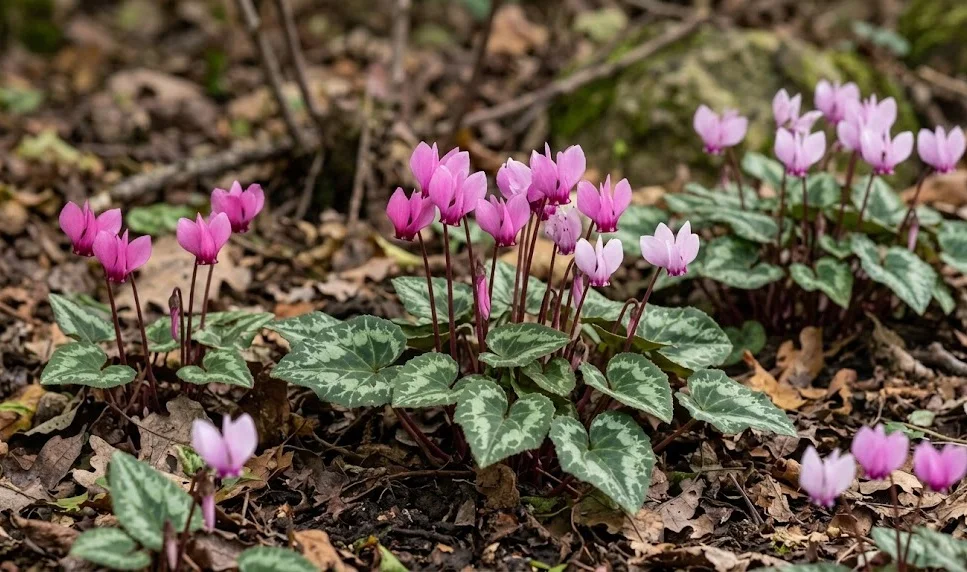

Understanding and managing the specific light preferences of these woodland perennials is essential for achieving optimal growth and abundant flowering. In their native habitats, these plants have evolved to thrive in environments where sunlight is heavily filtered by overhead vegetation. Replicating this balance of light and shadow within the home garden ensures healthy leaf development and triggers a spectacular autumn floral display. Striking the right balance protects the sensitive tissues from intense summer heat while providing enough energy for winter photosynthesis.
The ideal light condition for this species can be described as dappled shade or partial shade throughout the year. Direct, unfiltered sunlight during the middle of the day is highly detrimental, quickly scorching the delicate leaves and flowers. However, planting them in deep, heavy shade where no light penetrates will result in weak growth and a significant reduction in blossoms. The goal is to find a position that offers bright but indirect illumination for the majority of the day.
Positions on the north or east side of buildings, walls, or large fences naturally provide excellent light conditions. These locations shield the plants from the intense, burning afternoon sun while allowing gentle morning light to reach the foliage. Morning sunlight is cooler and less intense, providing a safe energy boost without risking heat stress or tissue dehydration. Assessing the sun patterns across your garden during different times of day helps identify these ideal planting zones.
Woodland gardens or shaded rockeries naturally offer the most authentic light environment for these resilient perennials. When grown under the protective canopy of mature trees, the plants receive shifting patterns of light and shadow as the sun moves. This dynamic exposure matches their evolutionary adaptations perfectly, allowing them to thrive without human intervention. Creating these layered planting designs enhances the natural beauty of the landscape while fulfilling the biological needs of the plants.
Adapting to shifting canopy cover
The relationship between these plants and the overhead tree canopy is a beautifully synchronized evolutionary partnership. During the summer months, deciduous trees produce a dense network of leaves that casts deep, cooling shade over the ground below. This intense summer shade is exactly what the dormant cyclamen tubers need to remain cool and moist during their rest phase. The canopy acts as a natural umbrella, shielding the sleeping plants from the baking summer sun.
More articles on this topic
As autumn arrives, the overhead leaves begin to thin out and drop, allowing more light to penetrate down to the forest floor. This increase in ambient light levels coincides perfectly with the emergence of the first cyclamen flower buds. The bright, filtered autumn light stimulates the buds to open fully and enhances the intensity of their pink or white colors. This seasonal shift demonstrates how closely the plant’s blooming cycle is tied to the natural rhythms of the surrounding trees.
Throughout the winter and early spring, the deciduous trees remain completely bare, allowing maximum sunlight to reach the ground. This is the period when the cyclamen foliage is fully expanded and actively performing photosynthesis to store energy. The lack of overhead leaves ensures that the silver-patterned foliage receives every bit of available winter light during the shortest days of the year. Without this seasonal increase in winter illumination, the tubers would struggle to accumulate enough reserves for the next year.
When planting these perennials under evergreen trees, such as pines or hollies, special care must be taken regarding light levels. Evergreen canopies provide deep shade all year round, which can severely limit the amount of winter light the cyclamen leaves receive. To counter this, position the plants near the outer drip line of the evergreen branches where light levels are slightly higher. This strategic placement ensures they receive the necessary winter illumination while still enjoying summer protection.
Recognizing light deficiency and sunburn
Learning to identify the physical signs of improper light exposure allows you to adjust the plant’s environment before long-term damage occurs. When these perennials suffer from a lack of adequate light, they exhibit a condition known as etiolation. The leaf stems become unusually long, thin, and weak as they stretch desperately toward the nearest light source. The foliage also loses its vibrant silver patterning, turning a dull, uniform green that indicates reduced photosynthetic efficiency.
More articles on this topic
A light-deficient colony will also show a dramatic decrease in the number of flowers produced each autumn season. The few blossoms that do manage to emerge are often small, weakly colored, and have short, fragile stems that collapse easily. If you notice your plants stretching and failing to bloom, it is a clear sign that the location is too dark. Remedying this issue involves carefully pruning overhead tree branches to allow more filtered light to reach the garden bed.
Conversely, excessive exposure to direct, intense sunlight manifests as severe sunburn and heat stress on the foliage. The affected leaves develop dry, bleached patches that eventually turn brown and crispy around the edges. In severe cases, the entire leaf canopy can wither prematurely, forcing the plant into an early, stressed dormancy. Sunburned flowers will fade quickly, and their petals may shrivel before the pollination process can be completed successfully.
If a planting location proves to be too sunny, providing immediate temporary shade using a shade cloth can prevent further damage. Long-term resolution requires transplanting the tubers to a more suitable, shaded location during their upcoming summer dormant phase. Moving the plants to a protected spot restores their health and allows the new foliage to develop normally in the following season. Regular observation ensures that your cyclamen colony always enjoys the perfect balance of light and shadow.