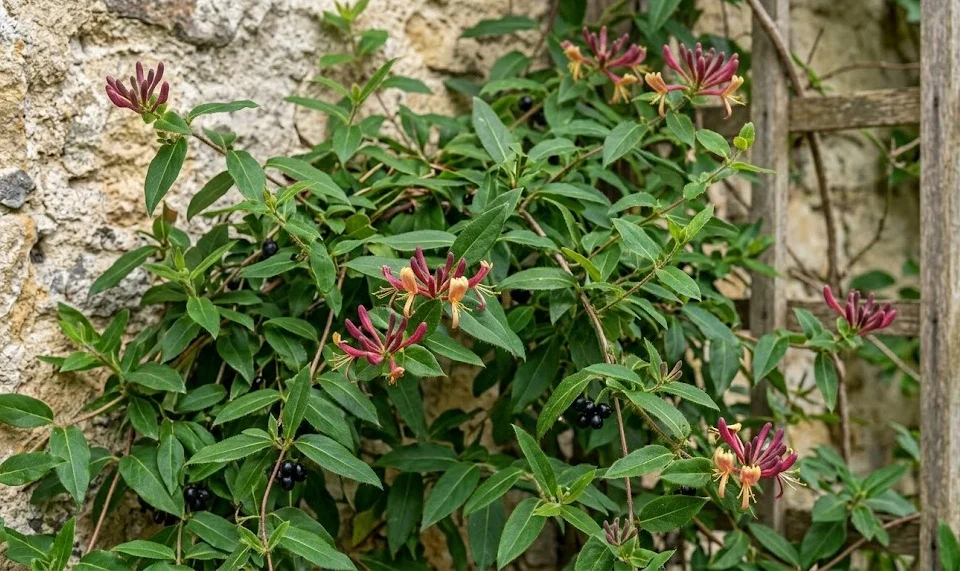

Successful establishment of Henry’s honeysuckle begins with a well-planned planting and propagation strategy. Choosing the correct location and employing proper techniques ensures rapid root development and vigorous vine growth. Whether expanding an existing collection or introducing this climber for the first time, precision is essential. This guide outlines the fundamental steps required to multiply and plant this resilient evergreen species.
The ideal time for planting this climbing specimen is during the early spring or autumn months. Soil temperatures during these periods are perfectly conducive to root cell division without excessive heat stress. Planting in autumn allows the root system to establish itself before the arrival of winter dormancy. Spring planting provides a full growing season for the vine to climb its designated support system.
Selecting the perfect site requires evaluating both soil drainage and future spatial requirements. The area must accommodate a vine that will expand horizontally and vertically over many years. Avoid locations near shallow utility lines or fragile structures that might be compromised by dense growth. A clear assessment of the surroundings prevents future relocation efforts, which can shock mature root systems.
Preparing the soil ahead of time significantly improves the survival rate of newly installed plants. Digging a generous pit allows for thorough loosened earth around the fragile young root ball. Mixing local soil with high-quality compost creates an optimal transition zone for expanding roots. Ensuring the ground is completely free of aggressive perennial weeds eliminates early competition for nutrients.
Execution of the planting process
The actual installation of the young honeysuckle vine requires careful handling to protect delicate root structures. Gently remove the plant from its nursery container to avoid breaking the primary root shoots. If the roots are tightly bound, gently loosen the outer layer to encourage outward growth. Place the root ball in the prepared pit at the exact depth it grew previously.
More articles on this topic
Backfilling the hole should be done in stages to eliminate detrimental air pockets within the soil. Firm the earth gently with your hands as you fill the pit halfway to ensure stable placement. Water the half-filled hole thoroughly to settle the soil around the lower roots naturally. Finish filling the remainder of the pit and level the surface with the surrounding terrain.
Constructing a temporary soil basin around the base helps direct water straight to the root zone. This shallow depression captures rainfall and irrigation, preventing wasteful runoff during the critical initial weeks. Apply a generous amount of water immediately after completing the planting process to ensure complete soil contact. This initial soaking triggers the growth hormones required for rapid environmental adaptation.
Securing the newly planted vine to its permanent support must happen immediately to prevent mechanical damage. Wind can whip unattached stems, causing microscopic tears near the root collar where it meets the soil. Use soft, flexible fasteners that allow for natural movement while keeping the main stem upright. This immediate stability allows the plant to focus energy on subterranean establishment rather than survival.
Multiplying plants using stem cuttings
Propagation through softwood cuttings is a highly effective method for producing identical clones of the parent plant. The best window for gathering these cuttings opens in mid-summer when the new growth is semi-ripe. Select healthy, vigorous shoots that show no signs of disease or nutritional deficiencies. Using sharp, sanitized pruning shears ensures clean cuts that heal quickly without inviting bacterial infections.
More articles on this topic
Each cutting should measure approximately four to six inches in length and contain several nodes. Remove the lower leaves carefully to expose the nodes where root development will primarily occur. Leaving a few upper leaves provides the cutting with the ability to photosynthesize during the rooting phase. Dipping the severed base into a high-quality rooting hormone powder accelerates the cellular transformation process.
Insert the prepared cuttings into a lightweight, sterile medium composed of peat and perlite. This mixture maintains excellent moisture levels while allowing vital oxygen to reach the forming roots. Keep the propagation tray in a warm, bright location away from direct afternoon sunlight. Covering the container with a clear plastic dome maintains the high humidity essential for survival.
Root development typically occurs within four to six weeks under optimal humidity and temperature conditions. Gently tugging on a cutting reveals whether a functional root system has begun to anchor itself. Once roots are well established, gradually acclimate the young clones to ambient room humidity levels. Pot them individually into larger containers to foster continued development before permanent outdoor transplantation.
Utilizing layering for effortless propagation
Tip layering represents a simple, low-risk alternative method that utilizes the vine’s natural growth habits. This technique takes advantage of flexible stems that naturally arch downward toward the garden floor. Choose a healthy, low-growing branch during the spring season when sap flow is highly active. This method keeps the offspring attached to the parent plant, minimizing survival risks completely.
Gently wound the underside of the chosen stem section by scraping away a thin layer of bark. Bury this wounded section three inches deep into the soil, securing it firmly with a wire landscape pin. Leave the growing tip exposed above the ground, pointing vertically toward the sky. The continuous supply of nutrients from the parent plant sustains the stem while it develops independent roots.
Keep the buried section consistently moist throughout the summer to encourage rapid root formation. Check the site in late autumn to evaluate the extent of the new root network. A distinct resistance when lightly tugged indicates that an independent root system has successfully formed. The connection to the mother plant can now be severed safely using sharp shears.
Allow the newly separated honeysuckle to remain in place for a short period to recover from the separation. Treat the independent specimen to its permanent location during the subsequent spring planting window. This technique yields large, robust plants much faster than traditional propagation from tiny seeds. It is an excellent way for amateur gardeners to expand their evergreen vertical displays safely.