
Providing the correct balance of moisture and nutrients is the single most important factor in the successful cultivation of the Chinese globeflower. This plant is essentially a moisture-loving species that has evolved to thrive in soils that are consistently damp but never stagnant. If you allow the soil to dry out completely, the plant will quickly show signs of distress, including drooping leaves and scorched edges. Establishing a reliable watering and feeding schedule will ensure that your globeflowers maintain their lush appearance and produce a spectacular floral display.
The primary rule of watering for this perennial is consistency, especially during the transition from spring into the heat of summer. You should aim to keep the soil at a moisture level similar to a wrung-out sponge—damp to the touch but not dripping wet. In many garden settings, this means deep watering at least twice a week, or more frequently during periods of extreme heat or wind. Morning is the ideal time to water, as it allows the foliage to dry before evening, reducing the risk of fungal infections.
Applying water directly to the base of the plant is much more effective than using overhead sprinklers which can waste water through evaporation. A soaker hose or a drip irrigation system is an excellent investment for a bed of globeflowers, as it delivers moisture directly to the root zone. This targeted approach not only conserves water but also keeps the delicate flowers and foliage dry, preserving their aesthetic quality. If you are watering by hand, be sure to use a gentle flow to avoid eroding the soil around the crown.
The use of mulch is an indispensable tool for managing the moisture requirements of the Chinese globeflower. A two- to three-inch layer of organic material like compost, leaf mold, or finely shredded bark acts as a protective barrier for the soil. This layer significantly reduces the rate of evaporation, keeping the roots cool and hydrated even when the sun is at its peak. As the mulch breaks down, it also improves the soil structure, making it even better at holding onto the water the plant needs.
Understanding nutrient requirements and soil health
While moisture is paramount, the Chinese globeflower also requires a rich supply of nutrients to support its rapid spring growth and heavy blooming. These plants are relatively “heavy feeders” because they produce a large amount of biomass in a short period of time. A soil that is naturally high in organic matter provides a good baseline, but supplemental fertilization is often necessary for the best results. You should look for a balanced, slow-release fertilizer that can provide a steady stream of minerals over several months.
More articles on this topic
The timing of nutrient application is crucial to avoid stimulating the plant at the wrong point in its life cycle. The first application should occur in the very early spring, just as the first purple shoots are breaking through the soil surface. This provides the nitrogen needed for foliage development and the phosphorus required for strong root and flower formation. A second, lighter application can be made in early summer after the first flush of flowers has faded to help the plant recover.
It is important to avoid over-fertilizing, as excessive nitrogen can lead to lush, weak growth that is more prone to falling over or being attacked by pests. If your soil is already very rich in organic matter, you may only need a light top-dressing of compost each year to keep the plants happy. Observing the color and size of the leaves will tell you a lot about the plant’s nutritional status. Dark green, vibrant leaves indicate a well-fed plant, while pale or stunted growth may suggest a need for more nutrients.
Soil pH also plays a subtle but important role in how well the globeflower can access the nutrients you provide. These plants generally prefer a soil that is slightly acidic to neutral, where minerals like iron and manganese are most available. If your soil is highly alkaline, you might notice yellowing between the leaf veins, a condition known as chlorosis. In such cases, using an acidifying fertilizer or adding elemental sulfur can help bring the pH into a more favorable range for the plant.
Specialized watering techniques for hot weather
During the peak of summer, the water demands of the Chinese globeflower can increase dramatically, requiring a more proactive approach. You may find that even with a good mulch layer, the plant starts to flag during the hottest part of the afternoon. This is a natural defense mechanism, but if the plant doesn’t bounce back by evening, it is a sign that you need to increase your watering volume. Deep, infrequent soakings are always better than light, daily sprinklings, as they encourage the roots to grow deeper into the soil.
More articles on this topic
If you live in an area with particularly harsh summers, you might consider using “water rings” or small basins around the base of each plant. This allows you to fill the basin with water, which then slowly percolates down directly to the root ball without running off. This technique is especially useful for newly planted globeflowers that haven’t yet established a deep root system. It ensures that every drop of water is used efficiently and reaches the part of the plant that needs it most.
Monitoring the weather forecast can help you stay ahead of the plant’s needs and prevent moisture stress before it happens. If a heatwave is predicted, give your globeflowers an extra deep watering the night before the temperatures rise. This pre-hydration allows the plant to fill its cells with water, making it much more resilient to the drying effects of the sun and wind. Prevention is always easier than trying to revive a plant that has already suffered significant leaf scorch or wilt.
In the late summer and early autumn, you can gradually reduce the frequency of watering as the plant begins its natural decline toward dormancy. However, you should never allow the soil to become bone-dry, even as the leaves start to turn yellow. The rhizomatous roots still need some moisture to stay healthy throughout the winter months. A final deep watering in late autumn, before the ground freezes, is a professional secret for ensuring a strong comeback the following spring.
Organic vs synthetic fertilization strategies
Many gardeners prefer using organic fertilizers for their Chinese globeflowers because they improve the soil over time. Materials like fish emulsion, seaweed extract, and well-rotted manure provide a complex array of micronutrients that synthetic products often lack. These organic options release their nutrients slowly as they are broken down by soil microbes, which aligns perfectly with the plant’s growth rate. They also help to build a healthy soil structure that naturally retains more moisture and supports beneficial organisms.
Synthetic fertilizers, on the other hand, offer the advantage of precise nutrient ratios and immediate availability to the plant. If you notice a sudden deficiency or if you are growing globeflowers in a less-than-ideal soil, a quick-release synthetic product can provide a rapid fix. However, you must be careful to follow the label instructions exactly to avoid chemical burns to the sensitive roots. Always water the plants thoroughly before and after applying synthetic fertilizers to help distribute the salts and protect the plant.
A hybrid approach often works best, using organic compost as a base and supplementing with specific nutrients when the plant is under high demand. For example, you might top-dress with compost in the spring and then use a liquid organic bloom booster as the flower buds begin to form. This ensures the plant has a steady foundation of health while also getting a little extra help during its most energy-intensive phase. This balanced method promotes both long-term soil vitality and immediate floral performance.
Regardless of which type of fertilizer you choose, it is important to keep it away from the direct center of the crown. Piling fertilizer or even heavy compost directly against the stems can create a moist environment that encourages rot. Instead, spread the material in a circle around the plant, extending out to the edge of the foliage. This “ring-feeding” method encourages the roots to grow outward and prevents any localized damage to the main growing point of the globeflower.
Balancing hydration and nutrition for peak performance
The relationship between water and fertilizer is synergistic; a well-watered plant can take up nutrients more effectively, and a well-fed plant can handle moisture stress more easily. If you fertilize a plant that is already suffering from drought, you risk causing severe damage to the roots because the concentrated salts cannot be diluted. Always ensure the plant is well-hydrated before you even think about adding fertilizer to the soil. This simple rule of thumb will prevent the most common mistakes made in the care of these delicate perennials.
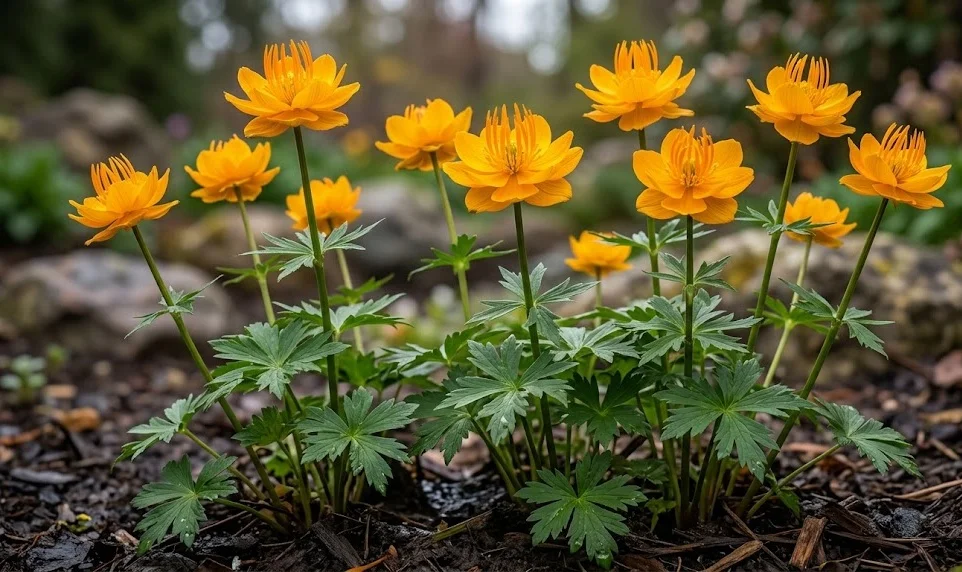
During the flowering stage, the plant’s demand for both water and potassium—a key nutrient for bloom quality—is at its highest. Providing a potassium-rich feed, such as a liquid tomato fertilizer, can result in larger flowers with more intense orange coloration. At the same time, the increased leaf surface area of a full-grown plant means it is losing more water through transpiration. Keeping a close eye on both aspects during the three to four weeks of blooming will make a visible difference in the quality of your display.
As the season progresses and the flowers fade, the plant’s needs shift toward preparing for next year. You can stop using high-potassium “bloom” fertilizers and switch back to a balanced organic approach or simply rely on the existing soil health. The goal now is to maintain healthy green foliage for as long as possible so the plant can store energy in its roots. Continued watering is essential during this phase, even if the plant no longer looks as spectacular as it did in June.
By the time the first frost arrives, your job of watering and fertilizing is largely complete for the year. The Chinese globeflower will take all the moisture and nutrients it has collected and pull them down into its rhizomes for the winter. You should resist the urge to add any late-season fertilizer, as this could encourage new growth that won’t have time to harden off before the freeze. Instead, simply ensure the soil is moist and let the plant enter its well-earned period of rest.