
The successful establishment of the Chinese globeflower in your garden starts with a well-planned planting strategy and an understanding of its reproductive habits. This moisture-loving perennial is not particularly difficult to grow, but it does have specific requirements that must be met during its initial stages. Whether you are starting from seeds or using vegetative methods, the goal is to create a strong root system that can support its lush growth. By focusing on the details of timing and soil preparation, you can ensure your new plants get off to the best possible start.
When you are ready to plant a nursery-grown specimen, the first thing you must consider is the timing of the operation. Early spring, just as the ground has thawed and become workable, is the ideal window for planting in most temperate climates. This allows the plant to establish its roots in the cool, moist soil before the heat of summer puts stress on the foliage. Alternatively, early autumn can also work well, provided the plant has enough time to settle before the ground freezes solid.
The preparation of the planting hole is a task that should never be rushed if you want long-term success. You should dig a hole that is at least twice as wide as the root ball and just as deep, ensuring the surrounding soil is loosened. Mixing in a generous amount of organic matter, such as well-composted leaf mold or aged manure, is essential for this species. This not only provides immediate nutrients but also ensures the soil remains moisture-retentive, which is the globeflower’s most critical requirement.
Once the hole is prepared, gently remove the plant from its container and loosen any circling roots to encourage outward growth. Place the plant in the center of the hole, ensuring that the top of the root ball is level with the surrounding soil surface. Backfill the hole with the amended soil, firming it down gently with your hands to remove any large air pockets. Immediately after planting, give the area a thorough soaking to help settle the soil and hydrate the roots thoroughly.
Selecting the perfect site for planting
The location you choose for your Chinese globeflower will dictate its health and the abundance of its blooms for years to come. These plants naturally occur in damp meadows and along stream banks, so a site that stays consistently moist is non-negotiable. If you have a low-lying area in your garden or a spot near a pond, this will likely be the most successful location. Avoid areas with high wind exposure or sites that are prone to drying out rapidly during the summer months.
More articles on this topic
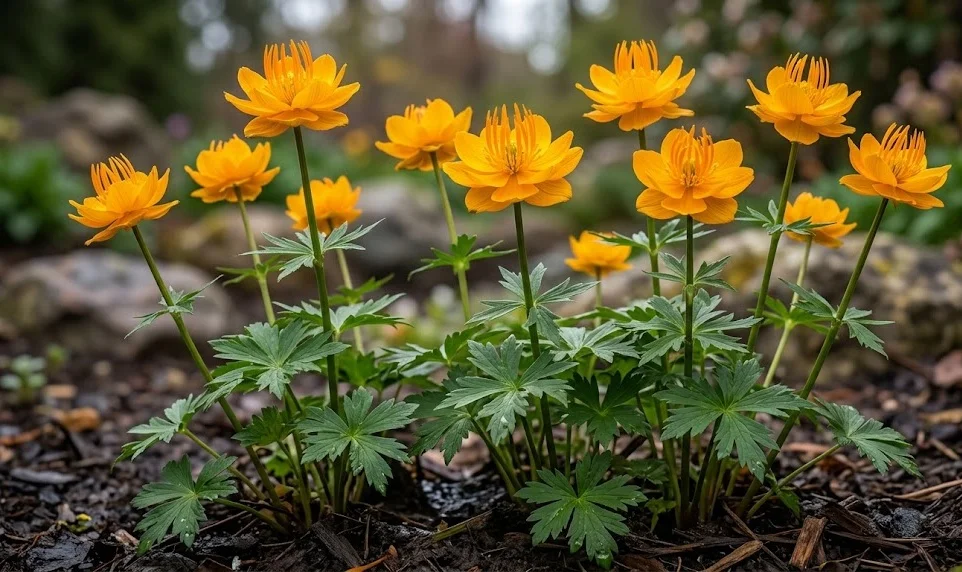
While the globeflower loves water, it also needs a fair amount of light to produce its famous orange blossoms. A spot with morning sun and dappled afternoon shade is often considered the “sweet spot” for this perennial in warmer regions. In cooler, northern climates, the plant may tolerate full sun as long as the soil moisture is strictly maintained throughout the day. Observing how sunlight moves across your garden during the spring will help you identify the best possible coordinates for planting.
Soil structure is the next major consideration when selecting a site, as the plant prefers heavy, nutrient-dense earth. Sandy soils are generally unsuitable unless they are heavily amended with clay and organic materials to hold onto water. You should also check the drainage of the site; while the plant loves moisture, it does not want to sit in stagnant, oxygen-depleted water. A site that is damp but has a slow, steady movement of moisture through the soil is ideal for preventing root diseases.
Finally, consider the long-term spacing of your plants to ensure they have enough room to reach their mature size. Each Chinese globeflower can eventually grow to about two feet wide, so spacing them about eighteen to twenty-four inches apart is a good rule of thumb. This allows for adequate air circulation between the plants, which is vital for preventing powdery mildew and other foliage issues. Giving them enough space also means you won’t have to move or divide them as frequently, reducing future labor.
Propagation through seed starting
Starting Chinese globeflowers from seed is a rewarding process, though it requires a bit of patience and a specific technique known as cold stratification. The seeds of this species have a built-in dormancy mechanism that prevents them from germinating until they have experienced a period of cold. You can achieve this naturally by sowing the seeds outdoors in late autumn, allowing the winter weather to do the work for you. Alternatively, you can mimic this process in a refrigerator by keeping the seeds in damp peat moss for several weeks.
More articles on this topic
If you choose to start seeds indoors, you should use a high-quality, sterile seed-starting mix that retains moisture well. Lightly press the seeds into the surface of the soil, as they often require some light to trigger the germination process. Cover the containers with a clear plastic dome or a plastic bag to maintain high humidity levels during the initial stages. Keep the temperature around 60 to 65 degrees Fahrenheit after the cold treatment has been completed to encourage steady growth.
Germination can be erratic and may take anywhere from a few weeks to a couple of months, so do not give up too soon. Once the seedlings have developed their first set of true leaves, you should carefully transplant them into individual pots to give them more room. Use a liquid fertilizer at half-strength to support their development without burning the delicate new roots. It is important to keep the young plants in a bright but cool location where they won’t be scorched by direct sunlight.
Before moving your home-grown seedlings into the garden, they must be gradually acclimated to outdoor conditions. This process, known as hardening off, involves placing the pots in a sheltered spot outside for increasing amounts of time each day. Start with just an hour or two in the shade and slowly work up to a full day of exposure over the course of a week. Once the seedlings are robust and the risk of a hard frost has passed, they are ready to be planted in their permanent garden home.
Division of mature plant clumps
Dividing established plants is perhaps the most reliable and fastest way to propagate the Chinese globeflower in a home garden. Over time, the center of the plant can become overcrowded and less productive, making division a necessary maintenance task. The best time to perform this operation is in the early spring, just as the first signs of green growth appear above the soil. This timing ensures that the new divisions have the entire growing season to establish themselves before the next winter.
To begin the process, use a sharp spade to dig an entire circle around the plant, lifting the root mass out of the ground with as much soil as possible. Gently shake or wash away some of the excess dirt so you can clearly see the structure of the rhizomatous roots and the individual crowns. You can often pull the clumps apart by hand, but for older, tougher plants, a sharp knife or a garden saw might be necessary. Each division must have a healthy portion of roots and at least two or three dormant buds or growing shoots.
Immediately after dividing the plant, you should protect the exposed roots from drying out by keeping them in the shade and covering them with a damp cloth. Replant the new sections as soon as possible into freshly prepared holes that have been enriched with organic matter. Be sure to plant them at the same depth they were growing originally, as planting too deep can cause the crown to rot. Firm the soil well and provide a generous amount of water to help the roots reconnect with their new environment.
The first year after division is a critical period for these new plants, and they will require extra attention to moisture. They may not bloom as vigorously in their first season as they focus their energy on repairing and expanding their root systems. However, by the second year, you will find that you have several healthy, blooming plants where you once had only one. This method is an excellent way to expand your collection or share these beautiful flowers with fellow gardening enthusiasts.