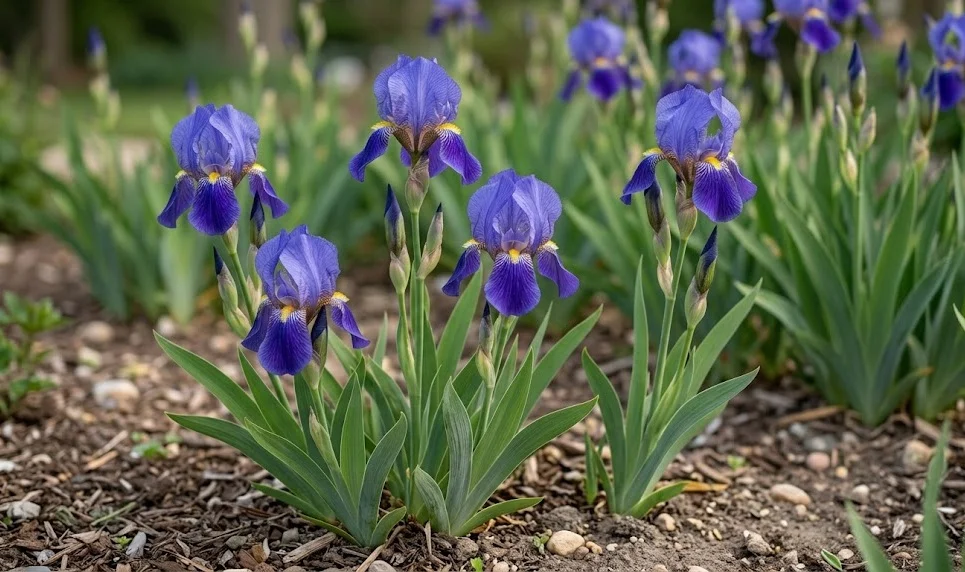

Providing the correct balance of moisture and nutrients is fundamental to the long-term success of these striking perennials. You should develop a management strategy that respects the natural rhythm of the plant’s growth cycle and the specific conditions of your local climate. Overwatering is often a more significant threat than drought, so a careful and measured approach is always recommended. This professional guide details how to optimize your watering and fertilization routines to achieve the best possible garden results.
Water requirements by season
During the early spring, the demand for water increases as the plant begins its rapid growth phase and prepares for blooming. You should ensure the soil stays consistently moist but never waterlogged as the new leaves and flower stalks emerge. This period is critical for determining the quality and size of the upcoming floral display for the season. Natural rainfall often provides enough moisture during this time, but you should supplement it if the spring is unusually dry.
Once the blooming period has concluded, the plant enters a phase where it requires significantly less supplemental irrigation. You should allow the soil to dry out somewhat between waterings during the mid-to-late summer months. This mimics the natural conditions of their native habitats and helps prevent the development of rhizome rot. The iris is remarkably drought-tolerant once established, and it can survive through dry spells with minimal intervention from the gardener.
As autumn approaches and the plant begins to prepare for dormancy, you should further reduce the frequency of your watering. You want to discourage new, soft growth that might be damaged by the first frosts of the coming winter. The focus during this transition period is on maintaining the health of the existing foliage rather than pushing for new development. Observing the weather and adjusting your habits accordingly will keep the plants in their best possible condition.
In the winter months, most established plants in the ground will not require any additional watering at all. The dormant rhizomes are sensitive to excess moisture during the cold season, which can lead to fungal issues and decay. You should only consider watering if you are experiencing an extreme winter drought and the ground is not frozen. Generally, the less you interfere with the plants during their winter rest, the better they will perform when spring returns.
More articles on this topic
Irrigation techniques to prevent rot
The method you use to apply water is just as important as the quantity of moisture you provide to the plants. You should always aim the water at the base of the plant and avoid getting the foliage wet whenever possible. Damp leaves can encourage the growth of fungal pathogens like leaf spot, which can quickly spread through a dense garden bed. Using a soaker hose or a watering can with a narrow spout allows for precise delivery directly to the root zone.
Early morning is the ideal time for irrigation because it allows any accidental moisture on the leaves to evaporate quickly as the sun rises. You should avoid watering in the late evening, as the foliage will remain wet overnight, creating a perfect environment for mold and mildew. By timing your watering correctly, you can significantly reduce the need for chemical fungicides in your garden. This proactive approach to hygiene is a hallmark of professional horticultural management.
Monitoring the moisture level of the soil can be done simply by using your finger to check the top few inches of the earth. You should only apply water when the surface feels dry to the touch and the plant shows signs that it needs hydration. Over-reliance on automated irrigation systems can sometimes lead to excessive moisture levels if they are not adjusted for weather changes. Taking a hands-on approach ensures you are responding to the actual needs of the living plant.
Deep, infrequent watering is far more effective than frequent shallow applications for developing a resilient root system. You should encourage the roots to grow deep into the soil where they can access moisture during dry periods. Shallow watering leads to a weak root system that remains near the surface and is more vulnerable to heat and drought. Providing a thorough soaking once a week is usually sufficient for these plants even in the height of summer.
More articles on this topic
Macro-nutrient requirements
Nitrogen, phosphorus, and potassium are the three primary nutrients that fuel the growth and flowering of your perennials. You should be cautious with nitrogen, as too much can cause the plant to produce excessive foliage at the expense of its flowers. High nitrogen levels also make the rhizome tissues softer and more susceptible to bacterial and fungal attacks. A balanced approach ensures that the plant remains structurally sound while still having the energy to grow.
Phosphorus is particularly important for these plants because it supports the development of strong roots and vibrant flowers. You should look for fertilizers that have a higher middle number in the N-P-K ratio to promote better blooming results. Applying a phosphorus-rich amendment in the early spring can make a noticeable difference in the intensity of the petal colors. This nutrient is essential for the metabolic processes that occur within the storage organs of the iris.
Potassium plays a vital role in the overall health and stress tolerance of the plant, especially during extreme weather. You should ensure your fertilization program includes enough potassium to help the plant regulate its internal water balance. This nutrient strengthens the cell walls, making the leaves more resistant to physical damage and environmental pressures. A well-fed plant is much better equipped to handle the challenges of a long growing season.
When applying granular fertilizers, you should be careful not to let the concentrated chemicals come into direct contact with the rhizomes. You should scatter the granules around the base of the plant and then lightly work them into the top layer of the soil. Always water the area immediately after fertilizing to help dissolve the nutrients and carry them down to the roots. This prevents the risk of chemical burns and ensures the plant can begin using the nutrients right away.
Micro-nutrient supplementation
Beyond the primary macro-nutrients, several trace elements are necessary for the complex biological functions of the plant. You should pay attention to signs of micro-nutrient deficiencies, such as chlorosis or stunted leaf development. Elements like iron, manganese, and zinc are required in very small amounts but are nonetheless essential for healthy growth. Using a high-quality, complete fertilizer often provides these trace minerals in the correct proportions for your garden.
Iron deficiency is a common issue in alkaline soils, leading to yellow leaves with prominent green veins. You should monitor the appearance of the foliage throughout the season to catch these nutritional imbalances early. If you suspect an iron problem, applying a chelated iron supplement can quickly restore the healthy green color to the leaves. This intervention helps the plant maintain its ability to produce energy through photosynthesis.
Boron and magnesium are also important for the structural integrity of the plant and the efficiency of its nutrient transport. You should consider using organic amendments like compost or seaweed extracts to provide a wide spectrum of these minor elements. These natural sources often release nutrients slowly, providing a steady supply that is easy for the plant to absorb. Incorporating organic matter also improves the soil’s ability to hold onto these minerals over time.
Regularly observing the growth rate and color of your plants is the best way to determine if they need extra supplementation. You should avoid the “more is better” philosophy when it comes to micro-nutrients, as some can become toxic if over-applied. A professional approach involves using small, targeted corrections rather than broad, heavy applications of chemicals. Healthy, vibrant plants are the ultimate proof that your nutritional strategy is well-balanced and effective.
Soil pH and nutrient availability
The acidity or alkalinity of your soil has a direct impact on how easily the plant can access the nutrients you provide. You should aim for a soil pH that is slightly acidic to neutral, generally in the range of 6.5 to 7.0 for the best results. If the pH is too high or too low, certain minerals become “locked” in the soil and are unavailable to the roots. Testing your soil every few years allows you to make precise adjustments using lime or sulfur as needed.
In very acidic soils, you may need to apply garden lime to raise the pH and improve the availability of phosphorus and calcium. You should perform this task in the autumn so the lime has time to react with the soil before the spring growth begins. Proper pH management ensures that the money and effort you spend on fertilizers are not wasted. It is a fundamental part of professional garden maintenance that many beginners often overlook.
If your soil is too alkaline, adding elemental sulfur or aluminum sulfate can help lower the pH to a more suitable level. You should apply these materials gradually over several seasons to avoid shocking the plant’s root system with a sudden chemical change. Monitoring the results with follow-up soil tests ensures you are moving in the right direction without over-correcting. A stable and appropriate pH environment is the key to long-term plant health.
The presence of organic matter also helps buffer the soil against rapid changes in pH and improves nutrient retention. You should continue to add small amounts of high-quality compost to your garden beds each year to maintain this natural balance. This practice creates a more forgiving environment for the plants and reduces the need for constant chemical intervention. A well-managed soil ecosystem is the foundation upon which all your gardening success is built.