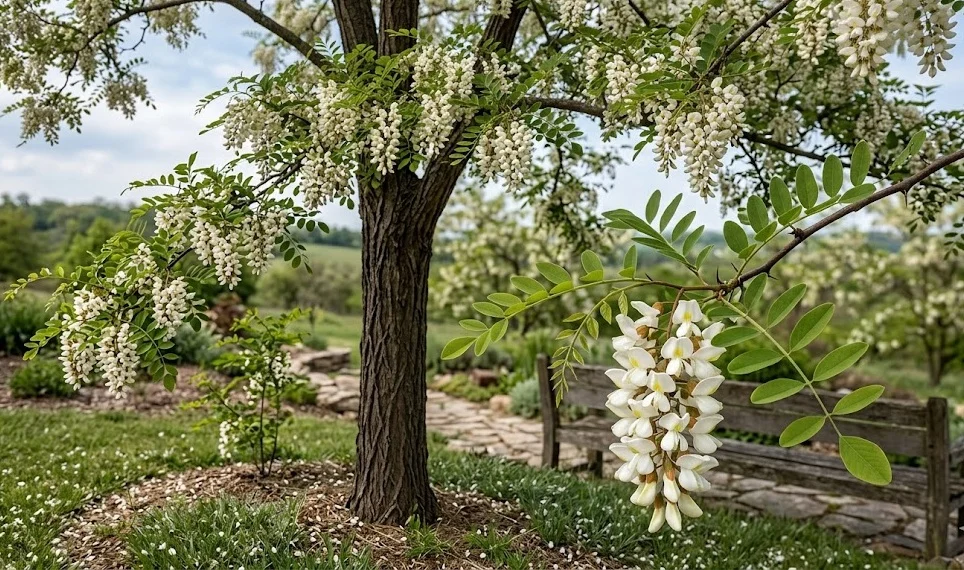

When you first plant a black locust, its water requirements are significantly higher than they will be in later years. The goal is to keep the root ball and the surrounding soil consistently moist until the tree establishes itself. This period usually lasts for the first growing season, depending on the local weather conditions. Proper hydration at this stage is the foundation for the tree’s future resilience and growth speed.
Watering should be done slowly and deeply to encourage the roots to grow downward into the soil. Surface watering often leads to shallow root systems that make the tree more vulnerable to drought later on. Using a soaker hose or a slow-release watering bag is an excellent way to deliver moisture effectively. These methods ensure that the water reaches the root zone without running off the surface.
You should adjust the frequency of watering based on the type of soil and the amount of rainfall received. Sandy soils dry out much faster than clay-based soils and may require more frequent attention from the gardener. During particularly hot and dry weeks, you might need to water the sapling two or three times. Always check the soil moisture a few centimeters below the surface before adding more water.
As the first autumn approaches, you can gradually reduce the amount of water provided to the tree. This helps the plant transition into its dormant state and prepare for the colder winter months. Over-watering late in the season can sometimes stimulate new growth that won’t have time to harden off before the first frost. A final deep watering before the ground freezes is beneficial for maintaining root health through the winter.
Mature tree drought strategies
Once a black locust has reached maturity, it becomes one of the most drought-tolerant trees in the temperate landscape. Its deep taproot and extensive lateral root system allow it to find water deep within the earth. During a typical summer, a mature tree rarely needs supplemental watering from human hands. This makes it an ideal choice for low-maintenance landscapes and reforestation projects in dry areas.
More articles on this topic
During extreme, multi-week droughts, even a mature tree can show signs of stress if the water table drops significantly. You might notice the leaves curling slightly or turning yellow earlier than expected in the season. In these rare cases, a single deep watering session can help the tree maintain its internal vigor. Aim to saturate the entire area under the tree’s canopy, known as the drip line.
The tree also uses physiological mechanisms to cope with a lack of water, such as closing its leaf pores. This reduces the amount of moisture lost through transpiration, although it also slows down the tree’s growth rate. It is a survival strategy that allows the species to persist where other trees might wither and die. Understanding these natural processes helps you appreciate the tree’s incredible adaptation to its environment.
Mulching continues to be beneficial for mature trees by keeping the soil temperature lower and reducing evaporation. A wide ring of mulch mimics the natural accumulation of organic matter found in a forest setting. It also protects the soil from the compacting force of heavy rain, which improves water infiltration. A healthy soil structure is the best natural reservoir for a tree during a long dry spell.
Natural fertilization techniques
The black locust is unique because it provides much of its own fertilizer through a process called nitrogen fixation. Special bacteria living in the root nodules take nitrogen from the air and convert it into a form the tree can use. This means that traditional nitrogen-heavy fertilizers are usually unnecessary and can even be counterproductive. Adding too much nitrogen can lead to rapid, weak growth that is more prone to pest damage.
More articles on this topic
Instead of synthetic chemicals, focusing on organic matter is the best way to support the tree’s long-term health. Composted manure or high-quality garden compost can be spread around the base of the tree in early spring. These materials release nutrients slowly and improve the overall biological activity within the soil. A thriving soil ecosystem supports better root health and more efficient nutrient uptake.
The leaves of the black locust are themselves a rich source of nutrients when they fall and decompose. Allowing the leaf litter to remain under the tree creates a closed nutrient cycle that benefits the soil. As the leaves break down, they return nitrogen and other essential minerals back into the ground. This natural process is often all the fertilization a healthy, established tree will ever need.
If you are growing the tree for high-quality timber, you might consider more specific nutrient management strategies. In some cases, the soil might be deficient in other key minerals like phosphorus or calcium. A professional soil analysis will identify these gaps and allow for targeted organic amendments. Maintaining a balanced mineral profile ensures that the wood remains dense and resistant to rot.
Addressing mineral deficiencies
While nitrogen is rarely an issue, other mineral deficiencies can occasionally affect the appearance and health of the tree. Iron chlorosis, which causes the leaves to turn yellow while the veins stay green, is sometimes seen in very alkaline soils. This condition prevents the tree from producing enough chlorophyll, which can eventually stunt its growth. Adjusting the soil pH or using chelated iron treatments can resolve this problem.
Phosphorus is essential for root development and the production of healthy flowers and seeds. If a young tree seems to be struggling to establish itself, a lack of this mineral might be the cause. Bone meal or rock phosphate are excellent organic sources that can be worked into the soil during planting. These slow-release options provide long-term support without the risk of burning the sensitive roots.
Potassium plays a critical role in the tree’s ability to regulate water and resist environmental stresses like frost and disease. Signs of a deficiency include browning at the edges of the leaves or weak, brittle branches. Adding wood ash or seaweed-based fertilizers can help boost potassium levels in a natural way. A well-nourished tree is much better equipped to handle the challenges of a changing climate.
Always remember that more is not necessarily better when it comes to fertilizing trees. Excessive minerals can build up in the soil and interfere with the tree’s natural ability to absorb water. It is always best to base your fertilization plan on the actual needs of the tree and the specific conditions of your site. Observing the color and size of the leaves is often the best indicator of the tree’s nutritional status.
Soil health and absorption
The ability of the tree to absorb nutrients and water is directly tied to the health of the soil structure. Compacted soil lacks the air spaces needed for roots to breathe and for water to move freely. If your tree is planted in a high-traffic area, you may need to aerate the soil periodically. This simple task can significantly improve the tree’s vigor by allowing the roots to expand more easily.
Mycorrhizal fungi are silent partners that live in the soil and help the roots absorb minerals and water. These beneficial organisms form a network that effectively extends the reach of the tree’s root system. You can encourage their growth by avoiding the use of heavy fungicides and maintaining high levels of organic matter. A healthy fungal population is a sign of a vibrant and productive soil environment.
Soil pH also influences which nutrients are available for the tree to absorb. The black locust is quite flexible but generally prefers a pH between 5.0 and 7.5. If the soil becomes too acidic or too alkaline, some minerals can become “locked” and unavailable to the plant. Testing the pH every few years allows you to make gradual corrections before the tree starts to show signs of stress.
In urban settings, soil contamination can sometimes be an issue for the health of long-lived trees. The black locust is often used to help clean up soils through a process called phytoremediation. While it is tough enough to survive in these conditions, it still benefits from any efforts to improve the soil quality. Providing a clean and healthy foundation is the best gift you can give to any tree in your care.