
Pruning a Chinese juniper is an art form that combines horticultural science with aesthetic intuition to guide the plant’s natural growth habit. Unlike some deciduous shrubs that can be cut back aggressively and expected to regrow from old wood, junipers require a much more considered and precise approach. Most varieties do not have “latent buds” on their older, brown wood, meaning that if you cut back past the green needles, that branch will likely never grow back. Professional pruning is therefore focused on maintaining the plant’s shape and health through subtle, frequent interventions rather than occasional heavy hacking.
The timing of your pruning is the first step in ensuring a successful outcome for the plant. The best time for general shaping and maintenance is in the late spring or early summer, after the initial flush of new growth has started to harden. This allows the plant plenty of time to heal its wounds and produce new foliage before the arrival of winter. Avoid pruning in the late autumn, as the fresh cuts can leave the plant vulnerable to winter burn and the cold can interfere with the natural sealing process of the bark.
Using the correct tools is also a hallmark of a professional-grade pruning job. Sharp, high-quality bypass pruners are essential for small branches, while long-handled loppers or a fine-toothed pruning saw may be needed for larger structural work. Never use hedge trimmers for anything other than the most formal, tightly-sheared hedges, as they tend to crush the needles and create a “shaggy” look that takes a long time to recover. Clean, precise cuts allow the juniper to seal its wounds quickly and reduce the risk of introducing pathogens into the vascular system.
Before you make your first cut, take a moment to step back and analyze the overall structure and health of the plant. Identify any dead, damaged, or diseased branches that need to be removed first, as this often opens up the canopy and changes how you see the rest of the plant. Pruning is a subtractive process, and once a branch is gone, it cannot be replaced. By working slowly and thoughtfully, you can enhance the natural beauty of the Chinese juniper while ensuring it remains a healthy and vibrant part of your landscape.
Structural pruning and maintaining shape
The goal of structural pruning is to ensure the juniper has a strong, balanced framework that can withstand the weight of snow and the force of the wind. For upright varieties, this often involves maintaining a single “central leader” and removing any competing branches that might create a weak crotch or a splayed appearance. If you notice two branches growing in the same direction or rubbing against each other, removing the weaker of the two will improve the plant’s long-term stability. This type of “corrective” pruning is best done while the plant is still relatively young and manageable.
More articles on this topic
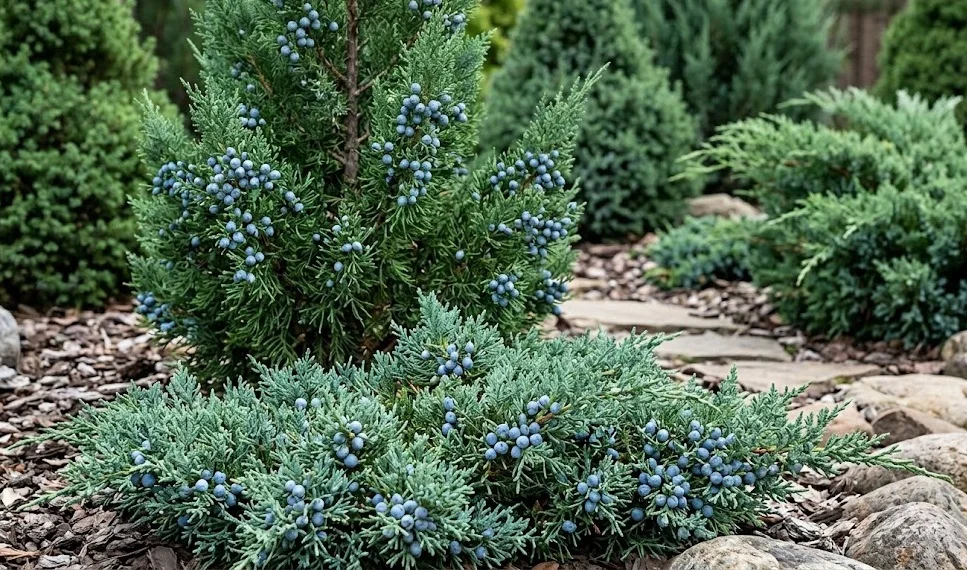
When shaping a juniper, it is important to follow its natural growth habit rather than trying to force it into a shape it doesn’t want to be. For spreading varieties, you can encourage a more dense and compact form by “tipping” the ends of the most vigorous branches. This involves cutting back the new growth by about one-third, which stimulates the plant to produce more lateral branches further back on the stem. The result is a much fuller, more lush appearance that better serves as a groundcover or low hedge.
One of the most important rules in juniper pruning is to always maintain a “green fringe” on every branch you cut. Because these plants generally do not sprout from old wood, you must always leave some healthy green needles beyond your cut. If you need to significantly reduce the size of a plant, it is better to do it gradually over several years rather than all at once. This “staged” approach allows the plant to redirect its energy and fill in the gaps without becoming stressed or unsightly.
Thinning out the interior of a dense juniper is a professional technique that improves both health and aesthetics. By removing some of the smaller, shaded branches in the center of the plant, you allow more light and air to reach the interior. This helps to prevent the “hollow” look that often plagues older junipers and reduces the risk of fungal infections that thrive in stagnant, humid environments. A well-thinned juniper has a sense of depth and transparency that makes it much more visually interesting than a solid, monolithic block of green.
Creative techniques and bonsai styling
The Chinese juniper is world-renowned in the bonsai community for its flexibility, beautiful bark, and ability to be trained into dramatic, weather-beaten shapes. Even if you are not a bonsai practitioner, you can use some of these techniques to create a more architectural and artistic look in your garden specimens. Techniques like “cloud pruning,” where the foliage is maintained in distinct, rounded masses on the ends of branches, can transform a standard juniper into a stunning focal point. This requires a high level of patience and a consistent maintenance schedule to keep the “clouds” looking sharp.
More articles on this topic
Wiring is another technique borrowed from bonsai that can be used to reposition branches in the landscape. By carefully wrapping a thick copper or aluminum wire around a young branch, you can guide it to grow in a more desirable direction or create a more graceful curve. It is vital to monitor the wire regularly and remove it before it starts to “bite” into the bark as the branch thickens. This active guidance allows you to create a custom-shaped plant that perfectly fits the specific space and aesthetic of your garden.
“Jin” and “Shari” are advanced techniques that involve intentionally stripping the bark from parts of a branch or trunk to create the appearance of ancient, dead wood. While this should only be attempted by those with a deep understanding of juniper physiology, it can create a hauntingly beautiful, rugged look that mimics trees found in the wild. The exposed wood is then treated with lime sulfur to whiten it and prevent rot, creating a striking contrast with the living green foliage and the reddish-brown bark. This level of styling turns gardening into a form of living sculpture.
Even for more traditional gardens, the principles of bonsai—balance, proportion, and the celebration of the plant’s age—can inform how you approach every pruning task. Think about the “negative space” between the branches as much as the branches themselves to create a sense of harmony. The Chinese juniper is an incredibly forgiving partner for these creative endeavors, as it responds well to careful manipulation. Whether you are aiming for a formal hedge or a wild, windswept accent, your pruning shears are the tools of your creative expression.
Rejuvenation and handling overgrown specimens
Dealing with a Chinese juniper that has become too large for its space is one of the most common challenges gardeners face. Because of the “no regrowth from old wood” rule, you cannot simply “top” a juniper or shear it back to the trunk and expect it to recover. If a juniper has truly outgrown its location, the most professional advice is often to remove it and replace it with a smaller variety. However, if the plant is still relatively healthy, there are some “renovation” techniques that can help manage its size without killing it.
The first step in renovation is to identify the few remaining green branches that are closest to the center of the plant. You can carefully prune back to these points, effectively “shrinking” the plant while still leaving it with the ability to photosynthesize and grow. This will result in a much more open and perhaps “stumpy” look for a season or two, but it is the only way to significantly reduce the size while keeping the plant alive. Over time, the remaining green tips will grow and begin to fill in the gaps.
Another approach for an overgrown upright juniper is to “lift the canopy” by removing the lower branches entirely. This transforms a large, unruly shrub into a small, multi-stemmed tree, revealing the beautiful, peeling bark of the main trunks. This technique is often highly successful, as it creates a more sophisticated look and opens up space beneath the plant for shade-loving perennials. It also improves air circulation and light penetration, which can rejuvenate the remaining upper foliage.
Finally, consistent “pinching” of the new growth every year is the best way to prevent a juniper from ever becoming overgrown in the first place. By simply snapping off the soft, new tips with your fingers in the late spring, you can slow down the plant’s outward expansion and encourage it to become much denser. This low-impact maintenance is far easier on both the gardener and the plant than occasional heavy pruning. A professional garden is built on these small, frequent acts of care that keep the landscape in perfect balance.