
Maintaining the compact, elegant shape of your shrubs is a task that requires both a steady hand and a clear understanding of the plant’s growth habits. You must view pruning not just as a way to control size, but as a professional technique to stimulate health and maximize the floral display. A well-pruned plant is more resilient, has better air circulation, and produces a higher density of flowers on its new growth. By following a disciplined approach to trimming, you can transform a wild-looking specimen into a polished masterpiece of the garden.
The purpose and timing of pruning
The primary reason for pruning this species is to encourage a bushy, well-branched structure that highlights its delicate foliage and flowers. You should understand that whenever you remove the tip of a stem, the plant responds by activating the dormant buds further down the branch. This “apical dominance” is redirected, resulting in several new shoots where there was once only one. Over time, this repeated pinching and cutting leads to a much denser and more attractive mounded shape that is highly prized in professional landscaping.
Timing your pruning activities is crucial to ensure you don’t accidentally remove the very flower buds you have been working so hard to produce. You should perform your major structural pruning in the early spring, just as the plant is beginning its new growth cycle. This allows the plant to recover quickly and put its energy into the branches that will carry the season’s blossoms. Minor “housekeeping” trims can be done throughout the summer to maintain the shape and remove any stray or overly long stems.
You must avoid heavy pruning late in the autumn, as this can stimulate a flush of new growth that won’t have time to harden before the cold weather arrives. Tender new shoots are easily damaged by frost, and the energy the plant spends on them is essentially wasted if they don’t survive the winter. If you need to tidy up the plant before moving it indoors, stick to removing only the most obviously damaged or diseased material. A professional gardener always thinks one season ahead when deciding where and when to make a cut.
Pruning can also be used as a tool for rejuvenation if you have a plant that has become woody, sparse, or generally unattractive. You should not be afraid to cut the plant back significantly, sometimes by as much as half its size, if it has lost its vigor. While this may look drastic at first, the plant is remarkably resilient and will usually respond with a burst of healthy new growth. This type of “reset” pruning is best done in the spring when the plant’s natural energy levels are at their highest.
More articles on this topic
Essential tools and techniques
Using the right tools is the first step toward a professional result, as clean cuts are essential for the health and recovery of the plant. You should invest in a pair of high-quality bypass pruners, which act like scissors to make a clean, sharp slice through the stems. Avoid using anvil-style pruners, which can crush the delicate tissues and create a jagged wound that is more susceptible to infection. For the very fine tips of the branches, a pair of sharp floral snips or even your fingernails can be used for precise pinching.
Sanitation is a non-negotiable part of the pruning process that prevents the accidental spread of pathogens from one plant to another. You should wipe your blades with rubbing alcohol or a mild bleach solution before you start and again between different plants. This simple professional habit ensures that you aren’t inadvertently introducing diseases into the fresh wounds you are creating. Keeping your tools sharp is equally important, as a dull blade requires more pressure and is more likely to slip and cause damage.
When making a cut, you should always position your pruners just above a healthy leaf node or a visible bud. You must make the cut at a slight angle, slanting away from the bud so that moisture doesn’t collect on the wound and encourage rot. Cutting too close to the bud can damage it, while leaving too much of a “stub” can lead to dieback that might eventually affect the rest of the branch. Finding that perfect balance is a skill that you will refine with practice and a keen eye for detail.
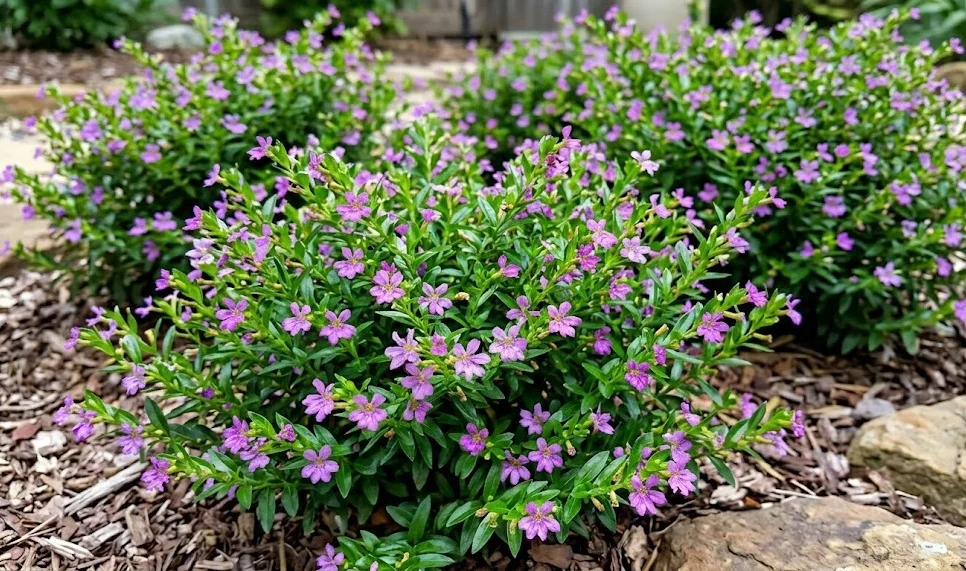
Pinching is a specialized pruning technique that is particularly effective for maintaining the shape of this small-leaved shrub. You should use your thumb and forefinger to remove the soft, green tips of the new growth every few weeks during the spring and summer. This constant, gentle guidance keeps the plant compact and prevents it from becoming leggy without the need for heavy cutting. Pinching is a proactive way to manage the plant’s development and ensures it always looks its best.
More articles on this topic
Shaping and rejuvenation practices
Creating a specific shape, such as a neat mound or a low hedge, requires a consistent and disciplined approach to pruning. You should visualize the final form you want to achieve and gradually work toward it by trimming back any stems that grow beyond the desired boundary. It is better to prune a little bit frequently than to wait and perform a massive overhaul that leaves the plant looking bare and stressed. A professional garden display is built on this foundation of regular, incremental maintenance.
Thinning out the interior of the plant is just as important as shaping the exterior, though it is often overlooked by novice gardeners. You should remove some of the older, inner branches that have become shaded and lost their leaves to allow light and air to penetrate the center. This improves the overall health of the plant and reduces the risk of fungal diseases that thrive in dense, stagnant foliage. A well-thinned plant looks more vibrant and has a more natural, healthy appearance from the inside out.
If you are dealing with a plant that has been neglected for several years, you may need to perform a multi-stage rejuvenation. You should start by removing all dead, damaged, or crossing branches to open up the structure and see what you are working with. Then, over the course of two or three seasons, gradually cut back the oldest wood to make room for younger, more productive stems. This gradual approach is less stressful for the plant and allows it to maintain some of its aesthetic value while it recovers.
Finally, you should always step back and evaluate your work from several angles as you prune to ensure the plant remains balanced. It is easy to get caught up in the details of one branch and lose sight of the overall symmetry of the shrub. A professional tip is to take a break every few minutes and look at the plant from a distance to guide your next moves. By treating pruning as both a science and an art, you can ensure your shrubs remain a highlight of your garden for years to come.