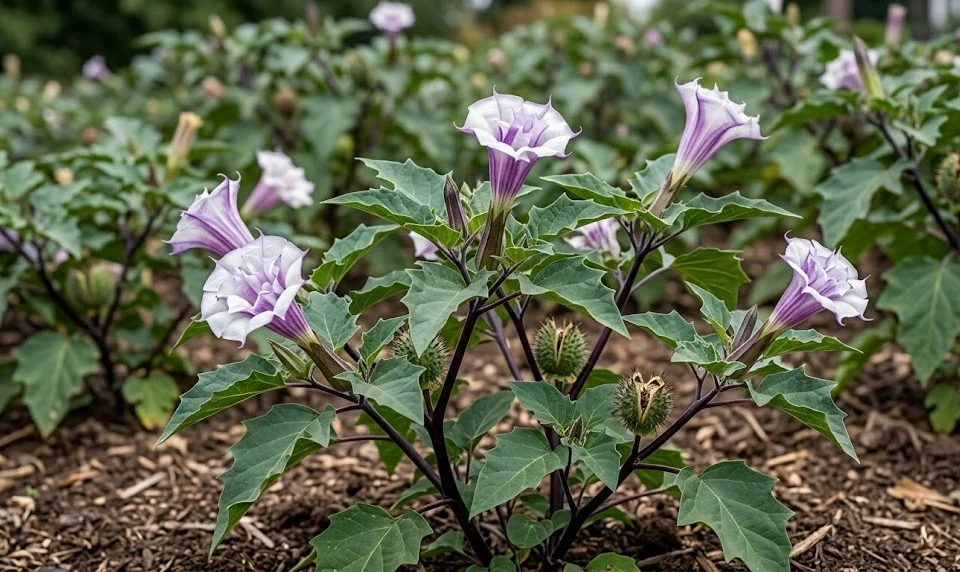

Pruning and cutting back are essential skills for any gardener who wishes to control the size and shape of the devil’s trumpet. This plant is a vigorous grower that can quickly become unruly if left to its own devices, often outgrowing its intended space in just a few months. Regular pruning not only keeps the plant looking tidy but also encourages a more prolific display of flowers by stimulating new growth. By applying professional pruning techniques, you can maintain a balanced structure and ensure the long-term health of your specimen.
Structural pruning and shaping
Structural pruning is best performed in the early spring as the plant is just beginning to emerge from its winter rest. The goal is to establish a strong framework of branches that will support the heavy leaves and flowers of the coming season. You should begin by removing any dead, damaged, or diseased wood that may have occurred during the winter months. This “cleaning” phase allows you to see the natural shape of the plant and decide where further cuts are needed to improve its form.
If you want a more tree-like appearance, you can choose a single main stem and remove all the lateral shoots that emerge from the lower part of the plant. This focuses the plant’s energy upward and creates a “standard” form that looks very elegant in a large pot or as a focal point. For a bushier, more shrub-like shape, you should pinch back the growing tips of the main stems once they reach the desired height. This encourages the plant to branch out horizontally, creating a denser canopy and more potential flowering sites.
Thinning out the interior of the plant is also an important part of structural pruning that improves air circulation and light penetration. If the center of the plant becomes too crowded, the inner leaves will often turn yellow and die, creating a messy appearance and a harbor for pests. By removing some of the smaller, crossing, or inward-growing branches, you create a more open and healthy structure. A well-pruned plant is not only more attractive but also much easier to inspect for any health issues throughout the season.
Always use sharp, clean bypass pruners to make your cuts, as ragged edges can take longer to heal and serve as entry points for pathogens. Make your cuts at a 45-degree angle about a quarter-inch above a leaf node or a dormant bud. This encourages the new growth to emerge in the direction you want and prevents water from pooling on the cut surface. Structural pruning is an investment in the plant’s future performance that pays off in a more balanced and beautiful specimen.
More articles on this topic
Maintenance pruning and deadheading
Maintenance pruning is an ongoing task that you should perform throughout the active growing season to keep the plant in peak condition. This includes the regular removal of any yellowing or damaged leaves that naturally occur as the plant grows and matures. Keeping the foliage tidy prevents the buildup of debris around the base of the plant, which can attract slugs and other unwanted pests. It also ensures that all the plant’s energy is directed toward healthy, productive tissues rather than trying to sustain dying ones.
Deadheading, or the removal of spent flowers, is perhaps the most important part of maintenance pruning for a flowering plant like the devil’s trumpet. When a flower fades, the plant begins the energy-intensive process of producing seeds within a spiky pod. By cutting off the faded blossoms before the pods can form, you signal to the plant that it should continue producing new flower buds. This simple practice can significantly extend the flowering season and keep the plant looking fresh for many months.
When deadheading, be sure to cut back to a healthy set of leaves rather than just pulling off the old flower. This keeps the plant’s silhouette clean and prevents the development of unsightly “stubs” that can eventually rot. If you are growing the plant specifically for its seeds, you can leave a few pods to mature toward the end of the season. However, keep in mind that allowing too many seed pods to develop will eventually cause the plant to stop blooming altogether as it reaches the end of its reproductive cycle.
You should also keep an eye out for “suckers” or unwanted shoots that may emerge from the base of the plant or from below a graft line if applicable. These shoots are often very vigorous and can quickly sap energy away from the main flowering branches. Removing them as soon as they appear will help maintain the intended shape and vigor of your devil’s trumpet. Consistent, minor interventions are much better for the plant than one or two major, stressful pruning events.
More articles on this topic
Severe rejuvenation and safety
There may be times when a devil’s trumpet becomes so overgrown or leggy that a more drastic “rejuvenation” pruning is required. This involves cutting the entire plant back significantly, sometimes to within a few inches of the main framework or even the ground. While this may seem harsh, the plant is remarkably resilient and will often respond with a flush of healthy, vigorous new growth. This is a great way to “reset” an older plant that has lost its lower foliage or has become too large for its space.
The best time for severe pruning is in the late winter or very early spring, just before the plant begins its active growth phase. This allows the plant to use its stored energy reserves to produce a brand-new set of branches during the peak growing season. You should provide a bit of extra fertilizer and ensure consistent watering after such a heavy pruning to support the recovery process. Within a few weeks, you will see new buds emerging from the old wood, promising a fresh start for your plant.
Safety is a critical consideration whenever you are pruning the devil’s trumpet due to the toxic nature of its sap. You must always wear gloves and long sleeves to protect your skin from potential irritation or accidental absorption of the alkaloids. It is also a good idea to wear eye protection, especially when cutting larger branches that might snap or spray sap. After you are finished pruning, thoroughly wash your tools and your hands with soap and water to remove any residues.
All the material you remove during pruning should be disposed of carefully and should never be added to a compost pile where it might be handled later. Burning the trimmings is also not recommended, as the smoke can contain toxic compounds that are dangerous to inhale. The most professional way to handle the waste is to bag it and dispose of it with your regular household trash. By following these safety protocols, you can enjoy the horticultural benefits of pruning while protecting yourself and your community.