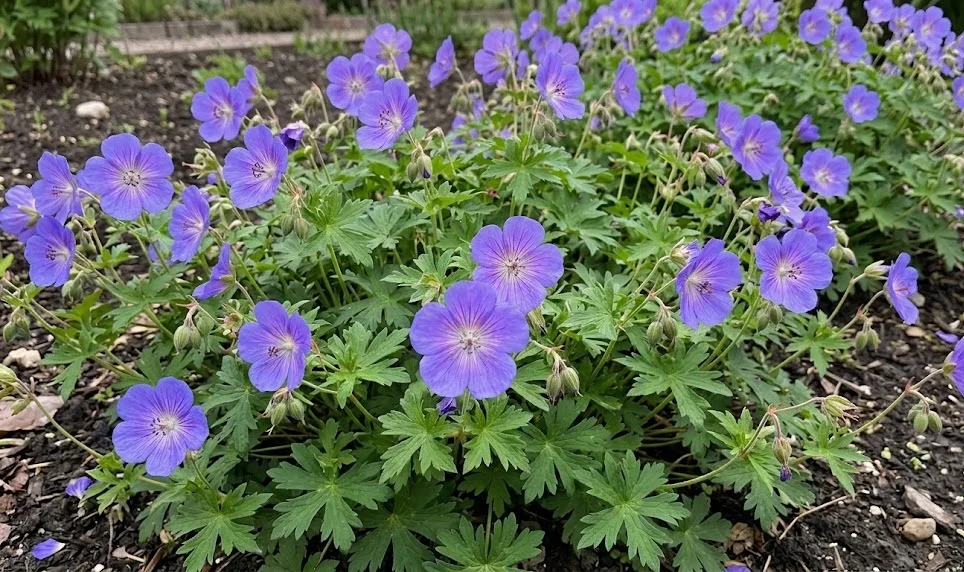

Establishing a successful colony of Himalayan cranesbill begins with a clear understanding of its planting and propagation needs. This perennial is known for its adaptability, but the initial steps taken in the garden determine its long-term health and spread. By following professional planting techniques, you can ensure that each new addition thrives from the moment it hits the soil. Propagation offers a cost-effective way to expand your collection while maintaining the genetic integrity of your favorite varieties.
The first step in the planting process is choosing the correct time of year to introduce the cranesbill to the garden. Spring and autumn are the most favorable seasons because the temperatures are mild and rainfall is usually more consistent. Planting during these windows allows the root system to establish itself before the stress of summer heat or winter cold. Proper timing is often the difference between a plant that struggles and one that flourishes immediately.
Before digging any holes, it is wise to arrange the plants in their pots on the ground to visualize the final spacing. Himalayan cranesbill tends to spread, so giving each plant enough room to breathe is essential for preventing disease. Generally, a distance of thirty to forty centimeters between plants allows for a dense cover without excessive overcrowding. Planning the layout beforehand saves time and prevents the need for moving plants later on.
Once the layout is decided, the actual planting can begin with the preparation of individual holes. Each hole should be twice as wide as the root ball but no deeper than the container the plant came in. This ensures that the crown of the plant sits at the correct level relative to the soil surface. Planting too deep can lead to crown rot, while planting too shallow may cause the roots to dry out prematurely.
Site selection and soil preparation
The success of your planting project depends heavily on the specific environment you provide for the cranesbill. While these plants are remarkably tolerant, they perform best in a spot that receives partial to full sunlight. Soil that is consistently moist but never waterlogged will support the most vigorous growth and the most abundant flowering. Avoiding the deepest shade ensures that the stems remain sturdy and do not become overly elongated.
More articles on this topic
Preparing the soil involves more than just digging a hole; it requires enhancing the existing structure to support life. Mixing aged compost or well-rotted manure into the planting area provides a slow-release source of essential nutrients. This organic matter also improves the soil’s ability to hold moisture while simultaneously aiding in drainage. A well-prepared bed acts as a reservoir of energy for the young plants as they begin to grow.
Checking for buried debris or large stones during the preparation phase is a small task that pays off in the long run. Clearing the soil of obstructions allows the roots to move freely and establish a deep, stable foundation. It also makes future maintenance tasks like dividing or weeding much easier for the gardener. A clean, loose soil texture is the ideal starting point for any new perennial installation.
Final site checks should include an assessment of local wind patterns and potential competition from tree roots. Although the cranesbill is hardy, extremely exposed sites might dry out the foliage faster than the roots can supply water. If planting under large trees, be prepared to provide extra water and nutrients to compensate for the competition. Understanding these microclimates allows you to adjust your planting strategy for the best possible outcome.
Propagation by division
Division is the most common and effective method for propagating established Himalayan cranesbill plants in the home garden. This technique is best performed in early spring when the new growth is just beginning to peek through the soil. By lifting an older clump, you can separate the vigorous outer sections from the older, less productive center. This not only creates new plants but also revitalizes the original specimen for better performance.
More articles on this topic
To begin the process, use a sharp spade to dig a wide circle around the perimeter of the plant. Carefully lift the entire root mass from the ground, taking care to minimize damage to the delicate feeding roots. Once the plant is out of the ground, you can often pull the sections apart by hand or use a clean knife for tougher roots. Each new division should have a healthy set of roots and at least two or three growing points.
Replanting the divisions should happen immediately to prevent the roots from drying out in the air. Treat each division as a new plant, following the same planting guidelines regarding hole size and soil preparation. Watering the new transplants thoroughly helps settle the soil around the roots and eliminates air pockets. With proper care, these divisions will quickly establish themselves and may even bloom in their first year.
Division also provides an opportunity to share plants with friends or neighbors, fostering a sense of community among gardeners. It is a sustainable way to fill large garden spaces without the need for purchasing numerous individual containers. Keeping a schedule of which plants were divided and when helps maintain a healthy rotation throughout the garden. This practice ensures that no single plant becomes too old and woody over time.
Growing from seeds and cuttings
While division is faster, growing Himalayan cranesbill from seeds can be a rewarding challenge for the patient gardener. Seeds are best sown in late winter or early spring using a high-quality seed starting mix. They often require a period of cold stratification to break their dormancy and encourage uniform germination. This process mimics the natural winter conditions the seeds would experience in their native Himalayan habitat.
Once the seedlings have developed their first set of true leaves, they can be transplanted into individual small pots. It is important to keep the young plants in a protected environment until they are strong enough to face the outdoor elements. Gradually hardening them off by exposing them to the outdoors for increasing periods prepares them for life in the garden. This method allows for the production of a large number of plants at a very low cost.
Basal cuttings are another alternative for propagation, usually taken in the spring when the shoots are about ten centimeters long. Selecting healthy, non-flowering shoots increases the chances of successful rooting and vigorous future growth. The cuttings should be placed in a gritty, well-drained potting medium and kept in a humid environment. Rooting usually occurs within a few weeks, after which the new plants can be potted up.
Both seeds and cuttings allow for the preservation of specific characteristics or the introduction of new genetic variety. While more labor-intensive than division, these methods provide a deeper understanding of the plant’s life cycle. They are excellent techniques for those looking to expand their horticultural skills and experiment with different growing conditions. Successful propagation from these smaller units brings a unique sense of accomplishment to the gardening experience.
Best practices for establishment
The first few weeks after planting are the most critical for the long-term survival of the Himalayan cranesbill. Regular watering is essential during this period to ensure the roots do not experience drought stress. However, it is equally important not to overwater, as the young roots need oxygen to grow effectively. Checking the soil moisture by hand is a simple and reliable way to determine when water is needed.
Applying a layer of organic mulch around the new plants can significantly improve establishment rates. Mulch helps regulate soil temperature, keeping the roots cool in the summer and warmer in the late autumn. It also suppresses weed growth, which reduces competition for light, water, and nutrients. Be careful not to pile the mulch directly against the crown of the plant to avoid rot.
Monitoring for pests and diseases during the early stages of growth allows for quick intervention if problems arise. Young plants are often more vulnerable to damage from slugs or snails than established clumps. Using organic deterrents or physical barriers can protect the tender foliage while the plant builds its strength. A healthy start leads to a resilient adult plant that can withstand future challenges.
Finally, resist the urge to fertilize heavily immediately after planting your new cranesbill. The plant needs to focus on root development before it starts producing a massive amount of top growth. A small amount of compost mixed into the soil is usually sufficient for the first few months of life. Once you see significant new leaves forming, you can begin a regular maintenance schedule as described in the care guidelines.