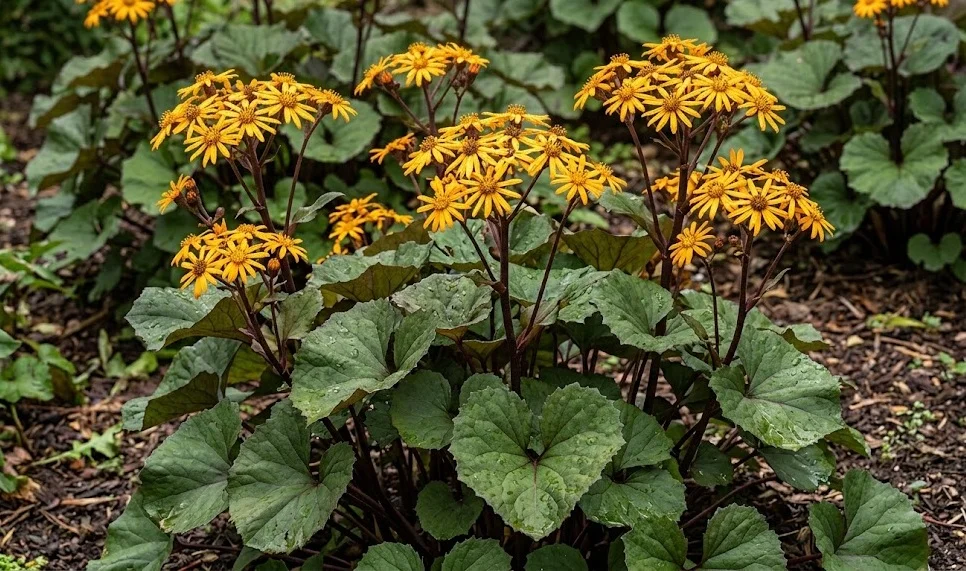

Maintaining the health of the Chinese leopard plant involves more than just watering and feeding; it requires a vigilant eye for the various biological threats that can compromise its beauty. While generally robust, the plant’s succulent stems and massive, moisture-rich leaves are particularly attractive to certain garden pests and fungal pathogens. Understanding the lifecycle of these threats and implementing a proactive management strategy is essential for any serious gardener. By identifying problems early, you can often resolve them with minimal intervention and prevent them from spreading to the rest of your landscape.
Dealing with mollusks and leaf damage
Slugs and snails are by far the most persistent and damaging pests for the Chinese leopard plant. The large, tender leaves are a prime food source for these mollusks, especially during damp nights or rainy weather. An infestation can quickly turn a beautiful foliage display into a tattered collection of holes and ragged edges. You will often see the telltale shiny slime trails on the leaves or the surrounding soil as a clear sign of their presence.
The most effective way to manage slugs and snails is to use a combination of physical barriers and biological controls. Surrounding the base of the plant with copper tape or crushed eggshells can create an uncomfortable surface that deterrents their movement. You should also remove any debris, such as fallen leaves or large stones, where these pests might hide during the heat of the day. Hand-picking them in the evening with a flashlight is a highly effective, though time-consuming, method of reduction.
Iron phosphate pellets are a professional-grade solution that is safe for use around pets and wildlife. These pellets act as a bait that, once consumed, causes the mollusks to stop feeding and eventually die. It is best to apply these treatments in the early spring as soon as the first shoots appear to catch the pests early in their cycle. Consistency is key, as new generations of slugs can emerge throughout the growing season whenever conditions are wet.
If the damage is already severe, you should remove the most heavily chewed leaves to improve the plant’s appearance and reduce stress. This also allows for better air circulation around the crown, which can help prevent secondary infections in the damaged tissues. Keeping the area around the plant relatively clear of low-growing weeds can also make the environment less hospitable for mollusks. A proactive approach in the spring will save you a lot of frustration during the peak of the summer.
More articles on this topic
Identifying and treating fungal infections
Fungal diseases like powdery mildew and leaf spot can occasionally affect the Chinese leopard plant, particularly in humid or overcrowded conditions. Powdery mildew appears as a white, dusty coating on the leaf surfaces, which can eventually lead to yellowing and premature leaf drop. Leaf spot diseases are characterized by small, dark lesions that may merge to form larger necrotic areas on the foliage. These issues are often a result of poor air circulation or water sitting on the leaves for too long.
Prevention is the best defense against fungal pathogens, starting with proper plant spacing and irrigation techniques. Ensure that there is enough room between plants for air to flow freely, which helps the foliage dry quickly after rain or dew. Always water at the base of the plant to keep the leaves dry, and avoid working in the garden when the plants are wet to prevent spreading spores. Removing and destroying any infected leaves as soon as they are spotted can halt the progress of the disease.
If a fungal infection becomes widespread, you may need to apply an organic fungicide, such as one based on sulfur or neem oil. These treatments are most effective when applied at the first sign of symptoms and should be repeated according to the product label. It is important to cover both the tops and the undersides of the leaves for complete protection. In some cases, a baking soda and water solution can act as a gentle preventative spray for powdery mildew.
Long-term management involves improving the overall environment to make it less conducive to fungal growth. This might include thinning out nearby shrubs to increase light and airflow or adjusting your watering schedule to earlier in the morning. Healthy plants with strong immune systems are naturally more resistant to these types of infections. By maintaining optimal growing conditions, you reduce the likelihood that you will ever need to rely on chemical controls.
More articles on this topic
Managing root and crown rot
Crown rot is a serious condition that can lead to the sudden collapse and death of an otherwise healthy Chinese leopard plant. This disease is typically caused by soil-borne pathogens that thrive in waterlogged, poorly drained conditions. The first signs are often a softening of the stems at the base and a foul odor emanating from the crown area. Once the rot has set in, the plant’s vascular system is compromised, preventing water and nutrients from reaching the leaves.
The primary way to prevent crown rot is to ensure that your planting site has excellent drainage and the crown is not buried too deep. If you have heavy clay soil, you should amend it with organic matter or plant on a slight mound to encourage water to run off. Avoid over-mulching directly against the stems, as this can trap moisture against the sensitive crown tissue. If you suspect rot is beginning, you should immediately reduce watering and try to gently clear some soil away from the crown to let it dry.
In cases where the rot is localized, you may be able to save the plant by carefully cutting away the infected tissue with a sterile knife. Dust the remaining healthy parts with a fungicidal powder and replant in a new, well-drained location with fresh soil. However, if the entire crown has turned mushy and dark, the plant is likely beyond recovery and should be removed and destroyed. Do not compost plants that have died from rot, as the pathogens can survive in the compost pile.
Monitoring soil moisture is critical, especially during exceptionally wet seasons or in areas with high water tables. You should be especially careful with irrigation during the late autumn and winter when the plant is dormant and using very little water. A dormant plant sitting in cold, wet soil is at its highest risk for developing rot issues. By paying close attention to the soil’s drainage capacity, you can protect the heart of your plant from this devastating condition.
Environmental stressors and physiological disorders
Not all leaf damage is caused by pests or diseases; sometimes the environment itself is the culprit. Physiological leaf scorch occurs when the plant loses moisture faster than it can be replaced, resulting in brown, dry edges on the leaves. This is common during periods of high heat, intense sun, or strong winds, and is essentially a form of localized dehydration. While unsightly, it does not necessarily mean the plant is diseased, just that it is struggling with its current exposure.
Wilting is another common physiological response that can be mistaken for a serious health problem. On very hot days, the Chinese leopard plant may droop significantly in the afternoon as a way to conserve moisture. If the plant recovers and becomes turgid again by the next morning, it is simply a temporary reaction to heat stress. However, if the wilting persists even after the sun goes down and the soil is wet, there may be a problem with the root system.
Nutrient imbalances can also manifest as symptoms that look like diseases, such as chlorosis or unusual leaf spotting. If the soil pH is incorrect, the plant may be unable to access certain micronutrients, leading to a decline in its overall health. Regular soil testing can help you distinguish between a genuine disease and a simple nutritional deficiency. Addressing the underlying soil chemistry is often the most effective way to restore the plant’s vibrant appearance.
To minimize environmental stress, you should always strive to match the plant’s placement with its natural preferences. Providing a consistent supply of water and maintaining a thick layer of cooling mulch will buffer the plant against the extremes of weather. If you notice persistent issues that do not respond to traditional pest or disease treatments, reconsider the plant’s location. Sometimes moving a stressed plant just a few feet into deeper shade or more sheltered ground can make all the difference.
Implementing integrated pest management
A professional approach to plant health involves Integrated Pest Management, or IPM, which focuses on long-term prevention and minimal chemical use. This strategy begins with selecting the right plant for the right place and maintaining it with proper cultural practices. By keeping your Chinese leopard plant healthy and unstressed, you make it a much less attractive target for pests. Encouraging natural predators like birds, toads, and beneficial insects creates a self-regulating ecosystem in your garden.
Regular scouting is a fundamental part of IPM, allowing you to catch problems while they are still small and manageable. Spend time each week looking closely at your plants, checking for early signs of insect activity or unusual spots on the foliage. Keeping a garden journal can help you track when certain pests appear each year, allowing you to be proactive in your defense. Early detection often means that a simple blast of water from a hose or hand-picking is all that is needed.
When an intervention is necessary, always start with the least toxic option available to achieve the desired result. For example, using barriers or baits for slugs is much safer for the environment than broad-spectrum insecticide sprays. If you must use a pesticide or fungicide, choose one that is specific to the problem and follow the application instructions exactly. Protecting the beneficial organisms in your garden is just as important as controlling the pests.
The ultimate goal of a professional gardener is to create a balance where the plants can flourish with minimal interference. By understanding the common diseases and pests of the Chinese leopard plant, you can act with confidence and precision. A well-managed garden is not one that is completely free of pests, but one where the pests are kept at levels that do not cause significant harm. This holistic view ensures that your landscape remains a beautiful and healthy environment for years to come.