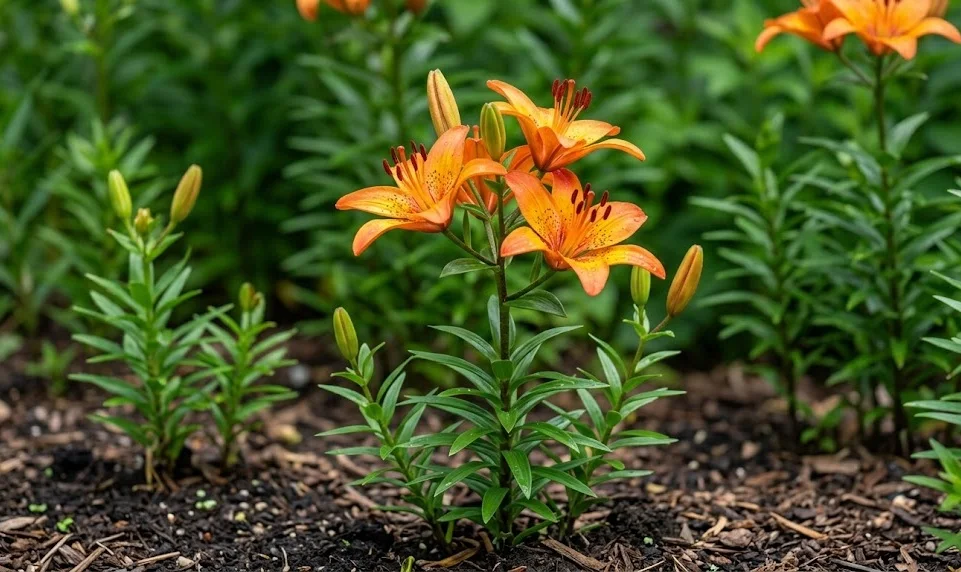

The interaction between light and the biological processes of the Asiatic lily is the primary driver of its growth rate, stem strength, and floral abundance. These plants have evolved to maximize energy capture during the long days of early summer, making them highly dependent on specific levels of solar radiation. While they are often categorized as sun-loving plants, the nuances of light intensity and duration can significantly alter their physical appearance. Understanding how to position these lilies in the landscape to receive the optimal balance of light is a hallmark of an expert gardener.
Full sun versus partial shade
In most temperate climates, Asiatic lilies perform best when they are planted in a location that receives full sun for at least six to eight hours a day. This intense light provides the energy needed for the plant to produce thick, sturdy stems that can support the weight of multiple large flowers without bending. Full sun also encourages the production of the most vibrant colors in the petals, as many pigments are light-dependent. If the light levels are too low, the plants will often “stretch” toward the sun, becoming leggy and prone to falling over.
However, in regions with extremely hot summer temperatures, a bit of afternoon shade can actually be beneficial for the longevity of the blooms. Intense, direct midday sun in a southern climate can sometimes cause the delicate petals to bleach or even scorch at the edges. Providing “dappled” shade during the hottest part of the day allows the plant to stay cooler while still receiving enough total light for energy production. Finding this balance is often a matter of observing how the light moves across your particular garden throughout the day.
The concept of “head in the sun, feet in the shade” is a classic piece of gardening wisdom that applies perfectly to the Asiatic lily. While the foliage and flowers crave the energy of the sun, the root zone and the bulb prefer to stay cool and moist. You can achieve this by planting low-growing perennials or groundcovers around the base of the lilies to shade the soil surface. This creative use of light management mimics the lily’s natural habitat in meadows where they grow up through other vegetation to reach the light.
Light quality also changes throughout the growing season, and the lily must adapt its growth patterns accordingly. In the early spring, the low angle of the sun provides a different spectrum of light than the high, intense sun of late June. The plant uses these changes in light quality to time its various developmental stages, from the first sprout to the final seed pod. Gardeners should consider how nearby deciduous trees might change the light levels as they leaf out, potentially shading out the lilies later in the season.
More articles on this topic
Managing intense heat and light stress
When light intensity is combined with high temperatures, the Asiatic lily can enter a state of physiological stress that affects its overall health. If the leaves start to look pale or have a “bronzed” appearance, it may be a sign that the light levels are too high for the current moisture availability. Under these conditions, the plant closes its stomata to conserve water, which also stops the process of photosynthesis and slows down growth. Providing extra irrigation during these high-light periods is essential to help the plant cope with the energy load.
Reflected light from light-colored walls or concrete surfaces can also increase the total light and heat load on a lily plant unexpectedly. If you plant lilies next to a white house or a stone patio, they may receive significantly more radiation than those in an open field. This can lead to premature fading of the flowers and a shorter total blooming period for the colony. In such locations, selecting varieties that are known for their heat tolerance is a wise professional move to ensure a successful display.
Light also plays a role in the development of certain physiological disorders, such as “leaf scorch,” which can be mistaken for a disease. This occurs when the plant cannot move water to the leaf tips fast enough to keep up with the evaporation caused by intense light and wind. The result is brown, crispy leaf tips that can detract from the overall aesthetic of the plant but rarely cause long-term harm. Increasing the humidity around the plants or providing a temporary windbreak can help to reduce the severity of this light-induced stress.
If you are growing lilies in a greenhouse or an indoor environment, managing light levels becomes an even more precise science. You may need to use supplemental lighting to provide the necessary spectrum for healthy growth if the natural light is insufficient. Conversely, using shade cloths can help to lower the temperature and intensity during the peak of the summer to prevent crop damage. Professional growers often manipulate light levels to “force” lilies to bloom at specific times for holidays or flower shows.
More articles on this topic
Impact of light on bloom quality and timing
The duration of light, or photoperiod, is one of the main cues that tells an Asiatic lily when it is time to start producing flower buds. Most of these hybrids are “long-day” plants, meaning they require a certain number of daylight hours to trigger the reproductive phase of their life cycle. This is why lilies planted in the shade often bloom much later than those in the sun, or may fail to bloom entirely if the threshold is never met. Understanding this internal clock helps you predict when your garden will be at its peak of color.
Light intensity also directly affects the “flower count,” or the number of individual blooms found on a single stem. A plant grown in optimal light conditions will have more energy to invest in a larger number of buds than one struggling in a dim corner. This relationship is so strong that professional landscapers often use the flower count as a metric for evaluating the suitability of a particular planting site. If your lilies are only producing one or two flowers per stem, it is a clear indication that they need a brighter home.
The orientation of your garden beds can have a surprising impact on how the light is distributed across the individual lily stems. Stems planted on the north side of a tall structure or a dense hedge will naturally lean toward the south to find more light. This can result in a “tilted” garden that looks disorganized and may lead to stems snapping under their own weight. Whenever possible, plant your lilies in an open area where the light comes from directly above for the most upright and symmetrical growth.
Finally, light levels during the post-bloom period are just as important as those during the flowering stage for the long-term health of the bulb. The plant needs several weeks of good light after the flowers have faded to perform the photosynthesis necessary to “recharge” for next year. If you move a potted lily into a dark corner after it finishes blooming, you are effectively starving the bulb for the next season. Keep the plants in a bright location until the foliage naturally dies back to ensure a repeat performance of beautiful blooms.