
Properly managing the hydration and nutrition of your trees is the cornerstone of professional fruit production. Asian persimmons have specific needs that change as the tree moves through its annual cycle of growth, flowering, and fruiting. Over-watering can be just as damaging as a drought, and improper fertilization can lead to poor fruit quality. This article details the expert strategies required to balance these two critical aspects of tree care for the best possible results.
Establishing a watering schedule
Young, newly planted trees require the most frequent attention when it comes to their water needs. Their root systems are not yet deep enough to tap into subsoil moisture, making them dependent on surface watering. During the first two growing seasons, you should aim to keep the soil consistently moist but never waterlogged. Checking the soil moisture by hand every few days is more effective than relying on a rigid calendar.
As the tree matures and its root system expands, it becomes significantly more drought-tolerant. However, consistent moisture is still required if you want the tree to produce a large crop of juicy, high-quality fruit. Mature trees generally benefit from a deep soaking once every week or two during the dry periods of summer. Deep watering encourages the roots to grow further down into the earth, which provides better stability and long-term resilience.
Seasonal weather patterns should always dictate your adjustments to the irrigation routine. During periods of heavy rain, you can suspend supplemental watering entirely to allow the soil to breathe. Conversely, during an extended heatwave, you may need to increase the frequency to prevent the tree from dropping its developing fruit. Pay close attention to the leaves; if they begin to droop in the late afternoon, the tree is likely under water stress.
The method of delivery is just as important as the amount of water you provide to the tree. Drip irrigation or soaker hoses are the most efficient ways to deliver water directly to the root zone with minimal waste. Overhead watering should be avoided whenever possible, as it can encourage fungal diseases by keeping the foliage wet. Aim to apply water in the early morning so that any accidental surface moisture can evaporate quickly in the sun.
More articles on this topic
Understanding nutrient requirements
Nitrogen is the primary engine for vegetative growth and is essential for the development of healthy, green leaves. In the early stages of a tree’s life, a nitrogen-rich fertilizer helps it reach a productive size more quickly. However, once the tree is established, you must be careful not to provide too much nitrogen, as this can lead to soft growth. Soft, succulent wood is more attractive to pests and more susceptible to winter injury during the cold months.
Phosphorus and potassium are equally important for the development of strong roots and high-quality fruit. Potassium, in particular, plays a vital role in the sugar metabolism of the tree and the ripening process of the persimmons. A balanced fertilizer often provides the right ratio of these major nutrients for a healthy home orchard. If you notice poor fruit flavor or weak branches, it may be a sign that the potassium levels in the soil are insufficient.
The timing of fertilizer application should be synchronized with the tree’s natural growth surges. The most important application occurs in early spring, just before the new growth begins to appear. This provides the tree with the resources it needs to push out new leaves and develop strong blossoms for the coming season. A second, much lighter application can be done in early summer to support the developing fruit if the soil is particularly sandy.
Always apply fertilizer to the area under the canopy, starting about thirty centimeters from the trunk and extending to the drip line. This is where the most active feeder roots are located and where the nutrients will be most easily absorbed. Never place fertilizer directly against the trunk of the tree, as the concentrated minerals can burn the bark. After spreading the fertilizer, water the area thoroughly to wash the nutrients down into the soil.
More articles on this topic
The role of soil ph and organic matter
The acidity or alkalinity of your soil significantly affects how well your tree can access the nutrients you provide. Asian persimmons thrive best in a slightly acidic environment, typically with a pH between 6.0 and 6.5. If the soil is too alkaline, the tree may suffer from iron chlorosis, which causes the leaves to turn yellow while the veins remain green. Regular soil testing every three years will tell you exactly what adjustments are needed to keep the pH in the ideal range.
Incorporating organic matter into the soil is a long-term strategy for improving both fertility and water retention. Well-rotted compost or manure provides a slow-release source of nutrients that mimics the natural forest floor. This organic material also improves the soil structure, making it easier for roots to penetrate and for water to move through the ground. Over time, high levels of organic matter create a buffer that protects the tree from sudden changes in nutrient availability.
Microorganisms in the soil play a hidden but essential role in the fertilization process of your persimmon tree. These tiny life forms break down complex organic compounds into simple minerals that the roots can absorb. By avoiding harsh chemical pesticides and using organic amendments, you foster a healthy population of these beneficial microbes. A living soil is much more efficient at supporting a fruit tree than a sterile, chemically-dependent environment.
Mulching is the final piece of the puzzle for maintaining both moisture and fertility in the orchard. A layer of organic mulch slowly breaks down and feeds the soil while simultaneously preventing the ground from drying out. This creates a stable environment for the roots, which leads to more consistent growth and fruit production. It is a simple practice that offers multiple benefits and significantly reduces the need for frequent manual interventions.
Monitoring for nutrient deficiencies
Visual clues from the foliage are often the first sign that your tree is lacking a specific nutrient. Small, pale leaves usually indicate a need for more nitrogen to support healthy photosynthesis. If the edges of the leaves appear burnt or brown, it could be a sign of potassium deficiency or even salt buildup from over-fertilization. Learning to read these signs allows you to address problems before they impact the overall health of the tree.
Boron and zinc are micronutrients that, while needed in tiny amounts, are crucial for proper fruit set and leaf formation. A lack of boron can cause the fruit to develop internal corky spots or drop prematurely from the tree. Zinc deficiency often results in “rosetting,” where the leaves are very small and crowded together at the tips of the branches. Using a high-quality, broad-spectrum fertilizer or a specialized foliar spray can quickly correct these minor element issues.
Environmental factors can sometimes make it look like a nutrient problem when the issue is actually related to water. For example, a tree that is too dry cannot absorb the minerals that are already present in the soil. Similarly, roots in waterlogged soil cannot function properly and may show signs of stress that mimic deficiencies. Always check the moisture levels in the ground before deciding that the tree needs more fertilizer.
If you are unsure about the health of your tree, a professional leaf tissue analysis can provide a definitive answer. This test measures the actual concentration of nutrients within the tree’s system rather than just what is in the soil. It is a highly accurate way to fine-tune your fertilization program and avoid wasting money on unnecessary amendments. Professional growers often use this method to ensure their trees are performing at their absolute peak.
Watering and feeding during the fruiting phase
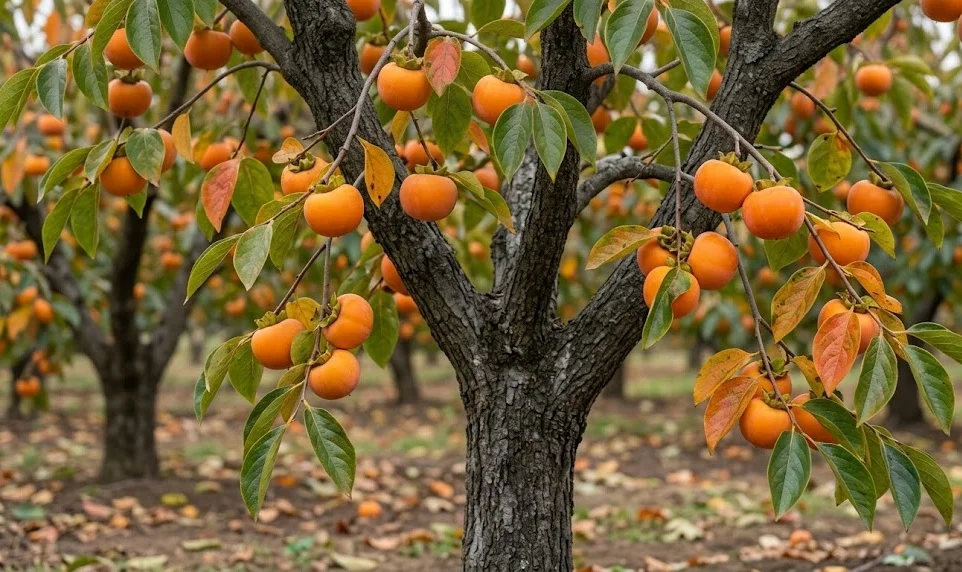
As the fruit begins to swell in late summer, the tree’s demand for water reaches its annual peak. This is the period when the final size and quality of the persimmons are determined by the resources available to the tree. If the tree becomes too dry during this time, the fruit may shrivel or fall off before it is fully ripe. Maintain a regular, deep watering schedule to ensure that the tree has a steady supply of moisture during this critical phase.
Fertilization should be avoided in the late summer and autumn to prevent the tree from starting a new flush of growth. New, tender shoots produced late in the year will not have enough time to harden off before the first frost arrives. You want the tree’s energy to be focused on ripening the fruit and preparing for winter dormancy. The goal is to have a tree that is healthy and well-fed but not actively growing during the cooling months of autumn.
The flavor of the fruit can actually be influenced by your watering practices during the final weeks of ripening. Some growers find that slightly reducing water as the fruit reaches full color can help concentrate the sugars and improve the sweetness. However, this must be done carefully to avoid stressing the tree or causing the fruit to become soft and unmarketable. It is a balancing act that often comes with experience and knowledge of your specific local climate.
Once the harvest is complete, the tree enters a period of transition where it begins to store energy in its roots and trunk. You should continue to provide moderate water if the autumn is particularly dry, but no further fertilization is needed until the following spring. This storage phase is essential for the tree’s survival through the winter and its ability to leaf out vigorously next year. Proper care in the post-harvest period sets the stage for another successful season of growth.