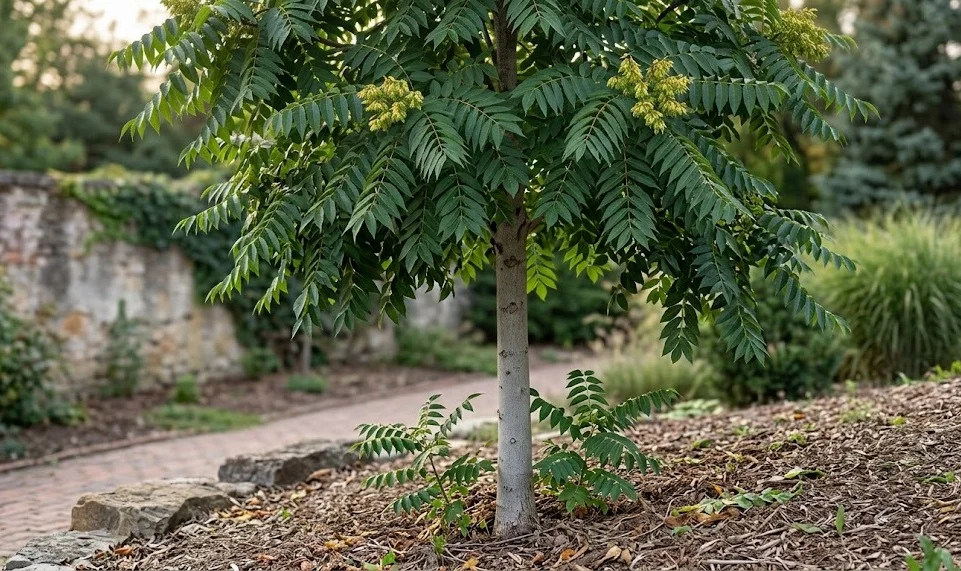

Understanding the fundamental relationship between this species and solar energy is essential for any successful horticultural project involving it. You should recognize that this is a pioneer species, naturally adapted to colonizing open spaces where direct sunlight is abundant throughout the day. Experienced landscapers often find that the tree’s growth rate and structural form are directly influenced by the quality and duration of the light it receives. It is important to place the tree where it can act as a dominant solar collector within your garden’s design.
Phototropic responses are highly visible in this tree, meaning it will actively grow toward the strongest source of illumination available in its environment. You might notice that a specimen planted near a tall building or under a larger canopy will lean significantly to reach the open sky. This leaning can eventually lead to structural instability as the tree becomes top-heavy on one side while its root system remains centered. To ensure a straight and balanced trunk, you should aim for a location that provides “overhead” light for the majority of the day.
The intensity of the sunlight also plays a role in the development of the characteristic pinnate leaves and the overall density of the crown. You will find that trees growing in full sun produce thicker, more robust foliage that is better able to withstand the physical pressures of wind and rain. In contrast, a tree forced to grow in partial shade will often have thinner leaves and a much more open, spindly branch structure. Maximizing the light exposure is the best way to achieve the lush, architectural look for which this species is famous.
Strategic placement within the landscape allows you to use the tree’s light-demanding nature to your advantage in creating shade or visual barriers. You should consider how the shadow of the tree will move across your property and affect the light requirements of other plants in your collection. A well-positioned tree can act as a natural umbrella, cooling your outdoor living spaces during the peak of the summer while still thriving in the intense solar radiation. Mastering the light dynamics of your garden is a key skill for any professional horticulturalist or dedicated hobbyist.
Optimal exposure and growth potential
To reach its maximum growth potential and achieve its full mature size, this tree requires at least six to eight hours of direct, unfiltered sunlight every day. You should evaluate your proposed planting site during different times of the year to ensure that shadows from nearby structures or evergreen trees don’t block the sun. While the species can “survive” in less than ideal light, its growth will be significantly slower and its health may be compromised over the long term. Full solar exposure is the fuel that drives the legendary rapid expansion of this particular botanical specimen.
More articles on this topic
Urban environments often present unique light challenges, such as the “canyon effect” of tall buildings or the reflective glare from glass and concrete surfaces. You will find that this tree is remarkably tolerant of these artificial lighting conditions, making it a favorite for greening difficult city spaces. However, you should still aim for a spot that gets at least a window of high-intensity light during the middle of the day. Watching how the sun interacts with the urban landscape will help you find the “sweet spot” for your new tree.
The color of the foliage can also give you important clues about whether the tree is receiving the appropriate amount of light for its needs. You should see a vibrant, deep green color in the leaves during the height of the summer, which indicates a high level of photosynthetic activity. If the leaves appear pale or yellowish despite proper watering and nutrition, it might be a sign that the light levels are too low for the tree’s metabolic processes. Adjusting the surrounding vegetation to let more light in can often solve these “mysterious” health problems.
Early morning light is particularly beneficial for drying the dew off the leaves and preventing the development of certain fungal leaf diseases. You should try to orient your planting so that the tree catches the first rays of the sun as it rises in the east. This natural drying process keeps the foliage healthy and reduces the need for chemical fungicides in your garden management routine. A tree that starts its day in the sun is a tree that is better prepared to handle the challenges of the biological and environmental world.
Shade tolerance levels and limitations
While the tree of heaven is primarily a sun-loving species, it does possess a remarkable degree of shade tolerance when it is in its juvenile stage. You will often see young saplings growing in the understory of established forests, waiting for a gap in the canopy to open up and provide them with more light. This ability to “persist” in lower light levels allows the species to invade and eventually dominate existing woodland areas if not managed carefully. However, this persistence is a survival strategy, not an indication of where the tree truly prefers to grow.
More articles on this topic
As the tree matures, its requirement for light increases dramatically, and it will eventually begin to decline if it remains trapped in the deep shade. You should avoid planting this species in areas that receive only indirect or dappled light for the entire day, as the resulting specimen will likely be weak and prone to disease. The tree’s natural response to low light is to put all its energy into vertical growth, resulting in a thin, unstable trunk that cannot support a full canopy. Professional gardeners know that “full sun” is not just a suggestion but a requirement for a high-quality mature tree.
Competition for light between this tree and other fast-growing species can lead to a “race for the sky” that you must manage through strategic pruning. You might need to thin out the branches of neighboring trees to ensure that your specimen is not being shaded out by more aggressive competitors. Maintaining a clear “light chimney” above the tree ensures that it can continue to expand its canopy and maintain its structural integrity as it grows taller. Being an active manager of the light environment is just as important as managing the soil or the water.
If you have a shaded garden but still want the aesthetic of a large, compound-leaved tree, you might consider other species that are better adapted to those specific conditions. You should always aim to match the plant to the place rather than trying to force a light-demanding species to grow where it will never truly thrive. Using the right plant for the right light level is the foundation of a sustainable and beautiful landscape that requires less maintenance over the long term. Understanding the limits of your garden’s light is the mark of a truly expert and thoughtful gardener.
Phototropic responses and structural form
The way a tree bends and grows in response to light, a process known as phototropism, is one of its most powerful and visible biological drives. You will see that the main trunk and the major branches will always orient themselves to maximize the surface area of the leaves exposed to the sun. In a balanced light environment, this results in a beautiful, symmetrical canopy that is both structurally sound and aesthetically pleasing. In an uneven light environment, however, the tree can become a distorted and potentially dangerous architectural feature in your garden.
Managing the “balance of light” around your tree is a task that starts at planting and continues as the surrounding landscape matures and changes. You should be prepared to prune back any neighboring plants that start to encroach on the tree’s light space and cause it to lean. Regular “corrective pruning” can also help to redirect the tree’s growth and maintain a more centered and stable form over many years. A proactive approach to managing the tree’s response to light will save you from having to deal with a lopsided and hazardous specimen later on.
Reflected light from light-colored walls or water features can also influence the growth patterns of the tree and its overall health. You might find that a tree planted near a white-painted house will grow more evenly because it is receiving light from multiple directions at once. This “bonus” light can be a great asset in smaller urban gardens where direct sunlight might be limited to only a few hours a day. Understanding how light bounces around your specific site will help you make more informed decisions about where to place your botanical additions.
Finally, you should remember that the light requirements of your tree will change with the seasons as the sun’s path moves across the sky. You should observe how the patterns of light and shadow shift throughout the year to ensure the tree is getting what it needs during its most active growth phases. The long days of summer are when the tree does its most important work, so maximizing light during this period is the top priority for any professional manager. Your commitment to understanding the “light life” of your tree will be rewarded with a strong, healthy, and beautiful specimen.