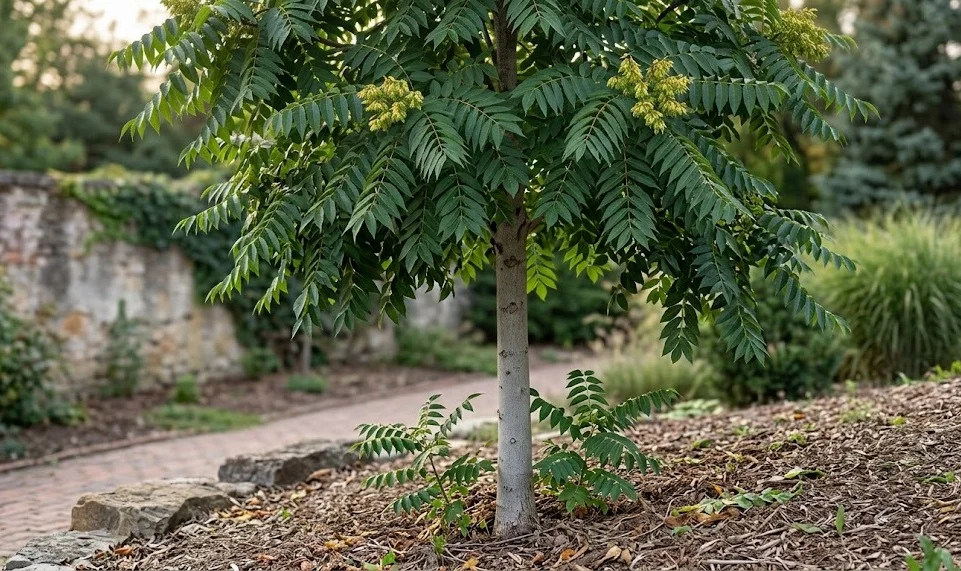

The maintenance of this vigorous species requires a strategic approach to ensure its growth does not become unmanageable in a managed landscape. You should recognize that while it is exceptionally hardy, it still benefits from specific environmental checks during the growing season. Many horticulturists suggest that monitoring the immediate surroundings is as important as looking at the tree itself. It is essential to keep a close eye on any suckers that might emerge from the base of the trunk throughout the year.
Managing the canopy structure is another vital task that ensures the specimen remains safe and aesthetically pleasing within its designated area. You should observe the branch density to prevent excessive weight from accumulating on weaker limbs during heavy summer storms. Professional care often involves thinning out the inner crown to allow better air circulation and light penetration to the lower sections. Regular inspections help you identify any structural issues before they become significant problems for nearby structures or plants.
Soil health plays a silent but crucial role in how this tree presents its foliage and maintains its overall vigor over several decades. Although it can thrive in poor soil conditions, ensuring that the ground remains aerated prevents the roots from becoming overly compacted in urban settings. You might consider light mulching around the root zone to stabilize soil temperature and provide a slow release of organic matter. Expert gardeners avoid heavy cultivation near the trunk to protect the shallow root system from unnecessary mechanical damage.
Monitoring the surrounding vegetation is a unique part of caring for this specific tree due to its allelopathic properties that can affect neighbors. You should regularly clear away fallen leaflets and seeds to minimize the impact of chemical compounds on more sensitive garden plants. It is also wise to check the vitality of nearby shrubs to ensure they are not being outcompeted for vital underground resources. Taking these proactive steps ensures a more balanced ecosystem where your chosen specimens can coexist with other horticultural varieties.
Soil management and root care
The foundation of a healthy specimen lies in the quality and consistency of the substrate where its expansive root system resides. You should ensure that the soil provides adequate drainage even if the tree is known for its ability to withstand temporary waterlogging. Professional growers often test the pH levels to maintain a neutral or slightly alkaline environment which mimics its natural limestone-based habitats. Understanding the physical composition of your garden soil helps you predict how the tree will respond to seasonal changes.
More articles on this topic
Root expansion is a characteristic feature that you must manage carefully to prevent damage to paved areas or underground utilities. It is highly recommended to install root barriers if the tree is situated near a foundation or a delicate walkway in a residential garden. You will find that regular root pruning during the early years can help train the system to stay within a specific footprint. Strategic planning during the initial maintenance phase saves a significant amount of effort and cost as the tree reaches maturity.
Aeration is frequently overlooked but remains essential for maintaining the metabolic processes within the deeper parts of the root architecture. You can use a garden fork to gently aerate the soil around the drip line twice a year to facilitate oxygen exchange. This practice is particularly beneficial if the area experiences high foot traffic which naturally compacts the earth over time. Healthy roots lead to a more resilient tree that can better withstand environmental stresses such as drought or high winds.
Microbial activity in the soil significantly enhances the tree’s ability to absorb essential minerals and water through its fine root hairs. You might introduce beneficial mycorrhizal fungi when working with younger trees to establish a symbiotic relationship that boosts growth rates. Avoid using heavy chemicals or synthetic herbicides in the immediate vicinity as these can disrupt the delicate balance of the soil biome. A natural approach to soil management often results in a more robust and visually striking specimen throughout the seasons.
Climate adaptation and resilience
This tree is renowned for its incredible ability to adapt to a wide range of climatic conditions, from extreme heat to freezing winters. You should observe how the leaves react to prolonged heatwaves to determine if additional support is needed during the peak of summer. While the species is drought-tolerant, providing some relief during unprecedented dry spells helps maintain the lush appearance of the pinnate foliage. Understanding the local microclimate will allow you to anticipate the tree’s needs before visible signs of stress appear.
More articles on this topic
In areas prone to high winds, the wood’s brittle nature can pose a risk that you must address through careful situational management. You should ensure the tree is not overly exposed to prevailing winds without some form of natural or artificial windbreak. Regular thinning of the branches reduces the sail effect, which significantly lowers the chance of limb breakage during turbulent weather events. Professional arborists recommend checking the union points of major branches for any signs of stress after a significant storm.
Air quality in urban environments often presents a challenge for many trees, yet this species acts as a natural filter with high efficiency. You will notice that it continues to thrive even in areas with high levels of sulfur dioxide and other common industrial pollutants. This resilience makes it a valuable asset for greening urban spaces where other more sensitive species might struggle to survive. Maintaining the cleanliness of the leaf surface after long dry periods can further enhance its photosynthetic capacity.
Temperature fluctuations in early spring can sometimes lead to frost damage on new, tender growth that has just emerged from the buds. You should be prepared to accept some minor dieback if a late freeze occurs, as the tree usually recovers quickly once warmer weather stabilizes. Watching the local weather forecasts allows you to understand the timing of the sap flow and the onset of the growing season. A well-adapted tree will show a consistent growth pattern that aligns perfectly with the seasonal cycles of your specific region.
Growth control and spatial management
Controlling the rapid growth rate is one of the most important aspects of professional care for this particular botanical specimen. You should establish a regular schedule for removing unwanted saplings that can appear quite far from the original planting site. Using mechanical removal methods for these young shoots is most effective when the soil is moist and the roots can be easily extracted. Consistent vigilance prevents a single tree from turning into a dense thicket that dominates the entire garden landscape.
The height of the tree can increase dramatically in a single season, often requiring you to consider topping or heavy reduction. You must decide on the desired final scale of the tree early in its life to implement a successful long-term pruning strategy. Keeping the tree at a manageable height ensures that you can perform maintenance tasks without the need for specialized climbing equipment. Professional height management also preserves the view and prevents excessive shading of neighboring properties or smaller plants.
Strategic spacing between the tree and other garden features is a critical consideration for any landscape architect or home gardener. You should maintain a clear buffer zone to allow the canopy to spread naturally without interfering with buildings or power lines. This open space also provides the necessary room for you to maneuver tools and equipment during routine care sessions. Proper spatial planning highlights the architectural beauty of the tree while minimizing its potential for causing structural interference.
Light competition within a mixed planting scheme can lead to lopsided growth if the tree is not given enough space to develop evenly. You should rotate or thin nearby plants if they start to lean away from the dominant shadow cast by the dense summer foliage. Ensuring that light reaches all sides of the trunk promotes a balanced crown and a stronger, more stable root base. A symmetrical tree is not only more attractive but also more resistant to the physical stresses of gravity and weather.
Structural integrity and safety
Ensuring the physical stability of a large specimen is a priority for any property owner who hosts this fast-growing tree. You should regularly inspect the main trunk for any signs of “included bark” or weak crotches where branches meet at a sharp angle. These areas are prone to splitting, especially as the tree gains mass and is subjected to the force of heavy winds. Early intervention through structural pruning can redirect growth and create a much safer and more durable skeletal framework.
Wood quality in this species is relatively soft, which means it can be susceptible to internal decay if large wounds are not managed properly. You should avoid making unnecessarily large pruning cuts and always use sharp, sanitized tools to promote rapid healing of the bark. Monitoring the tree for any hollow sounding areas or fungal fruiting bodies on the trunk is an essential part of a safety audit. A healthy bark layer acts as the first line of defense against the pathogens that can compromise structural integrity.
The balance of the canopy significantly affects the center of gravity and the overall stability of the tree during its mature years. You should aim to distribute the weight of the foliage and branches evenly around the central axis of the main trunk. Removing heavy limbs that lean excessively over high-traffic areas or valuable garden features is a wise preventative measure. Balancing the tree’s architecture reduces the leverage exerted on the root system during extreme environmental conditions.
Deadwood can accumulate within the inner parts of the crown as the tree focuses its energy on new, more productive growth. You should periodically remove these brittle branches to prevent them from falling unexpectedly and causing damage or injury. This practice also improves the visual clarity of the tree’s form and reduces the habitat for certain wood-boring insects. Keeping the canopy clean of dead material is a simple yet effective way to maintain both the health and the safety of your landscape.
Seasonal tasks and timing
Spring is the time for a thorough evaluation of the tree’s health as it wakes from its winter dormancy and begins to push new buds. You should look for even bud break across the entire canopy, which indicates a healthy vascular system and successful overwintering. This is also the ideal window for applying any slow-release organic fertilizers that will support the upcoming surge in vegetative growth. Catching any issues early in the spring allows you to address them before the tree enters its most active phase.
Summer maintenance focuses on managing the massive amount of foliage and ensuring the tree remains hydrated during peak temperatures. You should continue to scout for and remove any root suckers or opportunistic seedlings that thrive in the warm, moist soil. This is the period when the tree’s shade is most valuable, so ensuring the leaves remain healthy and pest-free is a top priority. Observing the tree during the summer also helps you identify which areas of the canopy might need thinning in the autumn.
Autumn brings the characteristic seed clusters that can be quite decorative but also pose a significant risk for unwanted spreading. You should consider removing the female seed heads before they mature and are dispersed by the wind if you wish to limit propagation. This season is also perfect for a final structural check before the leaves fall and reveal the underlying branch architecture. Preparing the tree for the dormant season involves cleaning up fallen debris and ensuring the base is clear of pests.
Winter provides the best visibility for major structural pruning and assessing the overall form of the bare tree. You can easily spot crossing branches or damaged limbs that were hidden by the dense summer foliage during the previous months. Since the tree is dormant, the risk of sap loss or pathogen infection at the site of pruning cuts is significantly reduced. Use this quiet period to plan any major changes to the tree’s management for the following year based on its performance.
Long-term health and vitality
Maintaining the vitality of a mature tree requires a shift from encouraging growth to preserving existing health and managing decline. You should monitor the annual growth increments of the twigs to ensure the tree is still receiving adequate nutrition and water. As the tree ages, its ability to recover from major stresses may decrease, making consistent and gentle care even more important. A well-maintained older specimen can provide significant environmental benefits and architectural interest for many decades.
Biodiversity around the tree can be enhanced by planting compatible ground covers that thrive in its shade and can tolerate its root competition. You should experiment with different native species that have evolved to live in the challenging conditions of a forest understory. This creates a more complex and resilient garden ecosystem that supports local wildlife and beneficial insect populations. A diverse planting scheme also helps to mitigate some of the negative allelopathic effects of the tree on the soil.
Documentation of the tree’s history and any treatments it has received can be incredibly helpful for future maintenance decisions. You might keep a simple log of pruning dates, any pest outbreaks, and unusual weather events that the tree has experienced. This historical perspective allows you to see patterns in the tree’s health and respond more effectively to new challenges. Understanding the individual personality of your tree makes the long-term management process more rewarding and successful.
Finally, staying informed about the latest horticultural research regarding this species will help you provide the best possible care. You should follow professional journals or attend local gardening workshops to learn about new management techniques and emerging pest threats. Being a proactive and informed gardener ensures that you are always one step ahead of potential problems. Your commitment to expert care will be reflected in the enduring strength and beauty of the tree within your professional or personal landscape.