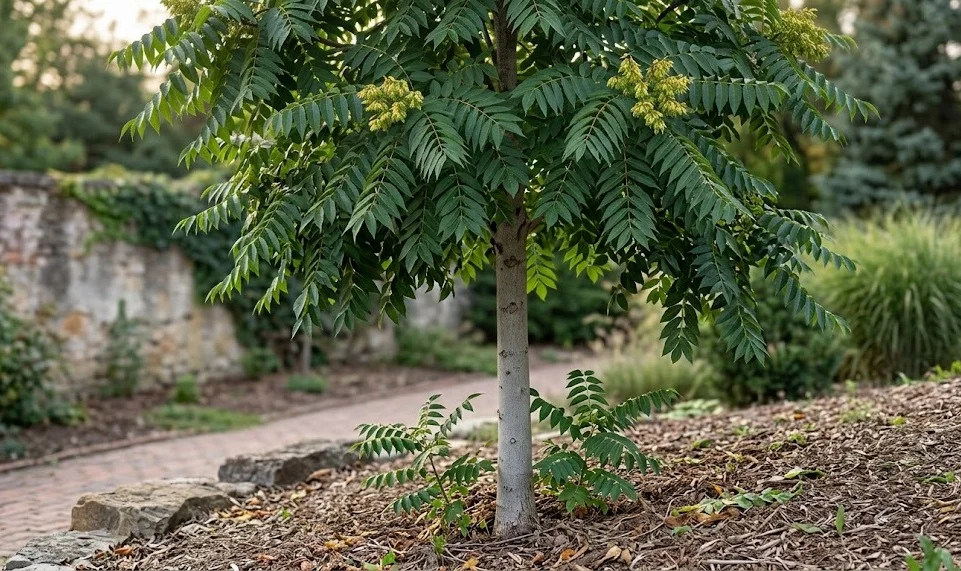

Providing the right amount of moisture and nutrients is essential for maintaining the rapid growth and lush appearance of this robust tree. You should understand that while it is naturally resistant to drought, a consistent watering schedule during its early years is vital for establishment. Expert gardeners often find that a deep soak once a week is far more effective than frequent shallow applications. It is important to monitor the soil moisture at a depth of several centimeters to ensure the water is reaching the active root zone.
Nutrient management is the other pillar of a successful care routine, helping the tree reach its full structural and aesthetic potential. You should consider the natural fertility of your soil before adding any supplemental products to avoid over-stimulation of the growth. A balanced approach ensures that the wood remains strong and the tree is not predisposed to breakage due to overly rapid expansion. Observing the color and size of the leaves throughout the season will give you clear clues about the tree’s nutritional status.
Applying water directly to the base of the tree is the most efficient way to ensure the plant receives what it needs without wasting resources. You should avoid overhead irrigation whenever possible, as wet foliage can sometimes encourage the development of fungal leaf spots. Using a soaker hose or a drip system allows the water to penetrate slowly and deeply into the ground, encouraging the roots to grow downward. This deep root system is what eventually provides the tree with its legendary resistance to dry conditions as it matures.
Timing your watering and fertilization efforts with the tree’s natural growth cycles will maximize the benefits of your work. You should focus your most intensive care during the peak growing months of late spring and early summer when the demand for resources is highest. As the season winds down in the autumn, you should gradually reduce both water and nutrients to help the tree prepare for its winter rest. This rhythmic approach to care works in harmony with the tree’s biology and ensures long-term health and resilience.
Hydration needs and strategies
The water requirements of a tree change significantly as it moves from a young sapling to a massive, established specimen in the landscape. You should be particularly attentive to newly planted trees, which lack the extensive root network needed to find water in deeper soil layers. During the first two growing seasons, providing supplemental water during any dry period longer than a week is a professional best practice. Once the tree has been in the ground for five years, it generally becomes self-sufficient in most temperate climates.
More articles on this topic
Environmental factors like wind, temperature, and soil type all play a role in how quickly the tree loses moisture through its large leaves. You should increase the frequency of your watering sessions during periods of high heat or when dry winds are a constant presence. Sandy soils will require more frequent attention than heavy clay, as they lack the ability to hold onto water for long periods. Observing the tips of the leaves for any signs of wilting will help you catch dehydration before it causes any lasting damage.
Mulching is a simple yet powerful strategy that you can use to conserve water and protect the root zone from temperature extremes. You should apply a layer of wood chips or bark around the drip line, making sure the material is several centimeters thick for maximum effectiveness. This organic blanket prevents surface evaporation and keeps the roots significantly cooler during the height of the summer. As the mulch decomposes, it also adds valuable organic matter to the soil, improving its overall structure and water-holding capacity.
Watering during the evening or early morning is the most effective way to ensure the tree gets the maximum benefit from every drop. You will find that evaporation rates are much lower during these times, allowing more water to soak into the ground where it is needed. Professional arborists recommend avoiding watering in the middle of a hot day, as much of the moisture is lost to the air before it can reach the roots. Developing a consistent and efficient watering routine is one of the best things you can do for your tree’s health.
Young tree irrigation techniques
For a young tree, the first few months after planting are a critical time when its future health is being decided by the availability of water. You should create a small basin or “well” of soil around the base of the tree to hold water and direct it straight toward the root ball. This simple earthwork ensures that the water doesn’t just run off the surface and away from the thirsty young roots. Filling this basin twice a week during the first summer provides the consistent hydration needed for rapid establishment.
More articles on this topic
Slow-release watering bags are a popular tool among professional landscapers for ensuring that young trees get a steady supply of moisture. You can wrap these bags around the trunk and fill them with water, which then seeps out slowly over several hours through small holes in the bottom. This method is incredibly convenient for busy gardeners and ensures that the water reaches deep into the soil profile. It is a highly efficient way to manage the needs of multiple trees without spending hours with a hose.
Monitoring the transition from a pampered sapling to a tough, independent tree is a process that requires a observant eye and a bit of patience. You should gradually increase the time between watering sessions as the tree grows, encouraging the roots to explore further and deeper for their own moisture. This “tough love” approach helps the tree build the resilience it will need to survive on its own in the future. By the end of the third year, the tree should only need help during the most extreme and prolonged droughts.
Winter watering is a task that many people forget, yet it can be very important in regions where the ground does not freeze deeply and the air is dry. You should check the soil moisture during warm spells in the winter and provide a light watering if the ground feels excessively dusty. Even though the tree is dormant, the roots still need a small amount of moisture to remain healthy and ready for the spring. Keeping an eye on the hydration levels year-round ensures that the tree never faces a truly life-threatening water deficit.
Nutrient requirements and soil health
Understanding what your tree needs from the soil is the first step toward creating a fertilization plan that actually works. You should look for signs of vigorous growth, such as long new shoots and large, deep green leaves, which indicate that the tree is finding plenty of nutrients. This species is famous for its ability to extract minerals from even the poorest soils, often thriving where other trees would fail. However, in a garden setting, a little extra support can help the tree look its absolute best and resist pests more effectively.
Nitrogen is the primary nutrient that drives the massive leafy growth for which this tree is known, but it should be used with some caution. You should avoid over-applying nitrogen-heavy fertilizers, as this can lead to weak, watery growth that is easily damaged by wind or ice. A balanced, slow-release fertilizer provides a steady supply of all the essential elements without causing a sudden, unsustainable growth spurt. Professional gardeners often prefer organic options like compost or well-aged manure for a more natural nutrient cycle.
Phosphorus and potassium are also important for root development and the overall structural strength of the tree’s cellular tissues. You should ensure that these elements are present in the soil, particularly during the early years when the tree is building its basic framework. Potassium also plays a key role in the tree’s ability to manage water and resist the stresses of extreme cold and heat. A soil test every few years is the most professional way to determine exactly what your garden is lacking.
Micronutrients like iron and manganese may be needed in certain soil types where they are naturally deficient or chemically locked away. You will notice that the leaves might turn yellow while the veins stay green if there is an iron deficiency, a condition known as chlorosis. Addressing these minor imbalances with specialized foliar sprays or soil drenches can quickly restore the tree’s vibrant appearance. Maintaining a healthy soil pH is the best way to ensure that all these vital nutrients remain available to the tree’s root system.
Fertilization schedules and methods
The best time to apply fertilizer is in the early spring, just as the buds are beginning to swell and the tree is preparing for its main growth push. You should spread the granules evenly over the entire root zone, which usually extends a bit further than the reach of the outer branches. This timing ensures that the nutrients are available in the soil precisely when the tree has the highest demand for them. A single application in the spring is often all that is needed for a healthy, established specimen.
Top-dressing with high-quality organic compost is a gentle and effective way to feed your tree while also improving the structure of the soil. You should apply a layer of compost about five centimeters thick around the base of the tree once every year or two. This natural approach mimics the way trees are fed in a forest environment through the slow decomposition of leaf litter and organic debris. It encourages a healthy population of earthworms and beneficial microbes that do much of the work for you.
For trees that are struggling or growing in particularly poor urban soils, deep-root fertilization might be recommended by a professional arborist. This process involves injecting a liquid nutrient solution directly into the soil at multiple points around the tree’s root system. You will find that this method bypasses the surface competition from grass or other plants and delivers the food exactly where it is needed most. It is an excellent way to rejuvenate an older tree that has started to show signs of slowing down.
Avoiding late-season fertilization is a critical rule that you must follow to prevent the tree from being damaged by the coming winter. You should stop all feeding by mid-summer to allow the new growth time to harden off and become woody before the first frosts arrive. Soft, green growth produced late in the year is very susceptible to freezing, which can lead to significant dieback and potential entry points for disease. Proper timing is just as important as the quality of the fertilizer itself when it comes to professional tree care.
Identifying and correcting deficiencies
Being able to read the “language” of the leaves is a skill that will help you catch nutritional problems before they become serious. You should look for any unusual patterns of discoloration, stunted growth, or premature leaf drop that might signal a lack of a specific element. For example, a general yellowing of the older leaves often points to a nitrogen deficiency that can be easily corrected. Learning to spot these signs early allows you to take action while the problem is still small and manageable.
Soil pH is often the hidden culprit behind many apparent nutrient deficiencies, as it controls the chemical availability of minerals in the ground. You should test your soil to see if it is too acidic or too alkaline for the tree to effectively absorb the food you are providing. If the pH is out of balance, adding lime to raise it or sulfur to lower it can unlock the existing nutrients without the need for more fertilizer. This scientific approach to gardening is what separates the experts from the amateurs and leads to better results.
Compaction of the soil can also mimic the signs of nutrient deficiency by physically preventing the roots from expanding and breathing. You should check the hardness of the ground around your tree and consider aeration if it feels like concrete under your feet. Sometimes the nutrients are present in the soil, but the tree simply cannot reach them because the roots are trapped in a low-oxygen environment. Loosening the soil is often a more effective “fertilizer” than any product you can buy in a bag or a bottle.
Finally, you should remember that over-fertilization can be just as damaging as a lack of nutrients, often leading to a buildup of salts in the soil. You will see burnt leaf edges or a general decline in health if the concentration of minerals becomes toxic to the delicate root hairs. When in doubt, it is always better to under-feed than to over-feed, especially with a species that is already so naturally vigorous. A balanced, observant, and conservative approach to nutrition will ensure your tree remains a healthy and beautiful part of your landscape.