
Light is the primary fuel for all plants, and for the Hjelmqvist’s cotoneaster, it is the deciding factor in how densely it grows and how many berries it produces. This shrub is known for its adaptability, being able to grow in conditions ranging from full sun to partial shade, but it definitely has its preferences for optimal performance. Understanding how light interacts with the plant’s biology allows you to place it in the most effective spot in your garden, whether you want a vibrant specimen or a functional ground cover. Proper light management ensures that you get the most out of this versatile and beautiful species.
When we talk about “full sun” for this cotoneaster, we are typically referring to at least six to eight hours of direct, unfiltered sunlight each day. In these conditions, the plant will develop its most compact and dense growth habit, with short internodes and a profusion of small, glossy leaves. This is also where you will see the most spectacular floral display in the spring, which leads to a massive crop of red berries in the autumn. For many gardeners, the goal is to maximize these features by providing as much light as possible.
However, one of the great advantages of the Hjelmqvist’s cotoneaster is its ability to perform well even in less-than-perfect light conditions. In partial shade—which means about three to six hours of sunlight or dappled light throughout the day—the plant will still be healthy and attractive. You might notice that it grows a bit taller and more open as it reaches toward the available light, which can be an advantage if you are using it to fill a larger space. It is a forgiving plant that won’t simply die if it isn’t in the brightest spot in the garden.
The key to successful placement is matching the light levels of your site with your specific goals for the plant’s appearance and function. If you are looking for a tight, clipped hedge, the higher light levels are essential to prevent the interior of the plant from becoming thin and leggy. For a more naturalistic, woodland edge look, the softer light of a partially shaded area might be more appropriate. By observing how the light moves through your garden over the course of a day, you can find the perfect home for this adaptable shrub.
Optimal sun exposure for berry production
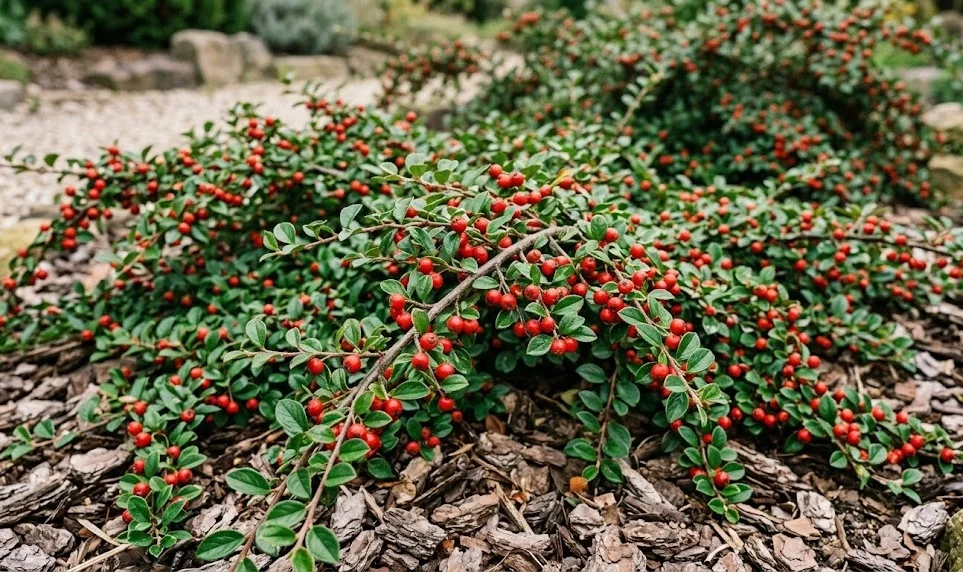
If your primary goal is to have a shrub covered in bright red berries from autumn through winter, then maximizing sun exposure is your number one priority. Sunlight triggers the physiological processes required for the production of flowers, which are the precursors to the berries. Plants in full sun produce significantly more blossom clusters, and these blossoms are more likely to be visited by the pollinators needed for fruit set. A sun-drenched cotoneaster is often so heavily laden with fruit that the branches arch even more gracefully under the weight.
More articles on this topic
Beyond just the quantity of berries, sunlight also plays a role in the intensity and timing of their coloration. Berries on plants in full sun tend to ripen more evenly and take on a deeper, more vibrant red hue than those in the shade. This is partly because the higher light levels help the plant produce the pigments responsible for the bright colors we find so attractive. If you have a plant in a shady spot that isn’t producing much color, moving it to a sunnier location can make a world of difference.
The foliage also benefits from full sun, as it encourages the development of the thick, waxy cuticle that gives the leaves their characteristic gloss. This waxy layer is not just for show; it also helps the plant resist moisture loss and provides a barrier against some types of pests and diseases. In high light, the leaves are smaller and more numerous, creating a dense “carpet” of green that is incredibly effective as a landscape element. This density is one of the hallmarks of a well-grown Hjelmqvist’s cotoneaster in an optimal light environment.
One thing to keep in mind is that “full sun” in a very hot, southern climate can be more intense than in a cooler, northern one. In regions with extremely high summer temperatures, a bit of protection from the harsh afternoon sun can actually be beneficial to prevent leaf scorch. However, for most temperate gardens, the more sun the better for this species. Providing adequate water is the best way to help a sun-loving plant handle the heat that comes along with all that light.
Tolerance for partial shade environments
The Hjelmqvist’s cotoneaster is often used as an “understory” plant in larger landscapes, and for good reason—it handles partial shade remarkably well. In these settings, it often receives dappled light through the canopy of taller trees or a few hours of direct sun in the morning or late afternoon. While the growth might be a bit more relaxed and the berry production slightly lower, the plant remains healthy and vigorous. This shade tolerance makes it an excellent choice for those tricky spots in the garden where sun-loving plants struggle.
More articles on this topic
In shaded environments, you might notice that the leaves are slightly larger and a darker shade of green as the plant tries to maximize its light-capturing surface area. The overall form of the shrub will be more arching and open, which can create a very elegant and naturalistic effect in a woodland garden. It is a fantastic plant for softening the edges of a shaded patio or providing a green backdrop for shade-loving perennials like hostas or ferns. The ability to bridge the gap between sun and shade is one of its most valuable traits.
When growing in partial shade, it is even more important to ensure that the plant has good air circulation to prevent fungal issues. Shade often goes hand-in-hand with higher humidity and slower drying times for the foliage, which can encourage mildews and leaf spots. By giving the shrub plenty of space and avoiding overcrowding with other plants, you can mitigate these risks and keep your shade-grown cotoneaster looking its best. Pruning to thin out the center of the plant is also a good practice in lower light environments.
One thing to avoid is planting the Hjelmqvist’s cotoneaster in deep, heavy shade, such as directly under a thick evergreen canopy or in a dark corner between high walls. In these conditions, the plant will struggle to produce enough energy to maintain its health and will eventually become weak and prone to pests. You will see very few berries, and the foliage will be sparse and dull. If you have a truly dark spot, it is better to choose a plant specifically adapted to deep shade rather than trying to force a cotoneaster to thrive there.
Impact of light on growth habits
The amount of light a Hjelmqvist’s cotoneaster receives has a profound impact on its architecture and overall growth habit. In high-light conditions, the shrub tends to be more compact, with branches that stay closer to the ground and a more symmetrical shape. The nodes—the points where the leaves and side branches emerge—are much closer together, resulting in a very dense and bushy appearance. This makes the plant an ideal candidate for low hedges or for covering large areas of ground with a solid mat of green.
As the light levels decrease, the plant’s growth strategy changes, and it begins to put more energy into “reaching” for the available light. This results in longer internodes and a more open, airy structure that can be quite beautiful in its own right. The branches may become more elongated and arching, giving the shrub a taller and more graceful silhouette than its sun-grown counterparts. Understanding this response allows you to use the plant’s natural growth habit to your advantage in different parts of your garden design.
If you find that your cotoneaster has become too leggy or thin due to a lack of light, you can often correct this with a combination of pruning and light management. Cutting back the long, spindly branches will encourage more side-shoots to form, creating a denser look even in lower light. If possible, thinning out overhanging branches from nearby trees can also provide a bit more light and help the shrub regain its vigor. It is a very responsive plant that will quickly adjust its growth patterns to changes in its light environment.
Light also influences the timing of the plant’s seasonal transitions, such as when it flowers in the spring and when the leaves change color in the autumn. Plants in sunnier spots will usually wake up earlier and enter dormancy a bit later than those in shaded areas. This can create interesting variations if you have multiple plants in different parts of your garden, with each one following its own slightly shifted timeline. Paying attention to these subtle differences is part of what makes gardening with the Hjelmqvist’s cotoneaster so fascinating.
Seasonal light changes and plant response
As the seasons change, the angle and intensity of the light in your garden shift, and the Hjelmqvist’s cotoneaster responds accordingly. In the spring, the increasing day length and higher light intensity are the primary signals for the plant to break dormancy and begin its growth cycle. This is when the light is most critical for the development of the flower buds and the initial flush of leaves. Ensuring the plant isn’t shaded by structures or dormant plants during this early phase will give it a strong start for the rest of the year.
During the peak of summer, the light is at its most intense, and the plant’s main challenge is balancing energy production with water conservation. While the cotoneaster loves the sun, the heat associated with high light levels can be stressful if the roots are dry. This is why consistent watering and mulching are so important for sun-grown plants during the hottest months. A well-hydrated plant can use all that extra light to build up the energy reserves it needs for a spectacular berry display and for surviving the coming winter.
In the autumn, the decreasing light levels and the changing spectral quality of the sunlight trigger the plant to begin its transition into dormancy. This is when the red berries reach their peak color and the foliage of this semi-deciduous variety may take on its own brilliant hues. The light levels during this time also help the new wood to “ripen” and harden off, making it more resistant to freezing temperatures. A plant that has received plenty of light throughout the growing season will be much better prepared for the challenges of winter.
Even in winter, light remains important, especially for the evergreen and semi-evergreen aspects of some cotoneaster varieties. While the plant isn’t actively growing, its leaves can still be affected by the bright winter sun, especially when it reflects off a layer of snow. This can lead to “winter sunscald” or desiccation if the ground is frozen and the roots can’t replace the moisture lost to the sun and wind. Providing a bit of winter shade or wind protection can help prevent these issues and ensure your Hjelmqvist’s cotoneaster emerges from the cold season in perfect condition.