
Getting your himalayan honeysuckle off to the right start begins with a proper planting technique and a good understanding of its lifecycle. This shrub is quite versatile, but it responds best when you take the time to prepare the site carefully before introducing it to the ground. Whether you are starting with a nursery-bought specimen or trying to grow your own from scratch, the process is rewarding. You will find that a little effort in the beginning leads to a much more resilient and beautiful plant in the future.
The best time to plant this shrub is either in the early spring or during the mid-autumn months. During these times, the soil is usually moist and the temperatures are mild enough to encourage root development without heat stress. You should avoid planting during the height of summer or when the ground is frozen solid in winter. Consistency in soil temperature helps the roots settle into their new home more quickly.
When you bring a new plant home, make sure it is well-watered while it is still in its original container. You can prepare the planting hole to be about twice as wide as the root ball and just as deep. This loose soil around the edges allows the young roots to spread out easily into the surrounding garden earth. Adding a handful of bone meal or a similar organic starter can provide the nutrients needed for initial growth.
Check the root system of the plant before placing it into the hole to ensure it isn’t root-bound. If the roots are circling tightly, gently tease them outward with your fingers to encourage them to grow into the soil. Position the plant so that the top of the root ball is level with the surface of the surrounding ground. Filling the hole back in with a mixture of native soil and compost will create an ideal environment for the shrub.
Choosing the perfect location
The himalayan honeysuckle is quite adaptable, but it has a definite preference for certain environmental conditions. You should look for a spot that receives plenty of sunlight but is protected from the harshest midday rays. A location that offers dappled shade throughout the afternoon is often considered ideal for maintaining leaf color. It also needs to be a place where the soil remains consistently moist but never becomes waterlogged.
More articles on this topic
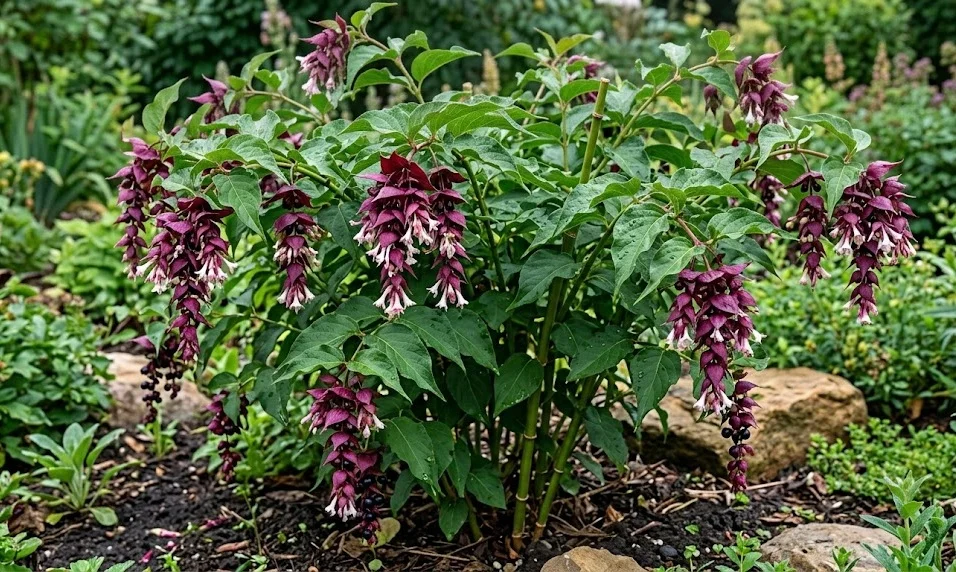
Consider the ultimate size of the shrub when choosing where it will live in your garden landscape. It can grow up to two meters tall and nearly as wide, so it needs enough breathing room from its neighbors. Planting it too close to a wall or a fence might restrict its natural arching habit and reduce its aesthetic appeal. You want to give it the space it needs to show off its unique stems and hanging flowers.
Wind protection is another critical factor that you should keep in mind during the site selection process. The hollow stems are somewhat brittle and can snap if they are caught in a strong, direct gust of wind. A sheltered corner or a spot near a sturdy evergreen hedge can provide the necessary buffer against the elements. This protection will help the plant maintain its structural integrity as it grows taller and heavier.
Soil quality varies from garden to garden, but this shrub is generally not too picky about pH levels. It will grow in slightly acidic to slightly alkaline soil, provided there is enough organic matter present. If your soil is particularly sandy or heavy clay, you can amend it with leaf mold or garden compost. This improvement in soil structure will help with both moisture retention and drainage, which are key for this plant.
Propagating through seed collection
Growing this plant from seed is a fascinating process that allows you to produce many new specimens for very little cost. You should wait until the berries are completely ripe and have turned a deep, dark purple or black color. Once collected, the seeds need to be cleaned of the surrounding pulp to prevent rot during the germination phase. You can do this by mashing the berries in a sieve and rinsing them under cool water.
More articles on this topic
The cleaned seeds can be sown immediately in a cold frame or stored in a cool, dry place for spring planting. If you choose to sow them in the autumn, the natural winter chill will help break their dormancy. Use a high-quality seed starting mix and cover them with only a very thin layer of fine grit or compost. Keeping the soil surface moist but not soaking wet is essential for the young seedlings to emerge.
Germination can be somewhat irregular, so you should be patient and wait for several weeks before giving up on them. Once the seedlings have developed a couple of sets of true leaves, they can be moved into individual pots. You should keep them in a protected area like a greenhouse or a sheltered patio for their first year of growth. This allows them to build up enough strength before they face the challenges of the open garden.
The young plants grown from seed might not look exactly like the parent plant, which adds an element of surprise to the process. You will start to see the characteristic green stems and pointed leaves as they mature over the first few months. It usually takes a couple of years for a seed-grown plant to reach a size where it begins to produce its first flowers. This method is a great way to fill large areas of your garden over time without spending a fortune.
Success with softwood cuttings
If you want to create an exact clone of your favorite shrub, taking softwood cuttings is the most effective method. This is best done in late spring or early summer when the new growth is still flexible but starting to firm up. You should select healthy, non-flowering shoots and cut sections that are about ten to fifteen centimeters long. Using a sharp, clean knife or shears will ensure a clean cut that heals quickly and roots more reliably.
Remove the lower leaves from the cutting and dip the base into a rooting hormone powder to speed up the process. Insert the cuttings into a pot filled with a gritty, free-draining compost mix to prevent the base from rotting. You should cover the pot with a clear plastic bag or place it in a propagator to maintain a high level of humidity. Placing the pot in a bright spot away from direct sunlight will keep the cuttings from wilting.
Check the cuttings every few days to ensure they are still hydrated and to vent any excess moisture that might lead to mold. Roots should begin to form within four to six weeks if the temperature and humidity levels are kept consistent. You can tell they have rooted when you see new growth at the tips or if you feel resistance when gently tugging the stem. Once rooted, the young plants should be gradually acclimated to the outside air.
Transitioning these new plants into the garden requires a bit of care to ensure they don’t go into shock. Pot them on into larger containers as they grow and feed them with a diluted liquid fertilizer to boost their strength. By the following spring, they should be robust enough to be planted out into their permanent positions. This technique is perfect for expanding your collection or sharing this beautiful shrub with fellow gardening enthusiasts.