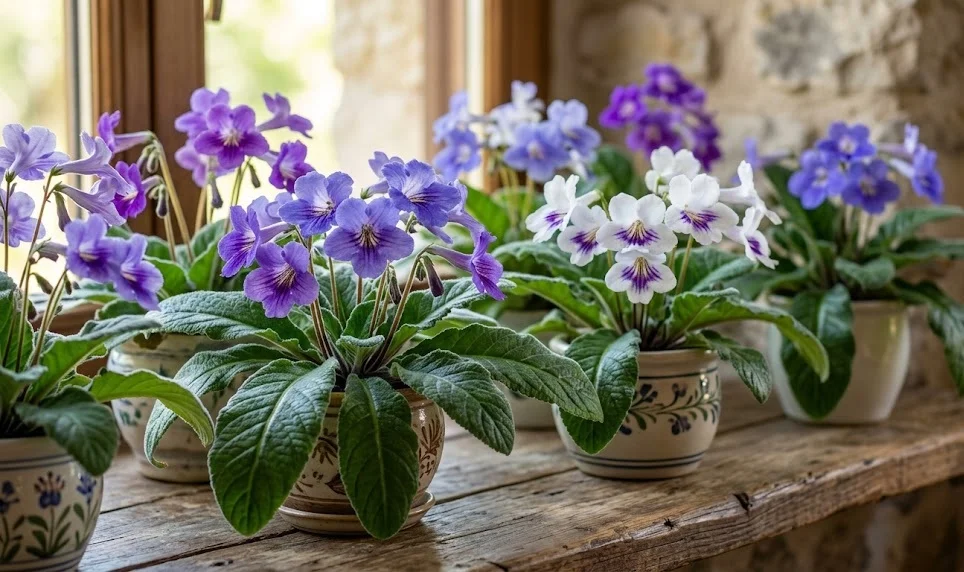

Mastering the art of watering is the single most important skill you can develop as a grower. These plants are very sensitive to moisture levels and do not tolerate “wet feet” or total dehydration. You should always wait until the top inch of the soil feels dry to the touch before adding more water. If you are unsure, it is usually safer to wait another day, as the plant can recover from slight drying more easily than from rot.
The best method for watering is to apply water from the bottom of the pot. Place the container in a saucer or sink filled with a few centimeters of water and let it sit for about twenty minutes. The soil will wick up the moisture through capillary action, ensuring the roots are hydrated without getting the foliage wet. Once the top of the soil feels cool and damp, remove the pot and let the excess water drain away completely.
If you prefer to water from the top, you must be extremely careful to avoid the crown and the leaves. Water sitting on the leaves can cause fungal infections or permanent spotting, which ruins the aesthetic of the plant. Use a watering can with a long, narrow spout to deliver the liquid directly to the soil surface. Always use room-temperature water to avoid shocking the sensitive root system with a sudden cold blast.
Consistency is the goal, but you must adjust your routine based on the seasons and the environment. In the heat of summer, your plant will transpire much faster and may need water every few days. During the dark days of winter, the plant’s needs will drop significantly, and you might only water once every two weeks. Developing a “feel” for the weight of the pot when it is dry versus wet is a great way to gauge moisture levels.
Choosing the right water quality
The type of water you use can have a long-term impact on the health of your Cape primrose. Many municipal water supplies contain chlorine or fluoride, which can build up in the soil and damage the roots over time. If your tap water is heavily treated, consider letting it sit out in an open container for twenty-four hours before use. This allows the chlorine to dissipate and the water to reach the ideal room temperature.
More articles on this topic
Rainwater is often considered the gold standard for these plants because it is naturally soft and free of chemicals. If you have the means to collect it, your plants will likely respond with more vigorous growth and healthier foliage. Distilled or reverse-osmosis water is another option, although it lacks the natural minerals found in rainwater. If you use distilled water, you must be more diligent about providing a balanced fertilizer.
Avoid using softened water, as the salts used in the softening process are toxic to most indoor plants. Over time, these salts accumulate in the potting mix and prevent the roots from absorbing water effectively. If you notice a white, crusty buildup on the pot or the soil surface, it is a sign that salts are accumulating. You can flush the soil with pure water once or twice a year to help wash away these harmful residues.
Temperature is the final factor to consider when preparing your water. Cold water directly from the tap can cause “ring spot” on the leaves, which are permanent, unsightly yellow or white markings. Always ensure the water is at least room temperature, or even slightly lukewarm, before it touches the soil. This small step goes a long way in keeping the plant’s vascular system functioning smoothly and without stress.
Fertilization strategies for maximum blooms
To keep your plant flowering throughout the year, you must provide a consistent supply of essential nutrients. These plants are “heavy feeders” during their active growth phase but can be easily burned by high concentrations of fertilizer. A balanced, water-soluble fertilizer with a slightly higher phosphorus content is ideal for encouraging flower production. Look for an N-P-K ratio like 10-30-20 or something specifically formulated for African violets or Gesneriads.
More articles on this topic
The “constant feed” method is highly recommended by professional growers for maintaining steady growth. Instead of giving a full dose once a month, you use a very diluted solution (about one-quarter strength) every time you water. This mimics the way plants receive nutrients in nature and prevents the “feast or famine” cycles that can stress the root system. It also ensures that the plant always has what it needs to develop new flower buds.
During the peak growing season, you will see the best results by sticking strictly to your feeding schedule. If the plant stops producing flowers despite having good light, it may be a sign that it has exhausted the nutrients in its pot. However, never fertilize a plant that is bone dry, as this can cause the concentrated salts to burn the roots. Always ensure the soil is slightly moist before applying any type of liquid fertilizer.
You can also use slow-release fertilizer pellets mixed into the potting soil during the repotting process. These provide a baseline of nutrition for several months, which can be helpful if you sometimes forget your liquid feeding routine. However, you should still supplement with liquid feed if you want the most spectacular floral displays. Balancing these two methods provides a safety net for the plant’s nutritional requirements.
Identifying and correcting nutrient issues
Your plant will tell you if its nutritional needs are not being met through its foliage and flowering habits. A lack of nitrogen usually manifests as pale, yellowish leaves and a general lack of vigor in the plant. If the leaves are dark green but the plant refuses to bloom, you might be providing too much nitrogen and not enough phosphorus. Adjusting the ratio of your fertilizer can often fix these issues within a few weeks of treatment.
Micronutrient deficiencies, such as a lack of magnesium or iron, can cause yellowing between the veins of the leaves. This is often a sign that the soil pH has become too high, which prevents the plant from absorbing these specific minerals. You can use a specialty fertilizer that includes chelated micronutrients to help resolve this problem. Alternatively, repotting the plant into fresh, slightly acidic soil is often the most effective long-term solution.
On the other hand, over-fertilization can be just as damaging as a lack of nutrients. If you see the edges of the leaves turning brown or the plant looking suddenly wilted after feeding, you may have used too much. In this situation, you should immediately flush the soil with plenty of clear, room-temperature water to wash away the excess salts. Skip the next few feeding sessions to give the roots a chance to recover from the chemical shock.
Regularly inspecting the root system during repotting can give you clues about how well your fertilization plan is working. Healthy roots should be white or light tan and firm to the touch, indicating they are absorbing nutrients efficiently. If the roots are dark and mushy, it is more likely an irrigation issue than a nutritional one. A balanced approach to both watering and feeding is the key to a long-lived and beautiful Cape primrose.
Seasonal adjustments to feeding
As the light levels change with the passing seasons, so must your approach to fertilization. In the winter, when the plant’s growth slows down significantly, you should stop fertilizing entirely. The plant cannot use the extra nutrients when it isn’t growing, and they will simply build up in the soil to toxic levels. This dormant period is essential for the plant to gather its strength for the next blooming cycle.
When the first signs of spring growth appear, you can slowly reintroduce a very weak fertilizer solution. Start with a high-nitrogen blend for a few weeks to encourage healthy new leaf development. Once the foliage looks lush and the first flower stalks begin to emerge, switch back to your high-phosphorus bloom booster. This transition helps the plant move smoothly from its vegetative stage into its reproductive stage.
In the height of summer, if the temperatures become excessively hot (over 30 degrees Celsius), the plant may enter a temporary state of semi-dormancy. During these heatwaves, it is wise to pause fertilization until the temperatures drop back into a comfortable range. Forcing a heat-stressed plant to process nutrients can lead to root damage and leaf drop. Always prioritize the plant’s environmental comfort over its nutritional schedule.
Finally, always keep a record of when you fertilized and what product you used to track the plant’s response. Different varieties of Cape primrose may have slightly different preferences for nutrient concentrations. By paying close attention to how your specific plants react, you can fine-tune your strategy over time. Professional gardening is often about these small, incremental adjustments that lead to superior results.