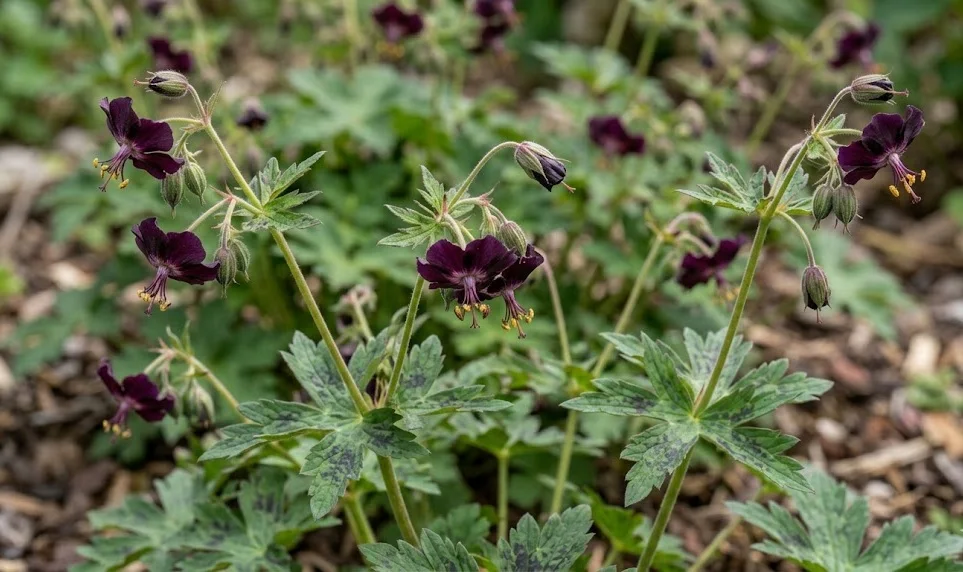

Achieving the perfect balance of hydration and nutrition is the cornerstone of maintaining a vibrant and healthy display of these elegant woodland perennials. The dusky crane’s-bill has specific requirements that, when met, allow it to produce lush foliage and a profusion of its characteristic dark blossoms. While it is often praised for its resilience, it truly excels when provided with a consistent care routine that respects its natural preferences for moisture and soil quality. Understanding how to manage these two vital elements will ensure your garden remains a sanctuary for this species throughout the changing seasons.
Watering is not just about the quantity of liquid provided, but also the timing and method used to deliver it to the plant’s roots. During the active growing season, the goal is to keep the soil consistently moist without ever allowing it to become saturated or waterlogged. This species is particularly sensitive to prolonged dry spells, which can lead to premature dormancy or a decline in the quality of the foliage. By establishing a regular schedule, you can prevent the stress that comes from the cycle of drying out and then being heavily soaked.
Fertilization serves as the supplemental fuel that supports the plant’s natural growth processes and enhances its overall vigor. In most garden settings, the soil may lack the full range of nutrients found in the plant’s native habitats, making regular feeding a beneficial practice. However, it is crucial to avoid over-fertilizing, as this can lead to excessive leaf growth and a reduction in the number of flowers produced. A thoughtful approach to nutrition focuses on long-term soil health rather than quick, temporary boosts that can eventually harm the plant’s balance.
By integrating these practices into your regular garden maintenance, you create an environment where the dusky crane’s-bill can truly thrive. Each garden is unique, so paying close attention to the specific reactions of your plants will help you fine-tune your approach over time. Whether you are dealing with a small patch in a shaded corner or a large border filled with these perennials, the principles of proper watering and feeding remain the same. The result will be a robust and beautiful plant that continues to delight you with its subtle charm and reliable performance.
Determining the correct watering frequency
The frequency of watering depends heavily on your local climate, the type of soil you have, and the amount of shade the plant receives. In general, plants located in more sun-drenched areas will require more frequent hydration than those tucked away in deep, cool shade. Sandy soils drain quickly and will need more regular attention, whereas clay-heavy soils hold onto moisture for much longer periods. You should always check the soil a few inches below the surface to see if it feels dry before deciding to reach for the watering can.
More articles on this topic
During the hottest months of summer, you may find that the plant needs a deep soak at least once or twice a week to maintain its lush appearance. It is much more effective to water deeply, allowing the moisture to reach the lower root zones, than to provide light daily misting. Deep watering encourages the roots to grow further down into the earth, making the plant significantly more drought-resistant in the long run. Morning is the ideal time for this task, as it allows the foliage to dry off before evening, reducing the risk of fungal problems.
As the weather cools down in autumn, the plant’s water requirements will naturally decrease as its growth slows down in preparation for dormancy. You should gradually reduce the amount of water you provide, but never allow the soil to become bone-dry before the ground freezes for the winter. In the spring, as soon as the first new shoots appear, you can resume a more regular watering schedule to support the rapid development of new leaves. Keeping a close eye on the weather forecast will help you adjust your routine to account for natural rainfall, preventing overwatering.
Environmental factors like wind can also significantly increase the rate of evaporation from both the soil and the plant’s leaves. If your garden is particularly exposed, you may need to water more frequently or consider providing some form of windbreak to protect the perennials. Mulching is your best ally in this regard, as it creates a protective barrier that locks in moisture and keeps the root zone cool. With a little observation and adjustment, you can master the art of watering to suit the specific needs of your garden’s microclimate.
Choosing the right fertilizers and amendments
When it comes to feeding the dusky crane’s-bill, organic options are generally preferred because they improve the soil structure while providing a slow release of nutrients. Well-rotted compost, leaf mold, or aged manure can be applied as a top dressing in the early spring to provide a natural boost. these materials mimic the natural decomposition process of a forest floor, which is the environment the plant is most adapted to. This approach not only feeds the plant but also supports the beneficial microbes that keep the soil ecosystem healthy and productive.
More articles on this topic
If you prefer to use commercial fertilizers, look for a balanced, slow-release granular formula that provides an equal ratio of nitrogen, phosphorus, and potassium. A “balanced” product ensures that the plant has everything it needs for both leaf and root development as well as flower production. Avoid using high-nitrogen fertilizers late in the season, as this can encourage soft, new growth that is easily damaged by the first frosts of autumn. Applying the fertilizer according to the package directions is essential to avoid “burning” the delicate roots with a concentration that is too high.
Liquid fertilizers can be useful for providing a quick pick-me-up during the peak of the flowering season if the plant looks a bit lackluster. These are usually diluted in water and applied directly to the soil around the base of the plant every few weeks. However, liquid feeds are easily washed away by rain or irrigation, so they should be seen as a supplement rather than the primary source of nutrition. For long-term health, focusing on building rich, fertile soil through organic amendments is always the most sustainable and effective strategy.
It is also worth considering the pH of your soil, as this can affect how well the plant is able to absorb the nutrients you provide. The dusky crane’s-bill prefers a neutral to slightly alkaline soil, so if your garden is very acidic, you might need to add a bit of lime. A simple soil test kit from a local garden center can provide you with this information and help you make more informed decisions about fertilization. By tailoring your feeding program to the specific conditions of your site, you ensure that none of your efforts or resources go to waste.
Signs of overwatering and underwatering
Learning to read the physical signs that the plant displays is the best way to determine if your watering routine is on the right track. When a plant is underwatered, the first thing you will notice is a loss of tension in the leaves, followed by wilting and eventually browning at the edges. The flowers may also droop prematurely, and the overall growth of the specimen will seem stunted compared to its neighbors. If these symptoms appear, a thorough and immediate watering is usually enough to revive the plant, provided the drought hasn’t lasted too long.
Overwatering, on the other hand, can be even more dangerous because it often leads to root rot, which is much harder to fix than simple dehydration. Signs of too much water include yellowing leaves that may feel soft or mushy to the touch, and a general lack of vigor despite plenty of moisture. In extreme cases, you might notice a foul smell coming from the soil, which indicates that the roots are suffocating due to a lack of oxygen. If you suspect overwatering, you must stop irrigating immediately and allow the soil to dry out completely before resuming a much lighter schedule.
Inconsistent watering can also cause issues, such as leaf spotting or a weakened immune system that makes the plant more susceptible to pests. When a plant is stressed by fluctuating moisture levels, it spends more energy on basic survival and less on the production of beautiful flowers and healthy foliage. Maintaining a steady, predictable environment is the key to preventing these stress-related problems from taking hold in your garden. A simple moisture meter can be a helpful tool for those who are still learning how to gauge the needs of their soil accurately.
The appearance of the soil itself can also provide clues, such as a crusty surface that indicates it has become too dry or green algae growth that suggests it is constantly wet. Ideally, the soil should look and feel like a wrung-out sponge—damp to the touch but not dripping with excess liquid. By checking your plants daily, especially during their first year of establishment, you will quickly become attuned to their specific needs. This proactive approach allows you to catch any potential issues early and keep your dusky crane’s-bill looking its absolute best.
Maximizing the impact of fertilization
To get the most out of your fertilization efforts, it is important to apply the nutrients at the times when the plant can use them most effectively. The “early spring boost” is perhaps the most important application, as it provides the resources needed for the initial explosion of growth. A second, lighter application in early summer can help sustain the plant through its flowering period and keep the foliage looking fresh. Avoid feeding the plant during the heat of midsummer or as it approaches dormancy in the winter, as this is when its metabolic rate is naturally lower.
The method of application also matters, as you want the nutrients to reach the roots without causing any damage to the above-ground parts of the plant. Always apply granular fertilizers to moist soil and water them in immediately to help the nutrients dissolve and move down into the root zone. Keep the fertilizer a few inches away from the main stems of the plant to prevent any direct contact that could cause chemical burns. If you are using compost or mulch as a fertilizer, spread it in a wide circle that extends to the drip line of the foliage for maximum effect.
Observing the results of your feeding program over several seasons will help you decide if you need to adjust the amount or type of fertilizer you use. If your plants are growing excessively large with very few flowers, you may be providing too much nitrogen and should switch to a formula with more phosphorus. Conversely, if the plants seem weak and have pale leaves, they may be suffering from a general lack of nutrients and would benefit from a more regular schedule. Every garden is a dynamic system, and what worked last year might need a slight tweak this year to keep things in balance.
Healthy plants are naturally more resistant to diseases and pests, making a good fertilization program a form of preventative medicine. When a plant has access to all the minerals and vitamins it needs, it can build stronger cell walls and produce natural defense compounds. This reduces the need for chemical sprays and makes your gardening experience much more enjoyable and environmentally friendly. By investing a little time and effort into the nutrition of your dusky crane’s-bill, you are ensuring the long-term beauty and health of your entire garden landscape.