
Establishing a successful Siberian dogwood in your garden begins with a well-planned planting strategy. You need to consider the specific environmental requirements of this species to give it the best possible start in its new home. Proper propagation techniques also allow you to expand your collection or share this beautiful plant with others. By following these professional guidelines, you can ensure a high success rate for both new plantings and propagated cuttings.
Selecting the right location is the most critical decision you will make during the planting process. You should look for a spot that offers plenty of sunlight and has soil that stays moist throughout the year. Avoid areas where the wind is excessively harsh, as this can dry out the young stems too quickly. A little bit of planning at this stage prevents many future headaches and plant health issues.
Timing your planting is just as important as choosing the right location for the shrub. You should aim to plant during the early spring or the middle of autumn when temperatures are mild. This allows the root system to settle into the soil without the stress of extreme heat or cold. Planting during these windows gives the dogwood the best chance to establish itself before the next season.
Preparing the soil beforehand will make the transition much easier for the young plant. You should dig a hole that is at it twice as wide as the root ball but no deeper than the container. Mixing in some high-quality organic compost will provide the initial boost of nutrients the plant needs. This preparation ensures that the roots can easily spread out into the surrounding soil.
Site selection and soil preparation
The best site for your dogwood is one where the soil is naturally rich and holds moisture well. You should avoid sandy soils that drain too quickly unless you plan on adding a lot of organic matter. On the other hand, heavy clay can be beneficial if it doesn’t lead to stagnant water. Understanding your garden’s soil type is the first step toward a professional planting.
More articles on this topic
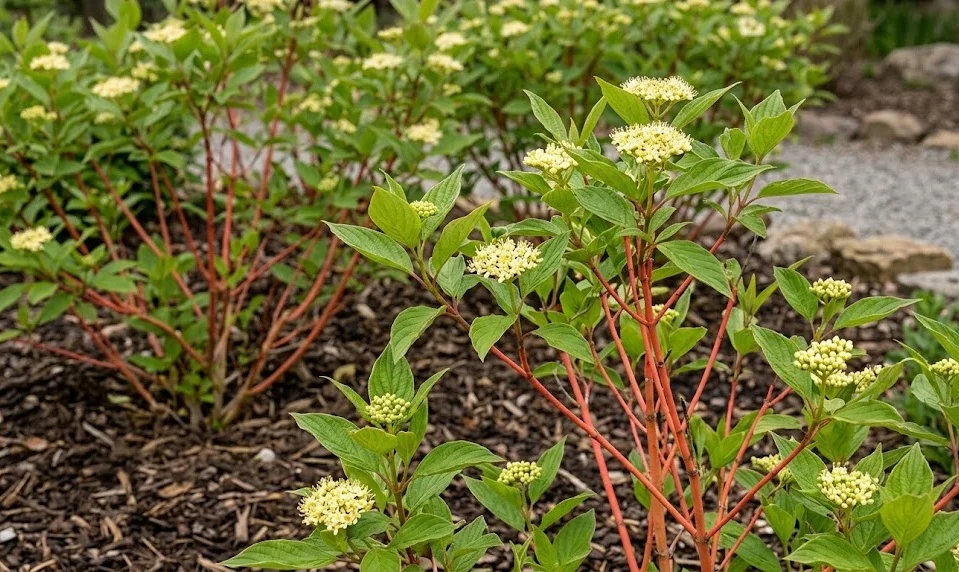
Light exposure is another factor that you must carefully evaluate before digging any holes. While the shrub can tolerate some shade, the best stem color is produced in full sun. You should observe how the sun moves across your garden at different times of the day. A spot that gets at least six hours of direct sunlight is generally considered ideal for this variety.
Accessibility for watering is a practical consideration that many people often overlook initially. You should ensure that your chosen site is within reach of a garden hose or an irrigation system. Young plants need frequent watering during their first year, so convenience will help you stay consistent. If the plant is too far away, it might suffer from neglect during a busy summer.
Wind protection can help prevent the branches from becoming damaged or drying out during the winter. You could plant the dogwood near a fence or alongside other shrubs to provide a natural windbreak. However, you must also ensure there is enough airflow to prevent fungal diseases from developing. Finding the right balance between protection and ventilation is a key part of site selection.
Planting techniques for success
Once you have prepared the hole, you should carefully remove the plant from its nursery container. You must avoid pulling the shrub by its stems, as this can damage the delicate connection to the roots. Instead, squeeze the sides of the pot or tap the bottom to loosen the root ball. Gently teasing the outer roots will encourage them to grow outward into the new soil.
More articles on this topic
Place the plant in the center of the hole and check that it is sitting at the correct depth. You should ensure that the top of the root ball is level with the surface of the surrounding ground. Planting too deep can lead to stem rot, while planting too shallow can cause the roots to dry out. Use a shovel handle across the hole to verify the level if you are unsure.
Fill the space around the roots with the amended soil you prepared earlier, tamping it down gently. You should avoid packing the soil too tightly, as this can squeeze out the oxygen that roots need. Creating a small soil basin around the base of the plant can help direct water toward the roots. This simple trick ensures that every drop of water reaches the area where it is most needed.
Immediately after planting, you must give the shrub a very thorough watering to settle the soil. This helps remove any air pockets that might have formed around the root system during the process. You should then apply a thick layer of mulch to help retain that moisture and suppress any weeds. Your new dogwood is now ready to begin its journey in your garden landscape.
Vegetative propagation methods
Propagation through hardwood cuttings is one of the easiest ways to create new plants from your existing shrub. You should take these cuttings during the dormant season, typically in late autumn or early winter. Select healthy stems from the current year’s growth that are about the thickness of a pencil. Each cutting should be roughly twenty to thirty centimeters long for the best results.
Prepare the cuttings by making a straight cut just below a bud at the base and a slanted cut at the top. You should dip the bottom end into a rooting hormone to speed up the development of new roots. Place the cuttings into a pot filled with a sandy compost mix or directly into a prepared nursery bed. Keep the soil moist but not soaking wet throughout the winter and following spring.
Softwood cuttings are another option, taken in the early summer when the new growth is still flexible. You should choose stems that have just started to become slightly firm at the base. These cuttings need a more controlled environment, such as a propagator or a pot covered with a plastic bag. High humidity is essential for softwood cuttings to survive until they can grow their own roots.
Layering is a more natural method of propagation that requires very little equipment or intervention from you. You can bend a flexible lower branch down to the ground and bury a small section of it. Secure the branch with a landscape staple and keep that area moist throughout the growing season. After a year or so, the buried section will have developed its own roots and can be detached.
Establishing young plants
The first year after planting or propagation is the most critical time for the survival of your dogwood. You should monitor the moisture levels in the soil almost daily during the first few weeks. If the leaves start to droop, it is a clear sign that the plant needs an immediate drink. Consistency is the secret to helping a young plant build a strong and resilient root system.
Avoid the temptation to fertilize a newly planted shrub too heavily during its first growing season. You want the plant to focus on root development rather than pushing out a lot of top growth. The organic matter you added during planting should provide enough nutrients for the initial phase. Once you see significant new growth the following year, you can begin a regular feeding schedule.
Protection from local wildlife might be necessary if you have deer or rabbits in your area. You could use a simple wire mesh cage around the base of the young plant to prevent browsing. Siberian dogwoods are often attractive to hungry animals, especially during the lean winter months. Protecting the stems now ensures the plant has a chance to grow large enough to survive minor damage later.
Pruning should be kept to a minimum during the establishment phase of the plant’s life. You should only remove dead, damaged, or diseased wood to keep the plant healthy and clean. Letting the shrub grow naturally for the first two years allows it to maximize its energy production. After it is well-established, you can begin the regular pruning cycle that keeps the stems so colorful.