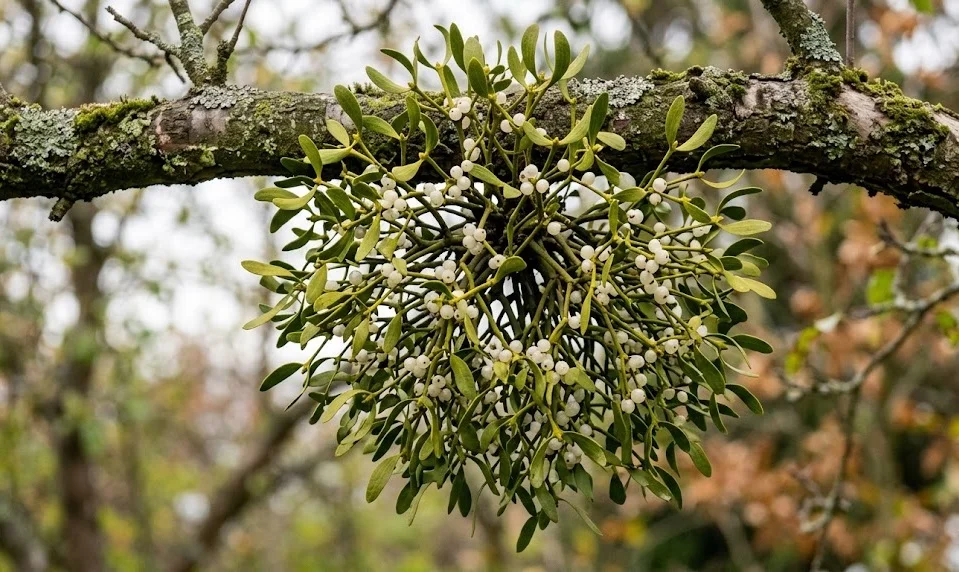

Pruning and cutting back white mistletoe is a vital management technique used to maintain the health of the host tree and control the spread of the parasite. While many appreciate the plant’s aesthetic value, its growth must be kept in check to prevent it from overwhelming the tree’s resources. A professional approach to pruning involves understanding the plant’s growth habit and knowing exactly how much can be removed without causing unnecessary stress. Strategic cutting ensures that the mistletoe remains a decorative feature rather than a threat to the garden’s structural integrity.
Strategic removal of overgrowth
The primary reason for pruning white mistletoe is to reduce the “parasitic load” on the host tree. When a clump becomes too large, it transpires a massive amount of water and minerals, which can lead to the decline of the branch it inhabits. Strategic thinning involves removing some of the older, heavier stems while leaving the younger, more vibrant growth. This keeps the clump looking fresh and prevents it from becoming a mechanical hazard during high winds or heavy snow.
When deciding which parts to cut back, a professional gardener looks for the balance of the entire tree. If one side of the tree is heavily infested while the other is clear, it can cause the tree to grow lopsidedly. In such cases, pruning back the largest clumps can help redistribute the tree’s energy and improve its overall symmetry. It is also important to remove any dead or dying mistletoe stems, as these can harbor pests and look unattractive in the winter.
Timing is crucial when it comes to cutting back mistletoe, and the best time is usually in the late winter or early spring. At this time, the host tree is still dormant, but the mistletoe is clearly visible and easy to access. Pruning before the host’s leaves emerge allows you to see the full extent of the infection and make precise cuts. It also prevents you from accidentally damaging the tree’s new spring buds while you are working in the canopy.
It is a common misconception that you can permanently remove mistletoe by simply cutting it off at the bark. Because the “roots” or haustoria are embedded deep within the wood, the plant will almost always grow back from the same spot. Professional pruning is therefore about management and containment rather than total eradication. By regularly cutting back the foliage, you can keep the mistletoe at a manageable size and prevent it from producing seeds that would spread to other trees.
More articles on this topic
Tools and techniques for safe pruning
Using the right tools is essential for a clean and professional pruning job that doesn’t harm the host tree. Small, sharp bypass pruners are perfect for thinning out individual mistletoe stems, while a small folding saw may be needed for larger, older clumps. It is vital that the tools are kept incredibly sharp to ensure that each cut is clean and smooth. Ragged cuts take longer to heal and are more likely to become infected with fungi or bacteria.
The technique for cutting mistletoe is different from standard tree pruning because you are often working in a very congested space. You should aim to cut the mistletoe stems as close to the host bark as possible without actually damaging the bark itself. Nicking the tree’s skin can create wounds that the tree must then use energy to repair. A steady hand and a patient approach are the marks of a professional when working around the sensitive host-parasite union.
Safety is also a major consideration, as mistletoe often grows high in the canopy where access is difficult. Using a high-quality pole pruner can allow you to reach many clumps from the safety of the ground. If a ladder is necessary, it must be properly secured, and a second person should always be present to assist. For very large or high-altitude infestations, it is often safer and more effective to hire a professional arborist who has the proper climbing gear and expertise.
Sanitation is the final step in the technical process of pruning. After working on an infested tree, all tools should be thoroughly disinfected with alcohol to prevent the spread of any latent pathogens. Any mistletoe debris that has been cut down should be collected and removed from the site, especially if it contains ripe berries. Proper disposal ensures that you are not accidentally “planting” new mistletoe seeds elsewhere in your garden or neighborhood.
More articles on this topic
Post-pruning care for the host tree
After a significant pruning session, the host tree may need some extra attention to help it recover from the loss of its parasitic load. While removing the mistletoe is ultimately beneficial, the process still involves a change in the tree’s internal hydraulic pressure. Providing the tree with a deep watering session and a light application of balanced fertilizer can support its spring growth. This helps the tree “fill in” the gaps in its canopy and strengthens its natural defenses.
Monitoring the pruning sites is an important part of professional follow-up care. Keep an eye on the host bark where the mistletoe was cut back to ensure that no secondary infections, like cankers, are developing. The tree should ideally begin to heal over any minor nicks in the bark within a few weeks. If you notice any unusual sap weeping or discoloration, further investigation may be required to protect the limb’s health.
It is also important to remember that the mistletoe will likely begin to regrow within a season or two. A professional gardener keeps a schedule of which trees have been pruned and when the next maintenance session should occur. Typically, a light thinning every two to three years is enough to keep the mistletoe in a healthy and attractive state. This consistent approach is much better for the tree than waiting a decade and then performing a massive, stressful removal.
Finally, take the opportunity to evaluate the overall health of the tree once the mistletoe has been thinned. You may find that the light levels in the interior of the tree have improved, which can lead to new growth on the host’s own branches. This renewal of the host tree’s vitality is the ultimate goal of a professional pruning program. By carefully managing the white mistletoe, you ensure that both the tree and the parasite can continue to coexist in a beautiful and balanced harmony.