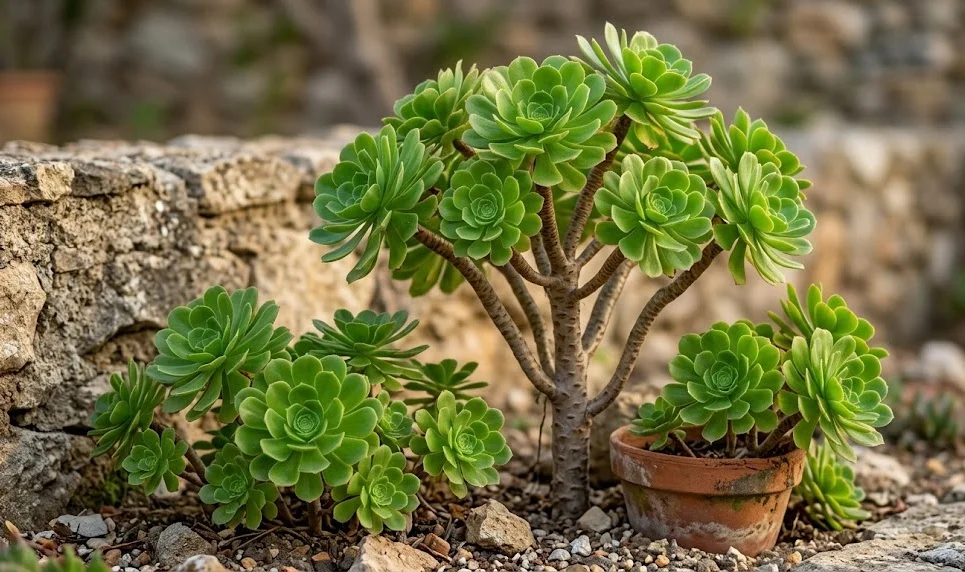

Pruning is a vital tool for managing the size, shape, and overall health of your tree aeonium over the years. Because these plants can grow quite tall and develop many branches, they can eventually become top-heavy or cluttered. The best time to perform major pruning is in the early spring, just as the plant is beginning its most active growth phase. This timing allows the plant to recover quickly and produce new, vigorous growth from the points where you have made your cuts.
You might decide to prune if your plant has become too leggy due to insufficient light in the past. Cutting back the long, spindly stems encourages the plant to branch out from lower down, creating a much fuller and more attractive appearance. This is also a great way to revitalize an older specimen that has lost its lower leaves and now looks like a bunch of “pom-poms” on bare sticks. Pruning allows you to reset the plant’s growth and maintain its iconic tree-like silhouette.
Removing damaged or diseased branches should be done as soon as you notice them, regardless of the season. If a stem has been broken by the wind or shows signs of rot, cutting it back to healthy tissue prevents the problem from spreading further. This type of maintenance pruning is essential for keeping the entire plant healthy and preventing secondary infections from taking hold. Always be observant and ready to intervene if you see any parts of the plant that look less than perfect.
Before you start cutting, take a step back and look at the overall structure of the plant from several different angles. Think about how you want the plant to look in a year or two and where you want new branches to emerge. A well-planned pruning session is much more effective than making random cuts without a clear goal in mind. Once you have a vision for the plant’s future shape, you can proceed with confidence and precision.
Tools and techniques for clean cuts
Using the right tools is essential for making clean cuts that heal quickly and do not introduce diseases to your tree aeonium. You should use a very sharp knife or a pair of high-quality bypass pruning shears for the most precise results. Dull tools can crush the succulent stems instead of cutting them, which leads to ragged wounds that are much more prone to rot. Investing in good tools and keeping them well-maintained is a mark of a dedicated and professional gardener.
More articles on this topic
Sterilizing your tools before and after each use is a non-negotiable step in the pruning process. You can use rubbing alcohol or a dilute bleach solution to ensure that no pathogens are being transferred from one plant to another. This is especially important if you are pruning multiple plants in your collection or if you are removing diseased tissue. Taking a few seconds to clean your blades can save you from a major disease outbreak that could ruin your entire succulent collection.
When making a cut, try to do it at a slight angle rather than perfectly horizontal across the stem. This encourages water to run off the wound rather than sitting on top of it, which helps prevent fungal issues during the healing process. You should also try to make your cuts just above a leaf node, which is the point where a leaf was previously attached. This is where the plant’s growth hormones are most concentrated, leading to faster and more reliable branching.
After you have finished pruning, allow the cut ends on the main plant to air-dry and form a callous naturally. You do not need to apply any kind of “wound paint” or sealants, as these can often trap moisture and cause more harm than good. In most cases, the succulent tissue will seal itself off within a few days in a well-ventilated environment. Keep the plant in a bright but sheltered spot while it heals to minimize any additional stress during the recovery period.
Encouraging new branching
One of the most exciting results of pruning a tree aeonium is seeing the new rosettes emerge from the cut stem. When you remove the growing tip of a branch, you disrupt the plant’s apical dominance, which signals the lower buds to start growing. You will often see multiple new rosettes forming around the edges of the cut within just a few weeks. this process allows you to turn a single, thin stem into a beautiful, multi-branched structure over time.
More articles on this topic
To ensure the best possible results, make sure the plant is healthy and well-hydrated before you decide to prune it. A stressed or thirsty plant will have much less energy to dedicate to producing new growth from the dormant buds. You should also ensure the plant is receiving adequate light during the recovery phase to support the high metabolic activity required for branching. The new rosettes will be small at first, but they will quickly grow and fill in the gaps in the plant’s canopy.
If you want to encourage branching in a specific direction, try to make your cuts just above a node that is facing that way. The plant will naturally favor the buds that are most conveniently located to receive light and air. You can also use selective pruning to remove branches that are crossing each other or growing inward toward the center of the plant. This opens up the structure, improves air circulation, and creates a much more pleasing and professional aesthetic.
Don’t forget that the pieces you remove during pruning can often be used to start entirely new plants. These cuttings are a valuable resource for any gardener, allowing you to expand your collection or share your favorite plants with others. By combining pruning for shape with propagation, you make the most of every part of your tree aeonium. The cycle of growth, pruning, and renewal is what makes gardening such a fascinating and rewarding long-term hobby.