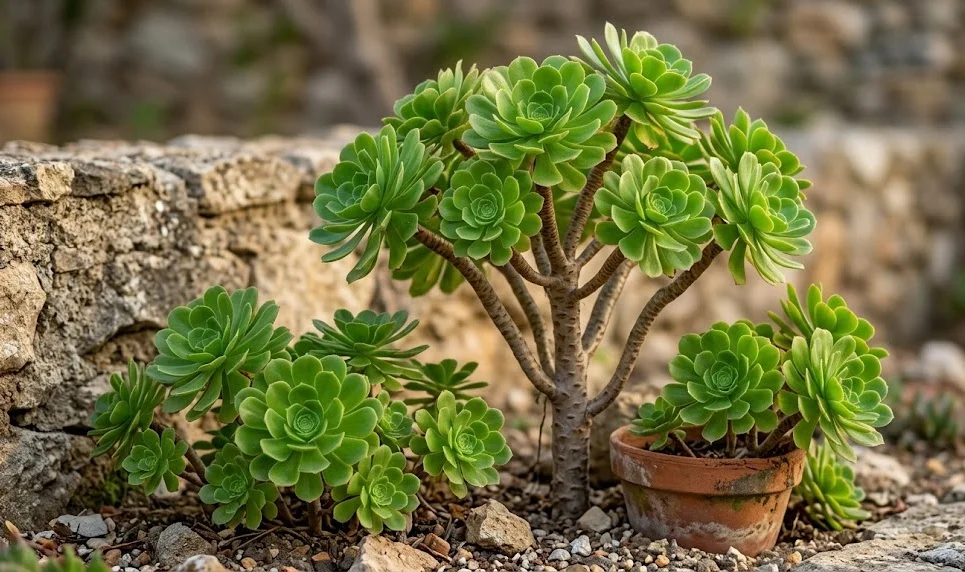

Understanding the light preferences of the tree aeonium is essential for maintaining its health and its beautiful, symmetrical form. In their native habitats, these plants often grow in locations that receive bright, indirect light or filtered sunshine throughout most of the day. While they can tolerate some direct morning sun, the intense heat of the afternoon sun can sometimes be too much for their fleshy leaves. Providing a balance of light and protection is the key to preventing sunburn while still encouraging vigorous growth.
In cooler coastal regions, the tree aeonium can often handle more direct sunlight than it could in a hot, inland desert environment. The presence of coastal fog or a cooling breeze helps keep the plant’s internal temperature down, even when the sun is bright. If you live in a very hot area, you should aim to provide a location with dappled shade, perhaps under the canopy of a larger tree. This mimics the natural environment where these succulents often find shelter from the most extreme solar radiation.
The color of the foliage is often a direct reflection of the amount of light the plant is receiving at any given time. Many cultivars will develop deep purple or bronze hues when exposed to brighter light, which is a desirable trait for many collectors. However, if the light is too intense, these colors may fade into a stressed, yellowish tone or the leaves may develop scorched patches. Conversely, if the light is too low, the plant will remain a simple, pale green and lose its distinctive pigmentation.
When placing your plant, you should also consider the seasonal changes in the angle and intensity of the sun. A spot that is perfectly shaded in the summer might receive too much direct sun in the winter when the sun is lower in the sky. Regularly checking on your plant’s condition will help you decide if it needs to be moved to a different location as the seasons change. Being flexible with your plant’s placement ensures it always has the ideal amount of light for its current stage of growth.
Signs of insufficient light
One of the most obvious signs that a tree aeonium is not getting enough light is a condition known as etiolation. This happens when the plant’s stem grows rapidly and becomes thin and weak as it stretches toward the nearest light source. The beautiful, tight rosettes will begin to flatten out and the leaves will space out further along the lengthening stem. If you notice your plant losing its compact and tree-like habit, it is a clear cry for more illumination.
More articles on this topic
Changes in leaf color can also indicate that the light levels are below what the plant needs for optimal health. A plant that should have vibrant purple or dark red leaves will often revert to a dull, solid green when kept in too much shade. This is because the plant is producing more chlorophyll to try and capture as much of the limited light as possible. While the plant may still be alive, it will not look its best and will be much more prone to structural issues.
In extreme cases of low light, the plant may become so weak that it can no longer support the weight of its own rosettes. The stems may start to lean or even droop toward the ground, making the specimen look neglected and unattractive. Lack of light also slows down the plant’s ability to process water, making it much more susceptible to root rot and other moisture-related problems. Ensuring adequate light is therefore a vital part of your overall pest and disease prevention strategy.
If you identify that your plant is suffering from low light, you should move it to a brighter location as soon as possible. However, do this gradually to avoid shocking the plant with a sudden increase in intensity, which could cause sunburn. Even a few more hours of bright, indirect light each day can make a massive difference in the plant’s appearance and vitality. Watching your plant respond to improved light levels is one of the most satisfying parts of being a succulent gardener.
Rotating plants for uniform growth
To maintain a perfectly symmetrical and balanced tree aeonium, you should make a habit of rotating your pots regularly. Like most plants, succulents will naturally grow toward the primary source of light, which can cause them to become lopsided over time. By giving the pot a quarter turn every week or two, you ensure that all sides of the rosettes receive an equal amount of illumination. This simple practice prevents the plant from leaning and encourages a sturdy, upright stem.
More articles on this topic
Uniform light exposure also helps ensure that the foliage develops its color evenly across the entire plant. If only one side of the rosette is facing a bright window, that side might be deep purple while the shaded side remains green. This can create a mismatched appearance that takes away from the plant’s natural beauty and architectural impact. Rotation is especially important for indoor plants where the light source is often very directional from a single window.
In addition to aesthetics, uniform growth is also important for the structural integrity of a large and mature tree aeonium. A plant that leans too heavily in one direction is much more likely to tip over or have its stems snap under their own weight. By encouraging the plant to grow straight and strong, you reduce the need for artificial supports like stakes or ties. A well-balanced plant is a more resilient plant that is better able to handle the stresses of daily life.
Developing a routine for your plant maintenance will help you remember to perform these small but important tasks. You might choose to rotate your pots every time you check the soil for moisture or whenever you do your weekly dusting. Over time, this becomes a natural part of your gardening habit, and you will notice the difference in the quality of your collection. A little bit of consistent attention goes a long way in producing a truly professional-looking specimen.