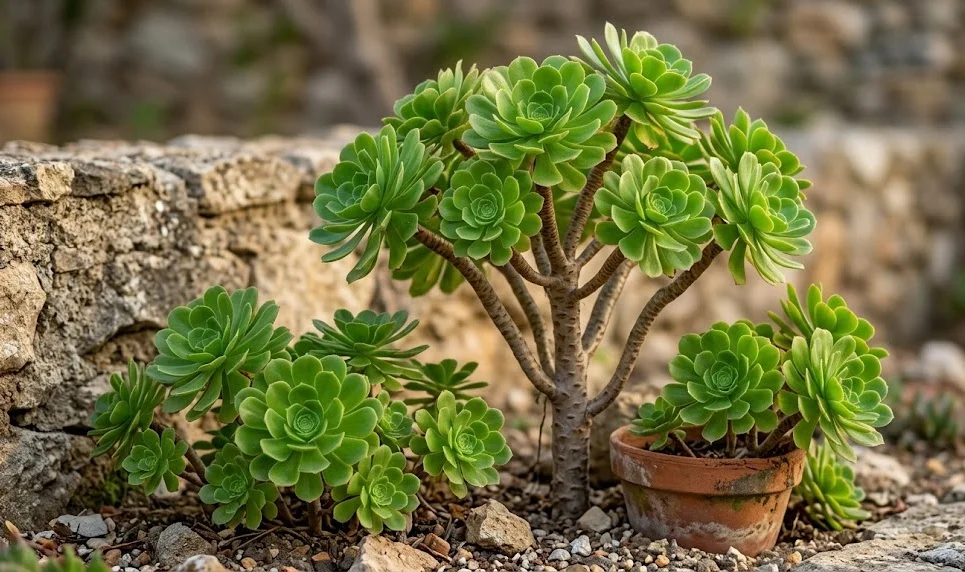

As autumn begins to fade and the first hint of frost appears in the air, it is time to think about protecting your tree aeonium. These plants are native to mild, subtropical regions and have very little tolerance for freezing temperatures. You should start by monitoring the local weather forecast closely once the night temperatures begin to drop below ten degrees Celsius. Being proactive during this transitional period will ensure that you are not caught off guard by a sudden cold snap.
Before moving your plants, take the opportunity to give them a thorough inspection for any signs of pests or diseases. You do not want to bring mealybugs or aphids into your home or greenhouse where they can spread to other indoor plants. Clean the pots and remove any dead foliage to make the transition as tidy and safe as possible. If the plants have been growing in the ground, you might need to carefully pot them up for the winter season.
Gradually reducing the amount of water you provide as the days get shorter is another important part of winter preparation. This encourages the plant to slow its growth and enter a more resilient state that is better able to handle cooler conditions. You should also stop all fertilization at this time, as any new, tender growth produced in the winter would be especially vulnerable to cold damage. The goal is to harden the plant off so it can successfully navigate the months ahead.
Deciding on the best location for overwintering will depend on your local climate and the space you have available. If you live in a region where freezes are rare, a covered porch or a cold frame might be enough to see them through. However, in colder climates, a bright windowsill indoors or a heated greenhouse is a much safer option for these sensitive succulents. Consider the light levels and temperature stability of each potential spot before making your final choice.
Ideal indoor conditions
When bringing your tree aeonium indoors for the winter, light is the most critical factor you need to consider. These plants need as much bright, indirect light as possible to maintain their compact shape and avoid stretching toward the windows. A south-facing window is usually the best spot, as it provides the most consistent and intense light throughout the day. If you do not have enough natural light, you might need to supplement with full-spectrum grow lights to keep the plant healthy.
More articles on this topic
Temperature stability is another key component of successful indoor overwintering for these Mediterranean succulents. While they can handle the typical temperatures inside a home, they should be kept away from cold drafts or hot air vents. Sudden fluctuations in temperature can cause the plant to drop its leaves or become stressed and more prone to pest attacks. Aim for a consistent range between fifteen and twenty degrees Celsius during the daytime for the best results.
Humidity levels inside many homes can become very low during the winter months due to central heating systems. While succulents are generally tolerant of dry air, extremely low humidity can sometimes cause the leaf tips to turn brown or the rosettes to shrivel. You can help maintain a bit of moisture in the air by grouping your plants together or using a tray of pebbles and water nearby. Avoid misting the foliage directly, as this can lead to fungal issues if the water sits in the center of the rosettes.
Air circulation is often overlooked indoors but is essential for preventing the buildup of pests and stagnant air. You can use a small fan to keep the air moving gently around your plants, mimicking the natural breezes they would experience outdoors. This not only keeps the plants healthier but also helps the soil dry out more evenly between watering sessions. A well-ventilated indoor space is much less likely to host mealybugs or other common winter indoor pests.
Adjusting care during dormancy
The most common mistake people make during the winter is continuing to water their succulents on a summer schedule. Because the days are shorter and the temperatures are cooler, the plant’s metabolic rate slows down significantly, and it requires much less moisture. You should wait until the soil is almost completely dry all the way to the bottom of the pot before adding any water. In many cases, watering once every three to four weeks is more than enough during the peak of winter.
More articles on this topic
When you do water, try to do it on a bright, sunny morning so that any excess moisture can begin to evaporate during the day. Avoid getting water on the leaves or in the center of the rosette, as it will stay wet much longer in the cooler indoor air. Use lukewarm water rather than cold water from the tap to avoid shocking the plant’s root system. The goal is to provide just enough hydration to keep the leaves from shriveling completely without saturating the soil.
Observation becomes even more important during the winter months when the plant is in a more vulnerable state. Check the foliage regularly for any signs of etiolation, which is the stretching of the stem due to insufficient light. If you notice the rosettes flattening out or the stem becoming pale and thin, you must find a brighter location immediately. You should also keep a close eye on the soil surface for any signs of mold or fungus that might indicate overwatering.
Resist the urge to repot or prune your tree aeonium during the middle of winter unless it is an absolute emergency. These tasks are best left for the spring when the plant has the energy and the right environmental conditions to recover quickly. Winter is a time for rest and preservation, so your job as a gardener is simply to maintain a stable environment. By respecting the plant’s natural dormancy, you ensure it will be ready for a burst of new growth when spring returns.
Moving plants back outdoors safely
As the spring weather begins to warm and the threat of frost has passed, you can start planning to move your plants back outside. However, you must not move them directly from a dim indoor spot to full outdoor sun all at once. This sudden change can cause severe sunburn, appearing as white or tan patches on the leaves that will never go away. A gradual transition process, known as “hardening off,” is essential for the health and appearance of your succulents.
Start by placing your tree aeonium in a fully shaded, protected spot outdoors for just a few hours during the warmest part of the day. Over the course of ten to fourteen days, slowly increase the amount of filtered sunlight the plant receives each day. Move it to a spot with morning sun and afternoon shade, and then eventually to its permanent, brighter location. This allows the plant to build up its natural defenses and adjust its pigmentation to the higher light intensity.
Keep a close eye on the nighttime temperatures during this transition period, as spring weather can be notoriously unpredictable. If a late frost is predicted, you must be prepared to move the plants back indoors or cover them with a protective frost cloth. The new growth produced in the spring is especially tender and can be easily damaged by a sudden dip in temperature. It is always better to be cautious and wait a few extra days if you are unsure about the weather.
Once the plant is successfully re-established in its outdoor home, you can begin to increase your watering frequency as you see new growth. This is also the perfect time to provide a light dose of balanced fertilizer to support the spring growing season. You will soon see the rosettes expand and the colors become more vibrant as the plant responds to the fresh air and natural light. Moving your plants back outside is a rewarding moment that marks the beginning of another successful growing year.