
Establishing a successful spinach crop begins with a precise approach to planting and understanding the nuances of propagation. Unlike many other garden vegetables, spinach is typically grown directly from seed because its sensitive root system does not always respond well to transplanting. Achieving the perfect stand of greens requires careful attention to soil temperature, sowing depth, and the timing of the initial planting. By mastering these early stages, you create the framework for a healthy, productive season that maximizes the potential of every seed.
Seed selection and preparation
Choosing the right variety of spinach is the first critical decision in the propagation process. There are three main types: savoy, semi-savoy, and smooth-leaf, each offering different textures and levels of disease resistance. Savoy varieties have crinkled leaves and are often more cold-hardy, while smooth-leaf types are easier to clean and grow faster. Selecting a variety that is specifically adapted to your local climate and planting season is essential for success.
High-quality seeds should be sourced from reputable suppliers to ensure good germination rates and genetic purity. It is often beneficial to look for seeds that have been treated with organic fungicides if you live in a particularly damp climate. Checking the “packed for” date on the seed packet ensures that you are using fresh stock, as spinach seeds lose viability relatively quickly. Older seeds can still be used, but you may need to sow them more thickly to compensate for lower germination.
Pre-soaking seeds is a professional technique that can speed up the germination process, especially in cooler soils. Placing the seeds in room-temperature water for about twelve to twenty-four hours softens the seed coat and hydrates the embryo. After soaking, the seeds should be dried slightly so they do not stick together during the sowing process. This simple step can reduce the time to emergence by several days, giving the plants a head start against weeds.
Understanding the concept of seed dormancy is important for those who wish to plant in late summer for an autumn harvest. Some spinach varieties have a built-in dormancy mechanism that prevents them from germinating when the soil is too warm. Priming the seeds by keeping them in a cool, dark place after soaking can help overcome this natural barrier. This ensures a more uniform stand of seedlings even when environmental conditions are not perfectly ideal for the species.
More articles on this topic
Sowing timing and depth
Spinach is a cool-weather specialist, meaning it should be planted as soon as the soil can be worked in the spring. Soil temperatures as low as five degrees Celsius are sufficient for germination, although fifteen degrees is the optimal point. For a continuous harvest, many growers practice succession planting, sowing small batches every two weeks. This prevents the entire crop from maturing at once, providing a steady supply of fresh leaves for the kitchen.
The depth at which the seeds are sown significantly impacts the uniformity of the emerging crop. Seeds should be placed approximately one to two centimeters deep in the soil to ensure adequate moisture contact. If planted too deeply, the small seeds may exhaust their energy reserves before reaching the surface. Conversely, shallow planting increases the risk of the seeds drying out or being eaten by birds and small mammals.
Row spacing is a practical consideration that affects both plant growth and ease of maintenance. Rows should be spaced about twenty-five to thirty centimeters apart to allow for proper air circulation and hoeing. Within the row, seeds can be sown relatively thickly and then thinned later to the desired final spacing. This “over-seeding” strategy acts as insurance against uneven germination or early losses due to environmental stressors.
Late summer planting for a fall harvest requires a different timing strategy than spring sowing. The goal is to time the planting so that the plants reach maturity just as the weather begins to turn cold. This usually means sowing seeds about six to eight weeks before the first expected hard frost in your region. Because the soil is still warm in late summer, extra care must be taken to keep the seedbed moist during the critical germination phase.
More articles on this topic
Soil preparation for planting
Preparing the seedbed is a foundational task that directly influences the success of the propagation phase. The soil should be tilled or turned to a depth of at least fifteen centimeters to create a loose, friable environment. Any large clumps of earth or stones should be removed to ensure that the delicate seedlings can emerge without obstruction. A smooth, level surface prevents water from pooling and helps maintain consistent sowing depths across the entire bed.
Incorporating organic matter during the preparation phase improves the soil’s structure and its ability to hold moisture. Compost or well-aged manure should be mixed thoroughly into the top layer of the soil several weeks before planting. This allows the biological activity in the soil to stabilize and makes nutrients more readily available to the young roots. Avoid using fresh manure, as the high nitrogen content can burn sensitive seedlings and may harbor pathogens.
Spinach performs best in soil that is rich in nitrogen but also contains a balanced supply of phosphorus and potassium. A light application of a balanced organic fertilizer can be raked into the surface just before sowing. It is important not to over-fertilize at this stage, as excessive salts can inhibit germination and damage young tissues. The goal is to provide a nutrient-rich “starter” environment that supports rapid early development.
Proper drainage is a non-negotiable requirement for spinach seeds, which can easily rot in cold, waterlogged soil. If your garden has heavy clay soil, consider planting in raised beds to improve the drainage and allow the soil to warm up faster in the spring. Creating a slightly mounded row can also help shed excess water away from the seeds during heavy spring rains. A well-prepared bed is the best defense against the common pitfalls of early-season gardening.
Germination and early growth
Once the seeds are in the ground, maintaining consistent moisture is the most important factor for successful germination. The soil surface should never be allowed to dry out completely until the seedlings have firmly established their root systems. Using a fine mist or a gentle spray prevents the seeds from being washed away or buried deeper by heavy water droplets. In dry or windy weather, a light covering of burlap or horticultural fleece can help retain surface moisture.
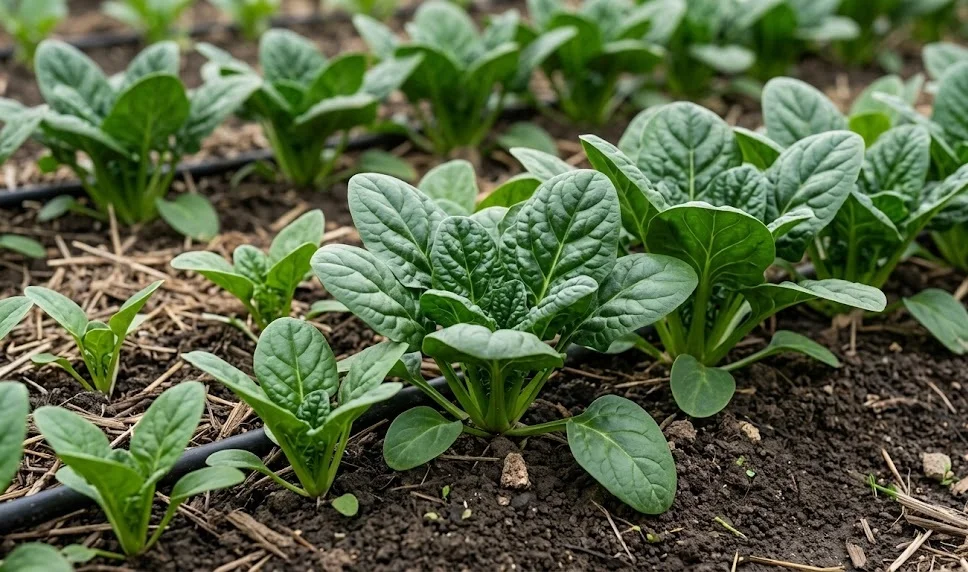
The first signs of growth usually appear within seven to fourteen days, depending on the soil temperature and moisture levels. The initial leaves, known as cotyledons, will be narrow and strap-like, looking very different from the true leaves that follow. During this stage, the plants are at their most vulnerable to pests like slugs and snails, which can quickly decimate a new row. Vigilance and early intervention are required to protect the investment you have made in the planting process.
As the true leaves begin to appear, the plants will start to demand more space and resources from the soil. This is the time to begin the thinning process, ensuring that the strongest seedlings have room to expand. Thinning should be done when the plants are small to minimize root disturbance to the neighbors. Providing a light liquid feeding of seaweed extract or fish emulsion can support the plants as they transition from seed energy to photosynthesis.
Monitoring the growth rate provides clues about the health of the propagation environment and the suitability of the variety. Stunted growth or pale leaves may indicate that the soil is too cold or that there is a nutrient deficiency. Conversely, rapid, vigorous growth suggests that the planting conditions were well-matched to the crop’s needs. By paying close attention to these early signals, you can adjust your care routine to ensure the crop reaches a successful harvest.