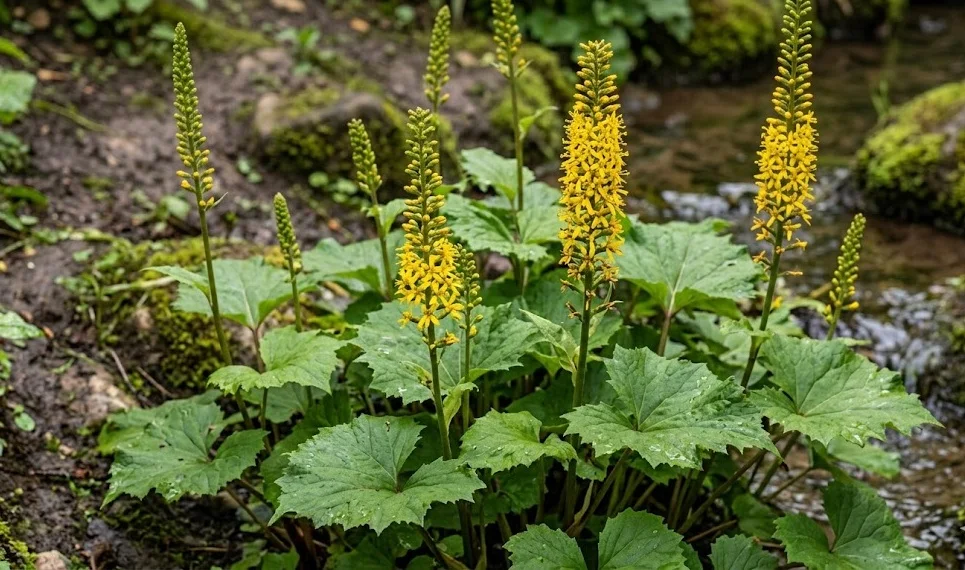

Mastering the hydration and nutrition of the narrow-spiked ligularia is the secret to achieving those iconic, lush leaves. Because this plant originates from damp environments, it has a physiological requirement for consistent moisture that few other perennials can match. When the water supply fails, the plant quickly loses its structural integrity and its aesthetic appeal in the landscape. A professional approach to irrigation ensures that the plant remains a vibrant focal point throughout the entire growing season.
The primary rule of watering this species is to maintain a “damp but not drowned” soil consistency at all times. You should check the moisture level of the soil by inserting your finger several centimeters deep near the base of the plant. If the soil feels even slightly dry, it is time to provide a thorough soaking to replenish the reserves. During the heat of July and August, this might mean watering every single day in certain climates.
Drip irrigation is the most efficient and effective way to deliver water directly to where it is needed most. By bypassing the foliage and delivering water slowly to the root zone, you minimize evaporation and reduce the risk of leaf diseases. If you are watering by hand, aim the nozzle at the base of the plant and avoid getting the leaves wet during the evening. Wet foliage overnight can create an environment that invites fungal pathogens to take hold.
Watering early in the morning allows the plant to hydrate fully before the sun reaches its peak intensity. This reserve of moisture helps the cells stay turgid even when the temperature rises and transpiration increases. If you wait until the afternoon when the plant is already wilting, you are forcing it to play catch-up under stress. A proactive morning routine is far more beneficial than a reactive evening intervention for long-term health.
Hydration requirements for health
The large leaves of the narrow-spiked ligularia act like giant solar panels, but they also lose water at an incredible rate. To compensate for this, the root system must be supported by a soil profile that can hold significant amounts of liquid. In nature, these plants are often found near streams or in marshy ground where the water table is consistently high. Your goal in the garden is to mimic this constant availability of water without letting the soil turn sour.
More articles on this topic
Understanding the difference between temporary wilting and genuine drought stress is a key skill for any gardener. On a very hot day, it is natural for the leaves to droop slightly to protect themselves from the sun. If the soil is moist, they will recover within an hour of the sun going down as the air cools. However, if the leaves remain limp during the cool night hours, the plant is in a state of dehydration that requires immediate attention.
Mulching plays a vital role in water conservation by acting as a physical barrier against the sun’s rays. A thick layer of organic material keeps the soil temperature lower and prevents the wind from stripping moisture from the surface. You will find that mulched plants require significantly less frequent watering than those left in bare earth. Over time, as the mulch breaks down, it also improves the soil’s ability to hold water internally.
During periods of prolonged rain, you might think that your watering duties are over, but dense foliage can sometimes act as an umbrella. The large leaves can deflect rain away from the center of the plant and out toward the edges of the garden bed. It is always worth checking the soil directly under the canopy after a light rain to ensure the water actually reached the roots. Do not assume the weather has done the work for you without a physical inspection.
Establishing a watering schedule
Consistency is the most important factor when creating a plan for your garden’s moisture needs. Plants that experience extreme cycles of drying and soaking often develop weakened tissues and are more prone to pests. By providing a steady supply of water, you allow the plant to grow at a uniform rate and produce more durable foliage. A regular schedule also makes it easier for you to manage the garden without feeling overwhelmed by sudden plant crises.
More articles on this topic
For newly planted specimens, the schedule must be even more rigorous than for established plants. The first two months in the ground are critical as the roots have not yet reached deep into the surrounding soil. You should aim to keep the original root ball moist without allowing it to sit in a puddle for days. Checking the plant twice a day during the first two weeks is a professional standard for ensuring success.
As the plant matures, you can begin to adjust the frequency based on the specific conditions of each season. In the cool, moist days of early spring, nature often provides enough water to support the emerging growth. As summer progresses and the plant reaches its full height, the demand for water will increase exponentially. Being flexible and observant allows you to ramp up your efforts exactly when the plant needs them most.
Automating your watering system can take a lot of the guesswork out of maintaining these moisture-loving perennials. Using a simple timer on your outdoor faucet ensures that the garden receives a drink even if you are away or busy. You can set the timer to run for longer durations during heatwaves and reduce it during cooler, overcast periods. This level of control provides the stability that the narrow-spiked ligularia needs to truly flourish.
Nutrient requirements for growth
To support the massive amount of biomass this plant produces each year, a high level of soil fertility is required. Nitrogen is the most important nutrient for the development of those large, deep green leaves that define the species. Phosphorus and potassium are also essential for strong root growth and the production of the vibrant yellow flower spikes. A balanced approach to fertilization will yield the most impressive results in the professional garden.
Organic fertilizers are generally preferred because they release nutrients slowly over a long period. Well-rotted manure or high-quality garden compost can be applied as a thick top dressing in the early spring. As the rain and irrigation wash through this organic layer, it carries a steady stream of nutrients down to the root zone. This method also improves the physical structure of the soil, unlike many synthetic liquid fertilizers.
If you choose to use granular fertilizers, look for a balanced formula like a 10-10-10 or a slightly higher nitrogen mix. These should be applied once in the spring as the new growth appears and perhaps once more in early summer. Be sure to water the area thoroughly after application to help the nutrients move into the soil and prevent root burn. Always follow the manufacturer’s instructions regarding quantity, as over-fertilizing can be just as harmful as under-feeding.
Foliar feeding is another technique that some experts use to give the plants an extra boost during the growing season. Spraying a diluted seaweed or fish emulsion directly onto the leaves allows for rapid absorption of trace minerals. This can be especially helpful if the plant is showing signs of minor nutrient deficiencies like yellowing between the veins. Perform this task in the early morning so the leaves can dry before the sun becomes too hot.
Signs of nutrient imbalance
Being able to read the leaves of your plant will tell you exactly what is happening beneath the soil. A plant that is receiving too much nitrogen may produce massive leaves but very few flower spikes. The growth may also be soft and weak, making it a prime target for pests like slugs and snails. If you notice this, reduce your fertilizer applications and focus on providing more balanced organic matter.
On the other hand, a lack of nutrients often manifests as stunted growth and pale, yellowish foliage. The plant may look tired and fail to produce the tall, architectural spikes that are characteristic of the variety. If the soil is consistently moist but the plant is not thriving, a lack of food is the most likely culprit. A soil test can provide professional insight into exactly which elements are missing from your garden.
Iron or magnesium deficiencies can sometimes cause a condition known as chlorosis, where the leaves turn yellow while the veins stay green. This often happens in soils that are too alkaline, which prevents the plant from taking up certain minerals. Adding a bit of sulfur or using a specialized fertilizer for acid-loving plants can help correct the pH level. Over time, regular additions of organic compost will naturally buffer the soil towards a more ideal range.
Finally, keep in mind that the best “fertilizer” for any plant is simply a healthy and living soil ecosystem. When you provide plenty of water and organic matter, you are creating a home for the worms and microbes that do the real work. A plant in a biologically active environment will always be more resilient than one that relies entirely on synthetic inputs. Focus on building the soil, and the plant will take care of itself with minimal intervention.