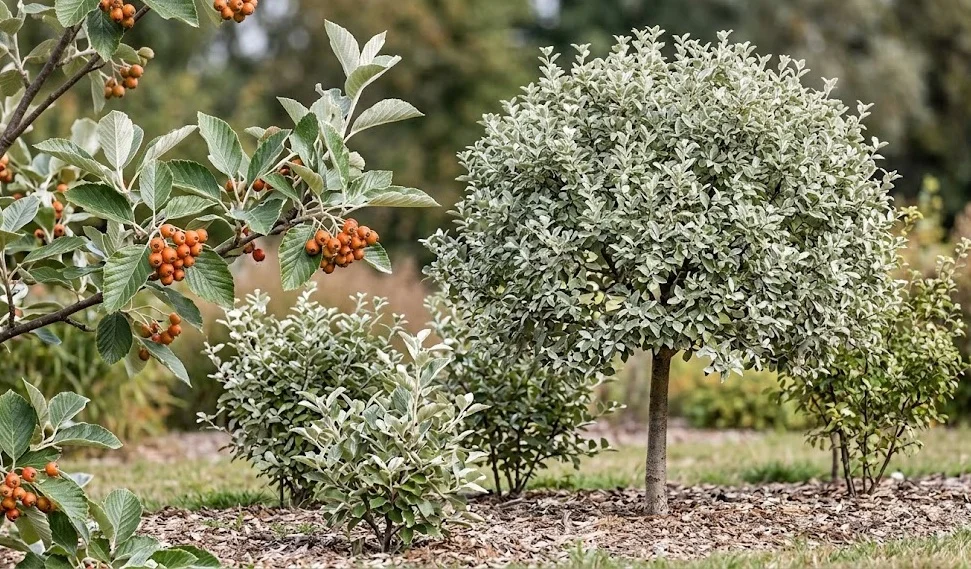

The photosynthetic efficiency and overall growth form of this species are directly influenced by the quality and duration of light it receives. It is naturally adapted to open, sunny positions where it can develop a symmetrical and dense canopy. You will find that trees grown in full sun exhibit the most vibrant silvery-white leaf undersides and produce the most abundant flowers and fruit. Providing at least six to eight hours of direct sunlight each day is ideal for maintaining the tree’s characteristic ornamental features.
While the tree is relatively adaptable, planting it in heavy shade will result in a sparse canopy and a leggy, unattractive growth habit. The leaves may lose their distinctive texture and the tree’s ability to resist certain fungal diseases may decrease due to slower leaf drying times. You should avoid placing the tree directly under the shadow of larger, faster-growing species or on the north side of tall buildings. If partial shade is unavoidable, ensure it is the lighter shade of the morning rather than the deep shadow of the late afternoon.
The orientation of the planting site affects how light is distributed across the canopy throughout the changing seasons. In a garden setting, you should consider how the sun moves across the sky and ensure the tree has room to capture light from multiple angles. Proper spacing between trees prevents them from shading each other out as they reach their mature dimensions. This thoughtful placement ensures that even the lower branches receive enough light to remain productive and healthy over the long term.