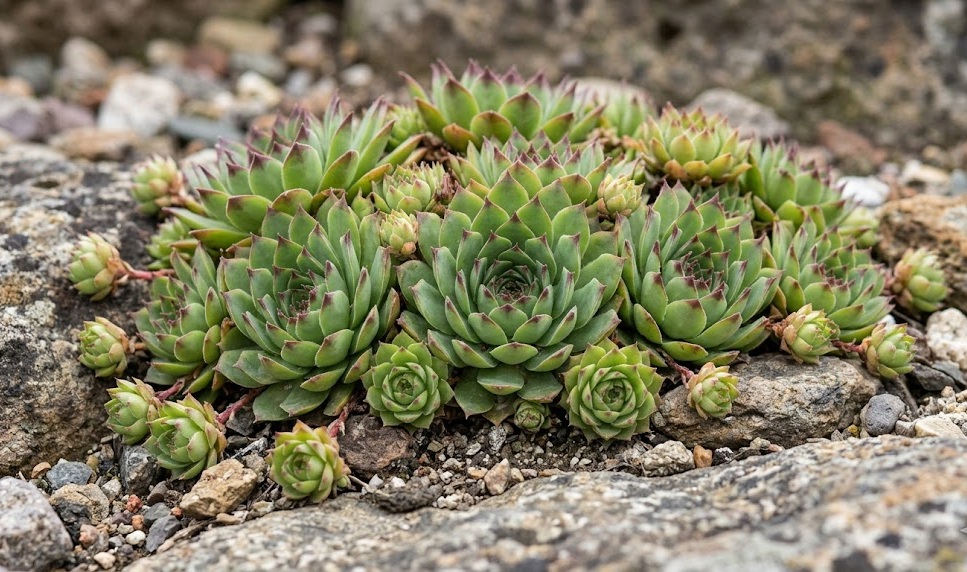

The irrigation strategy for the common houseleek is defined by the principle of “less is more,” reflecting its evolution in arid, mountainous regions. These plants have developed specialized tissues to store water, allowing them to survive for extended periods without any external hydration. In a domestic or agricultural setting, the most common cause of failure is overwatering, which leads to the suffocation of the roots. Understanding the delicate balance between necessary hydration and dangerous saturation is the hallmark of a professional succulent caretaker.
When determining when to water, the most reliable method is to check the moisture level of the substrate deep below the surface. If the soil feels even slightly damp to the touch, it is best to withhold water for several more days. The plant will often signal its need for moisture by a subtle softening of the leaves or a slight loss of its characteristic sheen. It is always better to wait for these physical cues than to follow a rigid calendar-based watering schedule.
During the active growing season in the spring, the water requirements are slightly higher as the plant produces new leaves and offsets. However, this does not mean the soil should stay wet; it simply means the “dry” periods between waterings can be shorter. A deep, thorough soaking that allows water to run out of the drainage holes is much more effective than frequent, shallow mists. This encourages the roots to grow deeper into the soil in search of moisture, creating a more resilient plant.
In the height of summer, the common houseleek may enter a state of dormancy to protect itself from extreme heat and drought. During this time, the plant’s metabolic rate slows down significantly, and its ability to process water is reduced. Watering heavily during a heatwave can be particularly dangerous, as the combination of heat and moisture promotes the growth of rot-inducing fungi. A very light watering in the cool of the evening is usually all that is required to sustain them through the peak of summer.
Nuances of fertilization in nutrient-poor environments
Fertilization of the common houseleek should be approached with extreme caution, as these plants are naturally adapted to very lean soils. In their native habitats, they derive most of their nutrients from the slow weathering of rocks and minimal organic debris. Providing a high-nitrogen fertilizer will often result in rapid but weak growth that is susceptible to pests and diseases. The goal of fertilization should be to support the plant’s natural structure, not to force unnatural size.
More articles on this topic
If you choose to provide supplemental nutrients, do so only once a year at the very onset of the spring growth cycle. A balanced, water-soluble fertilizer formulated for cacti and succulents is the best choice for these rosettes. It is professional practice to dilute the fertilizer to half or even a quarter of the strength recommended on the packaging. This provides a gentle boost that encourages healthy tissue development and vibrant leaf coloration without stressing the plant.
Avoid fertilizing during the autumn or winter months, as the plant needs to transition into its dormant phase. Stimulating new growth late in the year can result in soft tissues that are easily damaged by the first frosts of the season. The plant’s natural cycle relies on a period of rest, and forcing growth during this time can weaken its overall constitution. A minimalist approach to nutrition ensures that the houseleek retains its compact, iconic form and long-term vitality.
The role of organic matter in the soil should also be considered when thinking about fertilization. If your planting mix includes a small amount of well-decomposed compost or leaf mold, the plant may not require any additional fertilizer at all. These organic components release nutrients slowly over time, mimicking the natural processes of the alpine floor. Observation of the plant’s growth rate and color will tell you if it is getting what it needs from the soil alone.
Water quality and application techniques
The quality of the water used can have a surprising impact on the health of the common houseleek over several seasons. Hard water, which is high in calcium and magnesium, can sometimes leave unsightly white mineral deposits on the leaves. Rainwater is the ideal choice for irrigation, as it is naturally soft and slightly acidic, which these plants prefer. If you must use tap water, letting it sit for twenty-four hours allows some of the chlorine to dissipate before application.
More articles on this topic
When applying water, it is important to aim for the soil at the base of the plant rather than pouring water over the rosettes. Water trapped in the center of the rosette can act like a magnifying glass in the sun, causing burns, or it can lead to crown rot. If the plants are grown in a dense colony, use a long-necked watering can to reach the soil surface directly. This precision helps keep the foliage dry and healthy while ensuring the roots get the hydration they need.
The timing of watering is another professional consideration that can prevent many common issues. Watering in the early morning is generally best, as it allows any accidental splashes on the leaves to evaporate quickly as the sun rises. Evening watering can be risky in cooler weather, as the moisture may sit on the plant and in the soil all night, creating an environment ripe for mold. In very hot climates, however, late evening watering can help the plant recover from the day’s heat without immediate evaporation.
For plants grown in containers, the “soak and dry” method is the industry standard for ensuring proper hydration. This involves placing the pot in a shallow tray of water and allowing it to absorb moisture from the bottom for about twenty minutes. This ensures that the entire root ball is hydrated without getting the top of the plant wet. Once the surface of the soil feels moist, remove the pot from the tray and allow all excess water to drain away completely.
Seasonal adjustments for hydration and nutrition
As autumn approaches and the daylight hours shorten, you must begin to reduce the frequency of watering significantly. The drop in temperature means that the soil stays damp for longer, and the plant’s demand for water decreases as it prepares for winter. By late autumn, you should only be watering if the leaves appear significantly shriveled or the soil is bone dry. This “hardening off” process is essential for the plant to survive the freezing temperatures of the coming months.
During the winter, most common houseleeks grown outdoors in the ground require no supplemental watering at all. The ambient moisture in the air and the occasional snowfall provide more than enough hydration for their dormant state. In fact, keeping them too dry is far safer than providing even a small amount of extra water during the cold months. If you are overwintering them in a greenhouse or under a porch, a very light watering once a month may be necessary to prevent complete desiccation.
When spring finally arrives, do not rush to water and fertilize the moment the snow melts. Wait until you see the first signs of new growth in the center of the rosettes, which indicates that the roots are active again. This gradual return to a regular watering schedule prevents shocking the plant after its long winter rest. Once the weather has stabilized, you can apply your single annual dose of diluted fertilizer to kickstart the growing season.
Understanding the cycle of the seasons is the key to mastering the hydration and nutrition of these succulents. Each phase of the year requires a different mindset and a slightly different set of actions from the gardener. By paying close attention to the environment and the plant’s physical responses, you can provide the perfect level of care. This professional approach results in a collection of houseleeks that are not only survivors but thriving examples of their species.
Identifying and correcting moisture-related issues
If you notice that the lower leaves of your houseleek are becoming yellow, translucent, and mushy, this is a definitive sign of overwatering. At this stage, you must immediately stop all irrigation and allow the soil to dry out completely. If the rot has reached the stem or the center of the rosette, it may be necessary to remove the affected plant to prevent the spread to others. Often, you can save a plant by removing the healthy offsets and starting them in fresh, dry soil.
On the other hand, leaves that are thin, wrinkled, and brittle indicate that the plant is suffering from extreme dehydration. While they are drought-tolerant, there is a limit to how much stress they can handle before their tissues begin to collapse. In this case, a slow and steady rehydration is better than a sudden flood, which can cause the dry tissues to burst. Provide a moderate watering and repeat after a few days once the soil has dried again, watching for the leaves to plump back up.
The color of the plant can also provide clues about its nutritional status and watering needs. A plant that is consistently pale or washed out despite having enough light might benefit from a very light application of micronutrients. Conversely, a plant that is dark green and rapidly expanding might be getting too much nitrogen from the soil. Professional growers use these visual cues to fine-tune their care routines for each individual colony or container.
Ultimately, the goal of watering and fertilization is to maintain the plant’s natural resilience and beauty. By avoiding the temptation to over-care, you allow the houseleek to display the rugged character that makes it so appealing. These plants are built for a tough life, and they look their best when they have to work just a little bit for their survival. A disciplined approach to moisture and nutrients will ensure your houseleeks remain a highlight of your garden for many years.

