
Proper maintenance of the Greek fir requires a deep understanding of its high-altitude Mediterranean origins to ensure its long-term health and structural integrity. This majestic evergreen is prized for its sharp needles and symmetrical growth, but it demands specific environmental conditions to thrive in a cultivated landscape. Gardeners must focus on balancing soil moisture, nutrient availability, and protection from urban stressors to replicate its natural mountainous habitat. Achieving success with this species involves a commitment to consistent monitoring and a proactive approach to seasonal adjustments in care routines.
Ideal environmental conditions for stability
Creating the perfect microclimate is the first step in ensuring the longevity of your Greek fir within a managed landscape. These trees are naturally adapted to the cool, humid air found at high elevations in the mountains of Greece, which means they struggle in stagnant or overly dry environments. You should aim for a location that provides excellent air circulation while offering some protection from the most scorching afternoon sun in hotter regions. Ensuring that the surrounding area is not overcrowded by other dense vegetation will help prevent the buildup of humidity that can lead to fungal issues.
The quality of the soil plays a pivotal role in the overall vitality of the tree as it matures through different growth stages. You must ensure that the planting site offers deep, well-draining soil that is rich in organic matter to mimic the forest floor. While the Greek fir is somewhat adaptable to various soil types, it performs best in slightly acidic to neutral pH levels. If your local soil is heavy clay, you should incorporate significant amounts of grit or organic compost to improve drainage and prevent root suffocation.
Temperature management is another critical aspect that influences the growth rate and needle retention of the species over the years. This fir is remarkably cold-hardy, but it can be sensitive to rapid fluctuations in temperature during the early spring months when new growth emerges. You should monitor the weather patterns closely and provide temporary shielding if a late frost is predicted after the buds have started to swell. Protecting the tree from reflected heat from nearby concrete walls or asphalt driveways will also prevent the needles from browning during intense summer heatwaves.
Long-term structural health is often determined by the space allowed for the root system to expand without encountering significant obstacles. You need to consider the ultimate spread of the tree, which can reach impressive dimensions even in a garden setting. Compaction of the soil around the base should be strictly avoided, as this limits the oxygen exchange necessary for healthy root respiration. Using a thick layer of organic mulch around the base of the tree can help maintain a consistent soil temperature and suppress competing weeds effectively.
More articles on this topic
Monitoring seasonal growth patterns
Understanding the seasonal rhythm of the Greek fir allows you to anticipate its needs and provide interventions at the most effective times. During the spring, the tree focuses its energy on producing soft, lime-green new shoots that are highly attractive but also quite delicate. You should observe the development of these terminal buds carefully to ensure that pests or environmental stressors do not stunt the year’s growth. This period of active expansion requires the highest level of resource availability, including both moisture and accessible soil nutrients.
As summer progresses, the new growth begins to harden and take on the characteristic stiff, prickly texture that gives the species its name. This is the phase where the tree builds its resilience against the upcoming heat and potential periods of drought. You will notice the needles becoming more waxy, which is a natural defense mechanism designed to reduce water loss through transpiration. Keeping a close eye on the color of the needles will give you early indications of whether the tree is under physiological stress from the sun.
Autumn serves as a transitional period where the tree prepares its internal chemistry for the dormant months of winter. While the visible growth slows down significantly, the root system continues to expand and store essential carbohydrates for the following year. You should focus on ensuring the tree enters this phase well-hydrated, especially if the late summer was particularly dry or taxing. This is also the ideal time to evaluate the overall shape and health of the canopy before the snow or heavy rains arrive.
The winter months are a time of relative rest, yet the Greek fir remains a striking focal point with its persistent green foliage and upright cones. During this time, the primary concern is preventing physical damage from heavy snow loads or ice accumulation on the branches. You should gently brush off excessive snow if it threatens to bend the limbs beyond their natural breaking point. Maintaining a quiet vigilance during the coldest months ensures that the tree emerges in the spring without structural compromises or broken leaders.
More articles on this topic
Soil management and nutrient balance
The foundation of a healthy Greek fir lies in the complex biological activity occurring beneath the surface of the soil. You should regularly test the soil quality to ensure that the balance of macronutrients and micronutrients remains optimal for evergreen health. Over time, the tree will deplete the surrounding earth of specific elements, making it necessary to replenish these through careful supplementation. A focus on slow-release organic fertilizers is generally preferred to avoid the risk of salt buildup and chemical burns to the sensitive roots.
Organic matter serves as the lifeblood of the soil ecosystem, providing both structure and a steady source of nutrition. You should aim to incorporate well-rotted leaf mold or aged manure into the top layers of the soil annually to maintain fertility. This practice not only feeds the tree but also encourages the presence of beneficial mycorrhizal fungi that assist in water uptake. A healthy soil structure allows for the easy penetration of water while ensuring that excess moisture can drain away from the root crown.
Managing the pH level of the soil is essential for the availability of nutrients like iron and magnesium, which are vital for needle color. If the soil becomes too alkaline, you may notice the needles turning a sickly yellow, a condition known as chlorosis. You can correct this by applying elemental sulfur or using acidifying mulches such as pine needles or bark nuggets. Regular monitoring of the soil’s acidity will help you make small, incremental adjustments rather than drastic changes that could shock the plant.
Water retention and drainage must be carefully balanced to prevent the development of root rot or drought stress. In sandy soils, adding organic components helps hold onto moisture long enough for the roots to absorb what they need during the day. Conversely, in heavier soils, the addition of coarse sand or expanded clay can create the necessary macropores for drainage. You should always prioritize the creation of a stable soil environment that can buffer the tree against extreme weather events and fluctuating rainfall patterns.
Protective measures against urban stress
Growing a Greek fir in a residential or urban environment presents unique challenges that are not present in its native mountain ranges. Air pollution and smog can coat the needles in a layer of soot, which interferes with the tree’s ability to photosynthesize efficiently. You should occasionally rinse the foliage with a gentle spray of water during dry spells to remove dust and pollutants from the surface. This simple act can significantly improve the overall vigor of the tree and help it maintain its vibrant green appearance.
Wind desiccation is a major concern, particularly for younger specimens that have not yet established a deep and extensive root system. Strong, dry winds can pull moisture out of the needles faster than the roots can replace it, leading to tip burn or “winter burn.” You might consider installing a temporary windbreak made of burlap during the first few winters to give the tree a better chance at survival. Planting the fir in a location that utilizes existing structures or hardier trees as a shield can also mitigate this risk.
Soil compaction from foot traffic or heavy machinery is a silent killer for many established evergreens in developed areas. You should design the landscape so that the area directly beneath the canopy remains undisturbed and free from heavy activity. If the soil has already become compacted, professional aeration may be necessary to restore the flow of air and water to the root zone. Protecting the critical root zone is perhaps the most important long-term strategy for maintaining a healthy and upright specimen.
Chemical runoff from de-icing salts used on nearby roads and sidewalks can cause severe damage to the sensitive roots of the Greek fir. You should be mindful of where you apply salt during the winter and try to use alternatives that are safer for plants whenever possible. If the tree is located near a high-traffic road, consider building a small berm or installing a barrier to prevent salt-laden slush from reaching the root zone. Taking these extra precautions will ensure that the tree remains a beautiful and healthy part of your landscape for decades.
Aesthetic and structural development
The natural form of the Greek fir is one of its most desirable traits, characterized by a straight trunk and a broad, conical canopy. You should allow the tree to develop its natural shape with minimal interference, as excessive pruning can ruin its architectural beauty. Only remove branches that are dead, diseased, or crossing in a way that causes physical damage to the bark. Observing the natural symmetry of the tree will help you identify when it is performing well and when it might be struggling with structural issues.
As the tree ages, the lower branches may naturally begin to thin out or die back as they become shaded by the upper canopy. You can choose to leave these lower limbs if they are healthy, as they provide a full look that extends all the way to the ground. However, if you prefer a more “lifted” appearance, you should perform any limb removal in late winter while the tree is still dormant. This timing allows the wounds to heal quickly once the sap begins to flow in the spring, reducing the risk of infection.
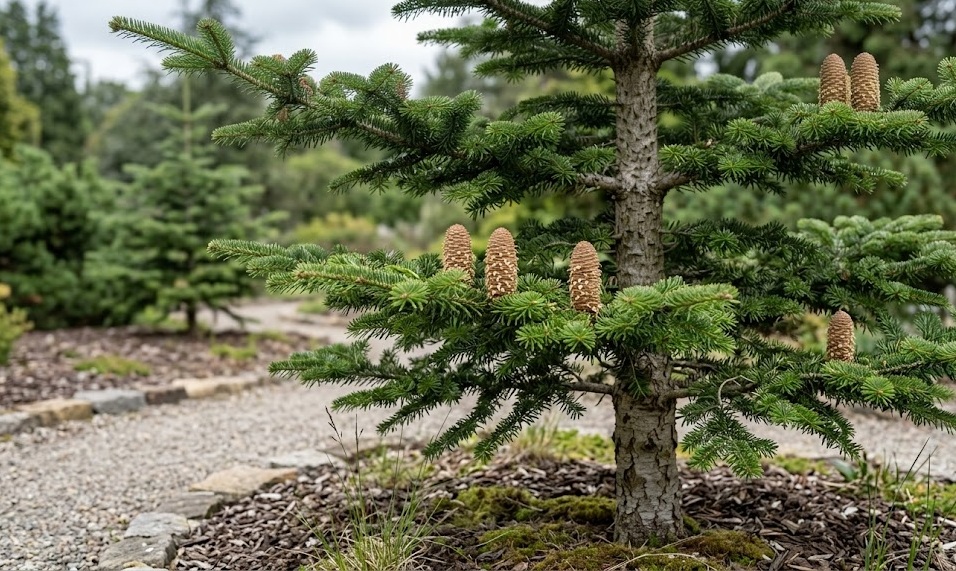
The cones of the Greek fir are a significant ornamental feature, standing upright on the branches like purple-tinged candles. You will notice that these cones eventually disintegrate while still on the tree, leaving behind a central spike that persists for some time. This unique reproductive cycle adds a layer of visual interest to the garden that changes throughout the late summer and autumn. Encouraging a healthy tree will lead to a more prolific display of these cones, enhancing the overall aesthetic value of your property.
Maintaining a clear leader is essential for the tree to reach its full height and maintain its classic silhouette. You should check the very top of the tree annually to ensure that a single vertical shoot is dominant and hasn’t been damaged by birds or ice. If the leader is lost, you may need to carefully train a side branch to take its place using a splint and soft ties. A strong, singular trunk is the hallmark of a well-cared-for Greek fir and ensures it can withstand the forces of nature over a long lifespan.
Long-term health assessments
A truly expert approach to tree care involves regular, detailed inspections that go beyond a simple glance at the foliage. You should get into the habit of checking the trunk for any signs of sap weeping, cracks, or unusual fungal growths that might indicate internal stress. These physical markers are often the first signs of trouble, appearing long before the needles begin to show significant discoloration. Early detection of such issues allows for much more effective and less invasive treatments to be implemented.
The density and color of the needle canopy are the primary indicators of the tree’s overall nutritional and hydration status. You should compare the current year’s growth with previous years to see if the internodal spacing is shortening, which could indicate a decline in vigor. Healthy needles should be stiff, sharply pointed, and a deep, lustrous green with two distinct white bands on the underside. Any deviation from this, such as dullness or premature shedding of interior needles, warrants a closer investigation into the soil and water conditions.
Root health is more difficult to assess directly, but you can infer much from the stability of the tree and the condition of the soil at its base. You should look for any signs of “heaving,” where the roots push upward, or “girdling,” where roots wrap tightly around the trunk. Girdling roots can eventually strangle the tree, cutting off the flow of nutrients and water as the trunk expands. If you notice these issues early on, they can often be corrected by a professional arborist before they become life-threatening.
Finally, you should consider the impact of the surrounding ecosystem on your Greek fir as the landscape matures and changes around it. As other trees grow taller, they may begin to cast too much shade or compete too aggressively for the available groundwater. You must be prepared to adjust your care routine, perhaps increasing irrigation or thinning nearby vegetation to ensure your fir continues to receive what it needs. A proactive mindset and a willingness to adapt are the keys to successfully stewarding a Greek fir through its many decades of life.
Integration into the sustainable landscape
Incorporating the Greek fir into a sustainable garden design requires an understanding of how it interacts with other plant species and local wildlife. You should consider planting native groundcovers around the base of the tree to create a living mulch that protects the soil and provides habitat for beneficial insects. These companion plants should have similar water requirements to the fir to avoid over-watering or under-watering either species. A biodiverse garden environment is much more resilient against pests and diseases than a monoculture, benefiting the tree in the long run.
Using rainwater harvesting systems to provide irrigation for your Greek fir is an excellent way to reduce your environmental footprint. You can collect water from your roof and store it in barrels or cisterns to be used during the drier summer months. This water is often better for the tree than treated municipal water, as it lacks the chlorine and fluoride that can sometimes affect sensitive evergreen species. Implementing a drip irrigation system connected to your rain barrels ensures that water is delivered directly to the root zone with minimal waste.
The Greek fir provides valuable shelter and nesting sites for a variety of bird species, adding a layer of ecological value to your property. You should avoid using broad-spectrum pesticides that could harm the birds or the insects they rely on for food. By maintaining a healthy tree, you are supporting a small ecosystem that contributes to the overall health of your local environment. The presence of birds can also help keep potential pest populations, such as caterpillars or beetles, in check through natural predation.
Viewing the care of your Greek fir as a long-term partnership with nature will make the process more rewarding and successful. You are not just maintaining a plant; you are cultivating a living landmark that will provide beauty and environmental benefits for generations to come. By following professional standards and remaining attentive to the tree’s subtle cues, you ensure its place as a cornerstone of your landscape. This dedication to quality care reflects a true passion for arboriculture and a respect for the natural world.