
Understanding the specific light preferences of these alpine perennials is essential for achieving the best balance of foliage health and floral production. In their native habitats, they are accustomed to bright, filtered light that is softened by the thin mountain air and frequent clouds. When brought into a garden setting, replicating this balance requires careful placement and an awareness of how light intensity changes with the seasons. A professional approach to light management ensures that the plant receives enough energy to bloom without suffering from the stress of excessive heat or solar radiation.
Optimal exposure levels
The ideal lighting for these plants is a situation where they receive several hours of direct morning sun followed by dappled or complete shade during the hottest part of the afternoon. Morning light is less intense and provides the necessary energy for photosynthesis while the air and soil are still cool from the night. This specific timing helps the plant build the reserves it needs for its large flower heads without causing the leaves to wilt or scorch. Professional landscape designs often place primulas on the east side of buildings or under the canopy of deciduous trees that provide seasonal shading.
In northern climates where the sun is less intense, these plants can often tolerate a bit more direct light, provided that the soil moisture remains consistently high. However, in more southern or lower-altitude regions, the afternoon sun can be much too harsh, leading to a rapid decline in the plant’s health. Observing the behavior of the leaves during the day will tell you if the light levels are correct; if they appear limp even when the soil is wet, they are likely receiving too much sun. Professional gardeners use these visual cues to fine-tune the placement of their plants for maximum vigor.
Winter light is also a consideration, although the plants are dormant and the intensity is much lower during the shortest days of the year. While they do not need active light for growth during this time, a location that stays in deep, frozen shadow all winter can sometimes lead to prolonged ice buildup around the crowns. A site that receives a small amount of winter sun can help the ground thaw more evenly in the spring, which is generally beneficial for the plants. The goal is to find a professional balance between the high light needs of spring and the protective shade needs of summer.
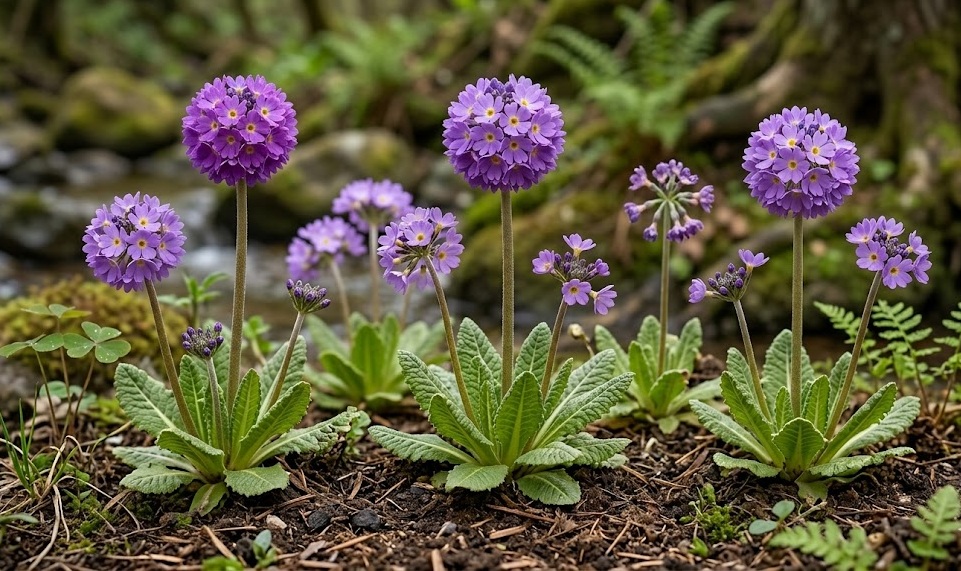
Using the surrounding garden architecture, such as fences or taller perennials, can help create the perfect light microclimate for the drumstick primula. As the spring progresses and the sun moves higher in the sky, the increasing shade from nearby plants often matches the primula’s growing need for protection. This natural progression is a key element of a well-planned garden that requires less manual intervention from the gardener. By matching the plant’s evolutionary light preferences, you ensure a professional-quality display that remains healthy year after year.
More articles on this topic
Managing sun scorch and stress
Sun scorch occurs when the leaves are exposed to more direct radiation than they can handle, leading to brown, crispy edges or bleached patches on the foliage. This is not just an aesthetic issue; it significantly reduces the plant’s ability to produce energy and can weaken its overall immune system. If scorch is detected, providing temporary shade with a piece of lattice or a strategically placed taller plant can help the primula recover. Professional management involves identifying these high-stress areas early in the season and moving the plants to a more suitable location if necessary.
Heat stress often goes hand-in-hand with excessive light, as direct sun rapidly increases the temperature of both the leaves and the root zone. Even if the light itself is not causing scorch, the resulting heat can cause the plant to enter a defensive, semi-dormant state where it stops growing and flowering. Maintaining a high level of humidity around the plants through regular watering and mulching can help mitigate some of the effects of high light intensity. A professional gardener will always prioritize the cooling of the root environment when managing plants in sunnier-than-ideal spots.
If you must plant drumstick primulas in a location that receives more sun than recommended, choosing varieties with darker or more robust foliage can sometimes offer a bit more resistance. However, this is never a substitute for proper placement and consistent hydration. Some experts use shade cloth during particularly intense weeks of summer to protect valuable specimens from the worst of the solar radiation. This level of professional care ensures that the plants remain a lush green asset to the garden rather than becoming a struggling, burnt eyesore.
Reflective heat from white walls or stone paths can also contribute to light and heat stress, even if the plant is technically in a shaded spot. Taking these environmental factors into account during the site selection process is a hallmark of a professional approach to horticulture. Avoiding these “heat islands” will make the maintenance of your primulas much easier and more successful in the long run. By understanding how light interacts with the entire garden environment, you can create a safe and thriving home for these beautiful alpine flowers.
More articles on this topic
Low light adaptability
While these plants are often categorized as shade-lovers, they do require a certain amount of brightness to produce their characteristic globe-shaped flowers. In a location that is too dark, such as under a very dense evergreen canopy or in a deep, narrow alleyway, the plants may become leggy and produce few, if any, blooms. The leaves might grow larger and thinner as they stretch toward whatever light is available, making them more susceptible to physical damage and pests. A professional gardener knows that “shade” in the context of primulas usually means bright, indirect light rather than true darkness.
If you find your primulas are not blooming well, it may be necessary to thin out some of the overhanging branches of nearby trees to allow more light to filter through. This “limbing up” or thinning is a common professional technique to improve the performance of understory plants without losing the benefits of the shade. You can also improve the light levels by using light-colored mulches or stones in the surrounding area, which reflect a bit more ambient light into the shaded spots. These small adjustments can often make the difference between a plant that merely survives and one that truly thrives.
During the early spring, before the trees have fully leafed out, the drumstick primula takes advantage of the temporary abundance of light to fuel its rapid floral development. This is why they are so well-suited to being planted under deciduous trees and shrubs that offer a changing light environment throughout the year. Once the flowering is finished and the canopy closes, the plant is more than happy to settle into the cooler, darker conditions of the summer. This natural timing is a beautiful example of how alpine plants have adapted to the rhythms of the forest and mountain edges.
In conclusion, mastering the light requirements of the drumstick primula is about finding the “sweet spot” where the plant feels energized but protected. It is a dynamic process that requires observation and occasional adjustment as the garden matures and the light patterns shift. A professional gardener treats light as one of the most important tools in their kit, using it to sculpt the growth and beauty of their perennial collection. By providing the right exposure, you ensure that your drumstick primulas remain a vibrant and healthy highlight of your spring garden.