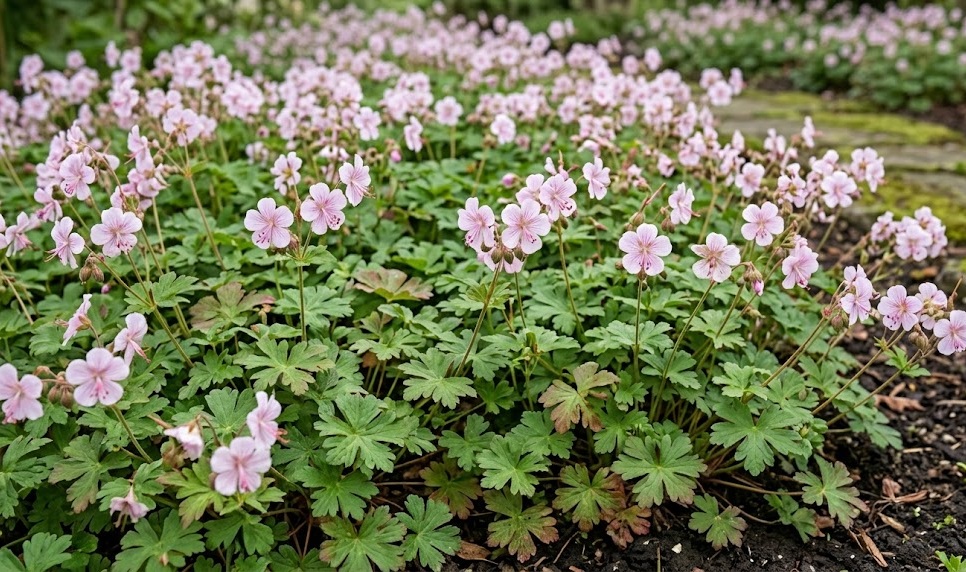

The relationship between Cambridge cranesbill and its light environment is one of the most important factors in determining its overall success in the garden. While this perennial is exceptionally versatile and can adapt to a wide range of exposures, its performance varies significantly depending on how much sun it receives. Understanding these nuances allows the gardener to place the plant where it will look its best and contribute most effectively to the landscape. A thoughtful approach to light ensures a healthy balance between lush foliage and prolific blooming.
In its most ideal setting, this geranium enjoys a position that offers full sun to partial shade, which mimics the edges of its native woodland habitats. Full sun generally results in a denser growth habit and a more concentrated burst of flowers during the late spring and early summer. The foliage also tends to be more vibrant, often taking on more dramatic color changes as the seasons progress into autumn. For those looking for a high-impact floral display, a sunny location is usually the best choice for this plant.
However, the Cambridge cranesbill is also famous for its ability to thrive in partial shade, where many other sun-loving perennials might struggle or become leggy. In shadier spots, the plant may grow a bit more slowly and produce fewer flowers, but the foliage remains beautiful and healthy. This adaptability makes it an invaluable tool for filling in the dappled areas under ornamental trees or on the eastern side of a building. It acts as a cooling, green carpet that bridges the gap between the sun-drenched lawn and the darker garden corners.
When planning your garden layout, it is helpful to observe how the light changes in your specific location throughout the year. A spot that is in full sun during the height of summer may be in deep shade during the spring when the surrounding trees leaf out. This dynamic light environment is exactly where this hybrid geranium excels, as it can handle the transition without missing a beat. Being mindful of these shifts will help you find the perfect home for each specimen you plant.
Balancing full sun and the risk of scorching
While full sun is often beneficial for blooming, there are times and places where too much direct light can be a challenge. In regions with exceptionally hot and dry summers, the intense midday sun can sometimes cause the edges of the leaves to become crispy or scorched. This is especially true if the soil is allowed to dry out completely during these peak temperature periods. If you live in such a climate, providing some afternoon shade can be a wise strategy to keep the plant looking fresh and green.
More articles on this topic
The reflective heat from light-colored walls or stone pathways can also increase the light intensity beyond what is comfortable for the plant. If you notice your cranesbill looking stressed or losing its color in these high-heat areas, it may be receiving too much reflected radiation. Moving the plant just a few feet away from these surfaces or providing some low-growing neighbors to shade its roots can make a big difference. This subtle adjustment allows you to keep the plant in a bright location without the negative side effects of extreme heat.
Sunlight also plays a critical role in the development of the aromatic oils within the leaves that give the plant its characteristic scent. Plants grown in brighter light often have a more pronounced fragrance than those grown in deep shade, adding another layer to the sensory garden experience. If you enjoy the scent of the foliage, prioritize a sunny or lightly shaded spot where the sun can warm the leaves throughout the day. This natural chemistry is one of the many reasons why this geranium remains a favorite among professional horticulturists.
Ultimately, the plant’s ability to cope with full sun is closely tied to the amount of moisture available in the soil. A well-watered plant can handle much higher light intensities than one that is struggling with drought. If you want to grow your cranesbill in a very sunny spot, be prepared to provide a bit more supplemental irrigation during the hottest weeks of the year. This balance of light and water is the key to maintaining a vibrant and healthy ground cover that can stand up to the summer sun.
Success in the difficult dry shade environment
One of the most highly prized characteristics of the Cambridge cranesbill is its remarkable tolerance for dry shade. This is a notoriously difficult environment for many garden plants, as they must compete with the roots of large trees for both light and moisture. While the geranium will not grow as quickly or bloom as heavily as it would in the sun, it provides a reliable and attractive solution for these “problem areas.” It is a much better alternative to bare soil or less attractive ground covers that might become invasive.
More articles on this topic
When planting in the shade, it is important to manage your expectations regarding the number of flowers the plant will produce. You will likely see a more delicate scattering of blooms rather than a solid carpet of color, but this can have its own subtle charm. The focus in these areas should be on the texture and color of the foliage, which will remain a cool and calming green even in the height of summer. This evergreen or semi-evergreen presence is vital for maintaining the visual structure of a shaded garden bed.
To help the plant succeed in competitive shade, it is beneficial to provide a little extra help during the establishment phase. Adding some organic matter to the planting hole will help hold moisture where the young roots can reach it before it is taken by the surrounding trees. You might also consider occasional deep watering during the first few years to ensure the plant has a strong foundation. Once established, the cranesbill is surprisingly independent and will require very little attention even in the toughest shaded spots.
The color of the flowers can also appear differently in the shade, often looking more luminous or intense against a darker background. White or pale pink varieties are particularly effective at “lighting up” a dark corner, making the space feel more inviting and less neglected. Using light to your advantage in this way is a hallmark of professional garden design. Whether in sun or shade, this versatile perennial offers a wealth of possibilities for the creative and observant gardener.
Seasonal light shifts and autumn performance
As the seasons transition from summer to autumn, the changing angle and intensity of the light trigger a dramatic shift in the plant’s appearance. The Cambridge cranesbill is well-known for its stunning fall foliage, which can range from bright orange to a deep, wine-red. Interestingly, the intensity of these colors is often directly related to the amount of sunlight the plant received during the preceding months. Plants in sunnier locations typically put on a more spectacular show than those that spent the year in more shaded conditions.
The cooler temperatures combined with bright, clear autumn light create the perfect conditions for these pigments to develop within the leaves. If you value this late-season interest, consider placing some of your plants where they will catch the low rays of the setting sun in October and November. This backlighting effect can make the garden glow and provides a beautiful contrast to the fading colors of other perennials. It is a final burst of beauty before the plant enters its winter dormancy.
During the early spring, the amount of light reaching the ground can also be much higher before the trees have fully developed their leaf canopy. This “window of light” is when the cranesbill does much of its early growth and prepares for its main flowering season. This is why it is perfectly suited for planting under deciduous trees, as it gets plenty of light when it needs it most and then enjoys the shade when the summer heat arrives. It is a perfect natural synchronization that has been perfected over countless generations.
By understanding these seasonal light patterns, you can make more strategic decisions about where to place different cultivars of this species. Some varieties may be more sensitive to light changes than others, so observing their performance over several years is always a good idea. Gardening is as much about timing and light as it is about soil and water, and this cranesbill is the perfect subject for exploring these relationships. With a little planning, you can ensure your garden is beautiful and vibrant from the first days of spring until the end of autumn.