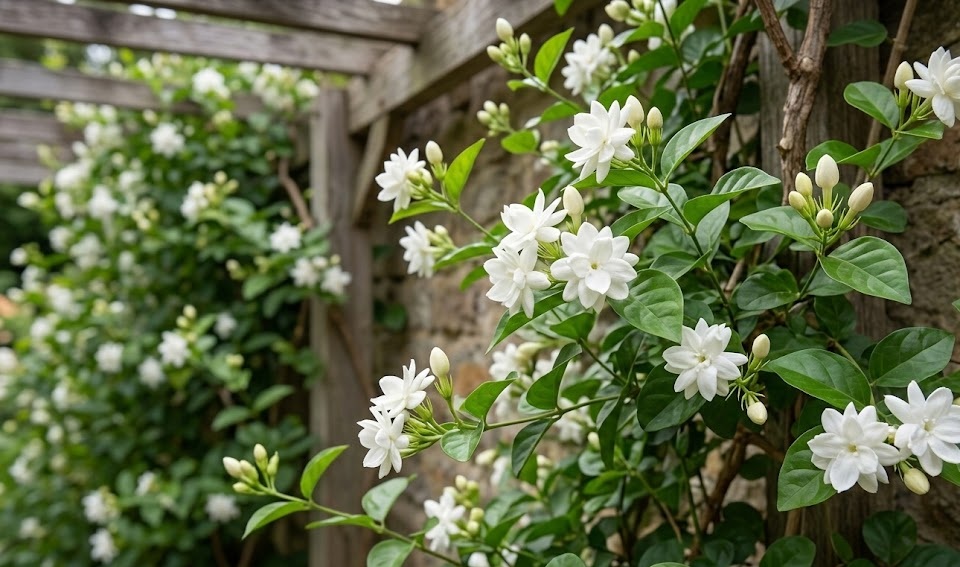

Wintering Arabian jasmine correctly is the key to ensuring it survives the cold and blooms again the following year. You must understand that this is a tropical plant that has no natural tolerance for freezing temperatures. Depending on your climate, this usually involves moving the plant indoors or providing significant protection. By managing the light and moisture carefully during the winter, you can keep your jasmine healthy until spring.
Temperature thresholds and timing
You should start thinking about winter protection as soon as the nighttime temperatures begin to drop consistently. Arabian jasmine will start to suffer if the thermometer falls below ten degrees Celsius for an extended period. It is much better to bring the plant inside a bit early than to wait for the first frost. Sudden cold snaps can cause irreversible damage to the tender stems and the root system.
If you live in a region where the winters are mild, you might be able to keep the plant outside with some help. You should move the pot to a sheltered location, such as against a south-facing wall that holds heat. Covering the plant with a frost cloth during the coldest nights can provide a few extra degrees of warmth. However, for most temperate climates, an indoor transition is the only safe option for survival.
The transition should be gradual to avoid shocking the plant with a sudden change in its environment. You can start by bringing the jasmine inside during the night and putting it back out during the day. After about a week of this, the plant will be better adjusted to the lower light and humidity of your home. This process helps minimize leaf drop, which is a common reaction to moving a plant indoors.
Indoor care and light management
Once the plant is inside, its primary need will be finding enough light to stay healthy through the dark months. You should place it in the brightest window you have, preferably one that faces south or west. If your home does not have enough natural light, you might need to use a full-spectrum grow light. Keeping the jasmine in a dark corner will lead to weak, spindly growth and a loss of foliage.
More articles on this topic
Humidity is often the biggest challenge when wintering tropical plants in a heated home. You should avoid placing the pot near a radiator or a heating vent that will dry out the air. Using a pebble tray or a room humidifier can help maintain the moisture levels that the jasmine requires. If the air is too dry, the plant may become more susceptible to pests like spider mites.
You should also be careful with the room temperature, keeping it away from cold drafts from windows or doors. While the plant likes warmth, a very hot room with stagnant air can also cause stress and health issues. A cool but frost-free room, like a bright porch or a sunroom, is often the ideal place for wintering. The goal is to keep the plant in a state of slow growth or rest until the spring.
Reduced resource management
During the winter, the jasmine’s demand for water will be significantly lower than it is during the summer months. You should allow the soil to dry out more between waterings to prevent the roots from sitting in cold, wet dirt. Always feel the soil with your hand before adding water to make sure the plant actually needs it. Overwatering in the winter is one of the most common causes of plant death for this species.
You should completely stop fertilizing the plant from late autumn until the early part of the spring season. Adding nutrients when the plant is not actively growing can lead to a buildup of salts in the soil. This rest period is a natural part of the plant’s life cycle and helps it save energy for the next blooming season. Forcing growth during the winter usually results in weak branches that are prone to disease.
More articles on this topic
Pruning should also be kept to a minimum during the wintering phase of the care cycle. You can remove any dead or yellowing leaves to keep the plant tidy and reduce the risk of mold. However, avoid any major structural pruning until the plant shows signs of new growth in the spring. Every leaf the plant keeps during the winter helps it produce the energy it needs to survive the low light.
Transitioning back to the outdoors
As the days get longer and the risk of frost passes, you can begin preparing your jasmine for the outdoors. You should wait until the nighttime temperatures are consistently above twelve degrees Celsius before making the move. Start by placing the plant in a shaded area for a few hours a day to get it used to the wind and sun. This “hardening off” process is essential for preventing the leaves from getting scorched by the sun.
Slowly increase the amount of direct sunlight the plant receives over a period of two weeks. You will notice the plant responding to the fresh air and natural light with a burst of new, vibrant growth. This is the perfect time to give the plant its first light feeding of the year to support its development. Check the root system to see if the plant needs to be moved to a larger pot for the summer.
Once the jasmine is fully settled back outside, you can resume your regular watering and fertilizing routine. You should keep a close eye on it for the first few weeks to make sure no pests have followed it from the house. The transition back to the garden or balcony marks the beginning of the most exciting time for jasmine growers. With the right winter care, your plant will be stronger and more productive than it was the year before.