
Light is the primary energy source that drives the growth and development of white clover, influencing everything from leaf size to nitrogen fixation efficiency. As a photosynthetic organism, this species has evolved specific strategies to capture solar radiation and convert it into chemical energy. While it is often considered a sun-loving plant, its ability to adapt to different light environments is one of its most valuable characteristics. Understanding the light requirements of this legume is essential for choosing the right planting site and managing the canopy for maximum productivity.
The intensity, quality, and duration of light all play distinct roles in the life cycle of the plant. High light intensity typically encourages a dense, low-growing habit with a high number of branching stolons. In contrast, low light conditions can cause the plant to become leggy as it prioritizes vertical growth to reach for more sun. A professional grower must manage these responses to maintain a balanced and healthy stand. This article explores the professional standards for managing light exposure in white clover installations.
Maximizing productivity in full sun exposure
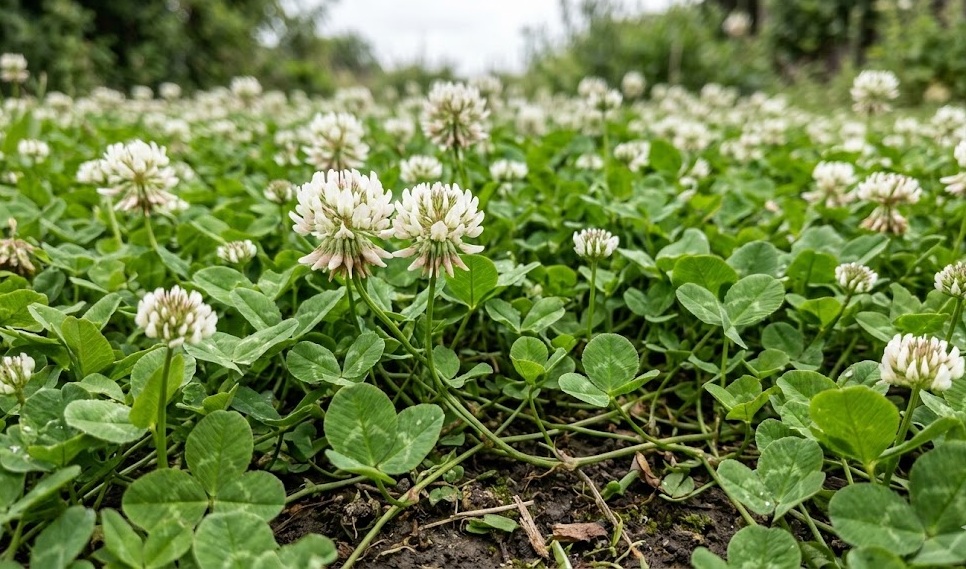
White clover performs at its peak when it is grown in full sun, which typically means at least six to eight hours of direct solar radiation per day. In these conditions, the rate of photosynthesis is maximized, providing the energy needed for rapid stolon expansion and high biomass production. The leaves are typically smaller and thicker in full sun, which helps the plant manage water loss and protect itself from UV radiation. A sun-drenched site is the ideal environment for a productive agricultural pasture or a vibrant garden cover.
High light levels also play a critical role in supporting the symbiotic relationship with nitrogen-fixing bacteria in the root nodules. The process of converting atmospheric nitrogen into a usable form is energy-intensive and requires a steady supply of carbohydrates from the leaves. In full sun, the plant can afford to invest heavily in this relationship, leading to high levels of soil fertility improvement. This natural fertilization is one of the key reasons why white clover is so highly valued in sustainable agricultural systems.
Flowering is another biological process that is heavily influenced by the amount of light the plant receives. In full sun, the clover produces a higher density of flowers, which is beneficial for both seed production and for supporting local pollinator populations. The timing of the flowering period is often linked to the duration of daylight, a phenomenon known as photoperiodism. A professional grower monitors these cycles to optimize the timing of grazing or mowing for the best results.
More articles on this topic
Managing a stand in full sun requires a commitment to consistent moisture management to prevent heat stress and desiccation. The high rate of photosynthesis and evaporation means that the plant’s water demand is at its peak during the brightest parts of the day. Providing adequate irrigation ensures that the plant can continue to take advantage of the abundant light without being limited by water availability. A professional approach balances the benefits of solar energy with the practical requirements of plant health.
Adaptability and tolerance to partial shade
One of the reasons for the widespread success of this species is its remarkable ability to tolerate and adapt to partially shaded environments. In a garden or orchard setting, clover is often grown under the canopy of trees or near buildings where it receives indirect or filtered light. While its growth rate may be slower than in full sun, it can still maintain a healthy and attractive cover. This shade tolerance makes it an excellent choice for complex landscapes where light levels vary significantly.
In shaded conditions, the plant undergoes several physiological changes to improve its light-capturing efficiency. The leaves often become larger and thinner, increasing the surface area available for intercepting the limited number of photons. The stolons may also elongate more quickly as the plant searches for brighter areas within its environment. A professional grower understands these changes and adjusts their management style, such as mowing height, to accommodate the different growth habit.
While the plant is adaptable, there is a limit to how much shade it can tolerate before its health begins to decline. In very deep shade, the stand may become thin and patchy, and its ability to compete with shade-tolerant weeds will be reduced. Nitrogen fixation is also less efficient in low light, as the plant has less surplus energy to share with the bacteria in its roots. Monitoring the density and color of the stand in shaded areas helps in determining if the light levels are sufficient for long-term survival.
More articles on this topic
Improving light penetration in shaded areas can often be achieved through professional landscape management, such as thinning tree canopies. This allows more dappled sunlight to reach the ground, significantly boosting the vitality of the clover below. If light levels remain too low, it may be necessary to choose specific shade-tolerant varieties that have been bred for these conditions. A professional grower evaluates each microclimate individually to ensure that the chosen species and variety are well-suited to the available light.
Managing light through canopy and site design
The design of the planting site and the management of the canopy are the two most powerful ways to regulate light exposure for white clover. In a mixed pasture, the height of the companion grasses must be managed to prevent them from shading out the clover. If the grasses are allowed to grow too tall, the clover will be starved of light and may eventually disappear from the mix. Regular mowing or grazing is the primary tool used to keep the canopy open and ensure that light reaches the clover leaves.
Orientation and topography also play a role in how much light a particular area receives throughout the day and year. South-facing slopes in the northern hemisphere receive the most intense solar radiation and are often the most productive sites for clover. North-facing slopes or areas in the shadow of large structures will have lower light levels and may require different management strategies. A professional site assessment includes a study of these light patterns to guide the planting and maintenance plan.
Artificial lighting is rarely used for this species in a traditional outdoor setting, but it can be a factor in specialized research or indoor growth environments. Understanding the spectral requirements of the plant—the specific wavelengths of light it uses for photosynthesis—is essential for these applications. In most cases, however, the professional grower focuses on maximizing the use of natural sunlight through thoughtful land management. This ecological approach is the most efficient and sustainable way to meet the plant’s energy needs.
Consistent observation of how the clover responds to changes in light throughout the seasons provides valuable insights for the grower. As the sun’s angle changes, areas that were once in full sun may become shaded, requiring an adjustment in care routines. Documentation of these changes, along with growth measurements, helps in refining the long-term management strategy for the site. A commitment to understanding and managing light requirements ensures that the white clover stand remains healthy, productive, and beautiful.